
The Single-Location Advantage: Architecting High-Assortment Digital Commerce

Beyond the Checkout Button: The Invisible Architecture of Modern Digital Commerce We often dismiss digital discounts, bundle tiers, and checkout verifications as purely the domain of marketing teams. Yet, look beneath the surface of any high-volume…
Read More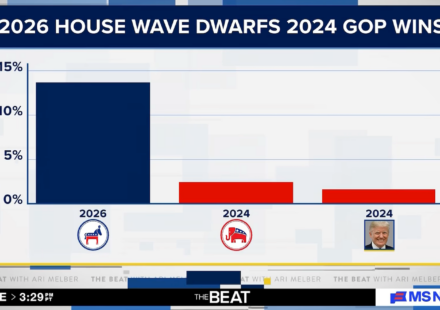
It’s the Economy, Stupid: The Real Drivers of the Blue Wave
AI’s Next Bottleneck May Be Public Consent, Not Compute We measure AI progress in parameters, tokens and benchmark scores. Citizens, however, may experience it through something far less glamorous: a higher electricity bill. A recent CleanTechnica…
Read More
Architecting Resilience: Lessons From the FAA Ground Stop
When the Sky Stops: The Architecture Lesson Hidden in a Nationwide Ground Stop Picture thousands of aircraft sitting at their gates across an entire continent. The weather is fine, and the planes are fine. What has failed is the invisible layer of…
Read More
From SimReady Assets to Agentic Robotics Workflows
The Robot Isn’t the Hard Part. The Contract Is. We love to talk about smarter robots and smarter AI agents. We rarely talk about the unglamorous problem underneath: nobody agrees on what it means for an asset to be ready to use. A recent…
Read More
The API Contract Era: Stabilizing Local AI Inference at Scale
The Real AI Revolution Isn’t in the Cloud; It’s Happening on Your Laptop We often obsess over the raw intelligence of large language models-the parameter counts, the benchmark scores, the sheer scale of the data centers required to train…
Read More
The Consent Layer: Rethinking AI Infrastructure’s Social License
The Data Center Backlash Is an Architecture Problem, Not Just a Political One Last week, Pennsylvania Democrats flipped the State Senate for the first time in over three decades. Opposition to data centers was a core campaign issue. An environmental…
Read More
Succession at Nvidia: Leadership, Geopolitics, and the AI Ecosystem
The Hidden Dependency in Your AI Architecture We design systems to survive server failures. We replicate databases, distribute workloads, and rehearse disaster recovery. Yet many enterprise AI strategies leave a different dependency largely unexamined:…
Read More
When Employee Loyalty Tests Board Governance
In enterprise software architecture, we spend decades obsessing over the elimination of a Single Point of Failure (SPOF). We build redundant cloud regions, deploy active-active database clusters, and design self-healing microservices so that if one node…
Read More
The Accountability Gap in AI Chip Traceability
Ten years ago, data residency was strictly a software, storage, and cloud-routing conversation. If an enterprise wanted absolute control, you bought the servers, racked them in a private data center, cut the external network cords, and called it…
Read More
Beyond Corporate Patronage: The Strategic Future of Open-Weight AI
When the Champion Leaves the Room: Open-Source AI and the Risk of Key-Person Dependency Ten years ago, we debated whether open source could ever compete with proprietary software. Today the debate has moved on. The question now is who owns the…
Read More