The Modular Energy Stack: Architecting the Post-Installation Grid

The Composable Microgrid: Why Physical Energy Is Adopting Cloud-Native Architecture
In software architecture, we abandoned the rigid monolith over a decade ago. Today, no Chief Architect designs a mission-critical enterprise platform that cannot scale horizontally, balance loads dynamically, or fail over in milliseconds. Yet, when it comes to the physical energy powering our digital ecosystems, we have remained stubbornly trapped in monolithic thinking-relying either on fragile centralized grids or heavy, permanently bolted backup systems that require specialized civil work just to upgrade.
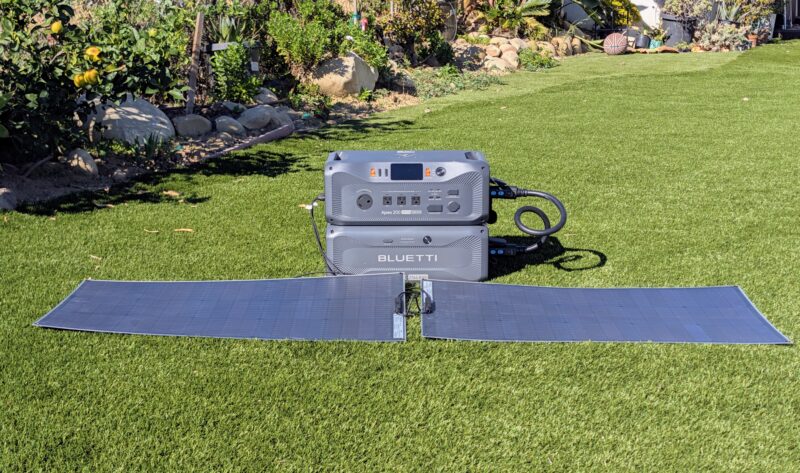
I recently examined a technical breakdown of the latest generation of modular, stackable energy storage architectures. Moving away from fixed installations, these systems utilize a central “head unit” controller that can start as a compact 2.5 kWh LiFePO₄ node and scale horizontally-like interlocking building blocks-up to nearly 100 kWh across linked expansion packs. By combining automated charge balancing, multi-protocol solar inputs, and sub-15-millisecond UPS switchover, physical power is behaving less like static hardware and more like a distributed compute cluster.
Orchestration, Load Balancing, and Architectural Trade-offs
Viewing this shift through the lens of enterprise system design reveals a fascinating convergence of bits and watts. What makes this modular leap viable isn’t merely battery chemistry; it is the software-defined orchestration layer sitting inside the head unit.
In a composable power stack, the primary controller functions remarkably like a Kubernetes master node. It abstracts the underlying complexity of attached storage packs, automatically balancing energy distribution and managing thermal limits across charging cables-throttling AC draw between quiet, low-wattage profiles and full “turbo” loads much like rate-limiting an API gateway under thermal or bandwidth stress.
However, as architects know well, modularity always introduces interface friction. A telling detail in high-voltage modular solar setups is the tension between physical safety and operational usability: high-voltage MC4 connectors enforce strict physical locks requiring specialized release tools, whereas lower-voltage XT60 ports offer simple plug-and-play agility. It is the hardware equivalent of the classic enterprise trade-off between Zero-Trust security protocols and developer velocity. CTOs designing hybrid edge infrastructure must evaluate these physical layer bottlenecks just as rigorously as software dependencies. Furthermore, with native integrations into open platforms like Home Assistant and Time-of-Use (TOU) scheduling, energy management is rapidly transitioning from a facilities headache into a programmable, API-driven workload.
Powering the Edge Across Northeast India
For those of us building digital ecosystems across Northeast India, this architectural shift carries profound operational weight. In my conversations with startup founders at STPI and technologists deploying e-governance tools across the region, a recurring bottleneck isn’t algorithmic-it is last-mile resilience.
In hilly terrains, flood-prone zones, and Tier-2 or Tier-3 towns, deploying heavy, fixed industrial backup systems for regional edge servers, rural clinics, or MSME offices carries prohibitive CapEx and logistical friction. Composable, solar-ready power architectures solve this through frugal, incremental scalability. An emerging tech venture can deploy a baseline unit to protect local compute nodes with near-instantaneous failover, and simply stack additional storage capacity as its operations-and local AI inference workloads-expand. When physical energy becomes portable and modular, reliable Digital Public Infrastructure (DPI) is no longer hostage to grid instability.
Strategic Takeaways for Tech Leaders
- Adopt “Pay-As-You-Grow” Hardware: Treat physical power backup like cloud capacity-avoid massive upfront over-provisioning by prioritizing modular architectures that scale horizontally.
- Demand Software-Defined Telemetry: Ensure energy storage infrastructure integrates via open APIs into your broader observability stack for automated load shedding and predictive maintenance.
- Design for Edge Autonomy: Whether running remote IoT networks or regional edge servers, sub-15ms switchover and dual-source solar/AC resilience should be baseline requirements for uptime.
The future of resilient enterprise infrastructure won’t just be written in clean code; it will be built on physical architectures that mirror the agility of the cloud.
About the Author: Sanjeev Sarma is the Founder Director and Chief Software Architect at Webx Technologies. With a core focus on Generative AI integration, Cloud-Native Scalability, and Enterprise Software Architecture, he has spent over two decades driving digital transformation across Northeast India and beyond. Beyond his corporate leadership, Sanjeev is deeply invested in shaping the future of the IT industry. He serves as an Industry Expert on the Board of Studies for Assam Don Bosco University’s School of Technology, advises state technology committees, and actively mentors emerging tech startups at STPI. He brings a unique, dual perspective of high-level enterprise execution and future-ready academic curriculum development.