The Consent Layer: Rethinking AI Infrastructure’s Social License

The Data Center Backlash Is an Architecture Problem, Not Just a Political One
Last week, Pennsylvania Democrats flipped the State Senate for the first time in over three decades. Opposition to data centers was a core campaign issue. An environmental advocate quoted in the coverage said she had never seen anything as unpopular in her career.
Let that sink in. The physical backbone of the AI economy has become a ballot-box liability.
The Signal
Newly elected legislators are now lining up moratoriums, repeal of data center tax exemptions, stronger local zoning authority, and codified transparency rules. Governor Shapiro’s executive order already asks developers to “bring their own power” and bans non-disclosure agreements with state agencies. Yet it remains voluntary, and one legislator fears it will push developers toward on-site gas plants.
The Social License Is a Dependency
We architects obsess over latency, throughput and redundancy. We rarely list “community consent” as a critical dependency in our design documents. Pennsylvania suggests we should.
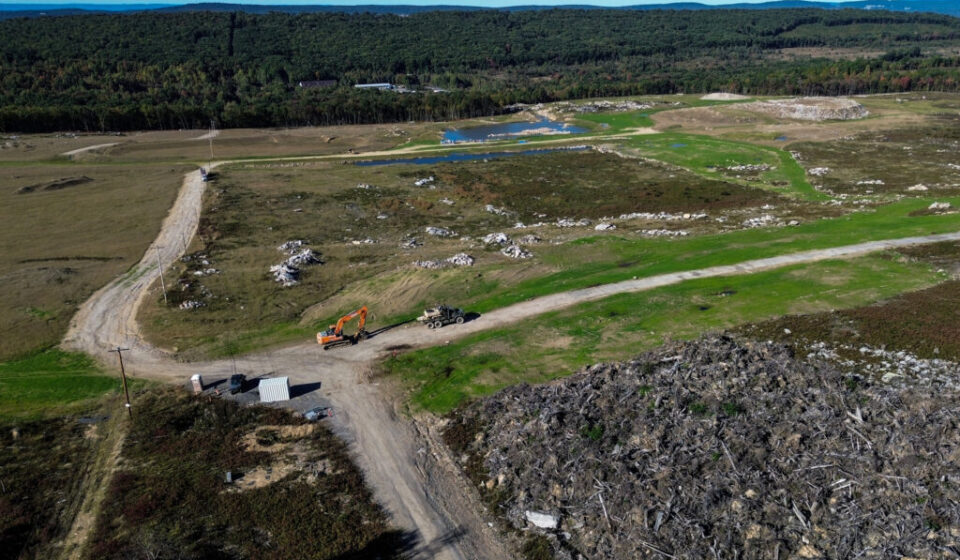
Compute is not weightless. Every model we call through an API lands somewhere as megawatts, water and land. When the externalities (higher utility bills, gas turbines in the valley, tax revenue forgone) are visible to residents and the benefits are abstract, the backlash is predictable. As one lawmaker put it, “Nobody ever asked for this.”
I see three architectural lessons here.
1. Energy is now a first-class design constraint. The “bring your own power” model sounds elegant, but it exposes a trade-off. Self-generation shields ratepayers, but if the fastest route is gas, you have only moved the cost from the bill to the air. Teams that design for efficiency, with smaller models, workload scheduling and inference at the edge, carry less of this risk than teams that simply scale up.
2. Regulatory volatility is technical debt. A project approved under one regime can be paused under another, and some legislators are even asking for retroactive moratoriums. If your roadmap assumes unlimited, cheap, permitted capacity in one geography, you are carrying unpriced risk. Multi-region and multi-cloud portability stops being a procurement nicety and becomes a resilience strategy.
3. Transparency is cheaper than distrust. The industry’s response so far has been to promise to “earn trust”. But trust is earned through disclosed power draw, water use and grid impact, not through press statements. Publishing that telemetry voluntarily, before it is mandated, is good engineering hygiene and good politics.
Where Bharat Fits
India is about to face this same question at scale. State governments across the country are courting data center investment with land and power incentives, and the Northeast has its own fragile realities: hydropower dependence, monsoon-stressed grids, ecologically sensitive terrain and communities that deserve a voice. If we want AI infrastructure here, the Pennsylvania lesson is to involve local bodies early, disclose resource use plainly, and tie incentives to renewable commitments and local skilling, not just to capital expenditure.
Takeaways
- Treat social license as a dependency. Put community impact in your architecture reviews alongside security and uptime.
- Design for efficiency first. Right-size models and measure energy per inference as a standard KPI.
- Build for portability. Avoid concentrating critical workloads in a single jurisdiction.
- Disclose before you are compelled. Voluntary transparency is a competitive advantage.
- Question incentives. Tax breaks without accountability create backlash that costs more than the break saved.
Closing Thought
The next phase of AI will not be limited by silicon or algorithms alone. It will be limited by whether the communities that host it believe they are partners in the build-out rather than bystanders to it.
About the Author: Sanjeev Sarma is the Founder Director and Chief Software Architect at Webx Technologies. With a core focus on Generative AI integration, Cloud-Native Scalability, and Enterprise Software Architecture, he has spent over two decades driving digital transformation across Northeast India and beyond. Beyond his corporate leadership, Sanjeev is deeply invested in shaping the future of the IT industry. He serves as an Industry Expert on the Board of Studies for Assam Don Bosco University’s School of Technology, advises state technology committees, and actively mentors emerging tech startups at STPI. He brings a unique, dual perspective of high-level enterprise execution and future-ready academic curriculum development.