
The Robot Isn’t the Hard Part. The Contract Is.
We love to talk about smarter robots and smarter AI agents. We rarely talk about the unglamorous problem underneath: nobody agrees on what it means for an asset to be ready to use.
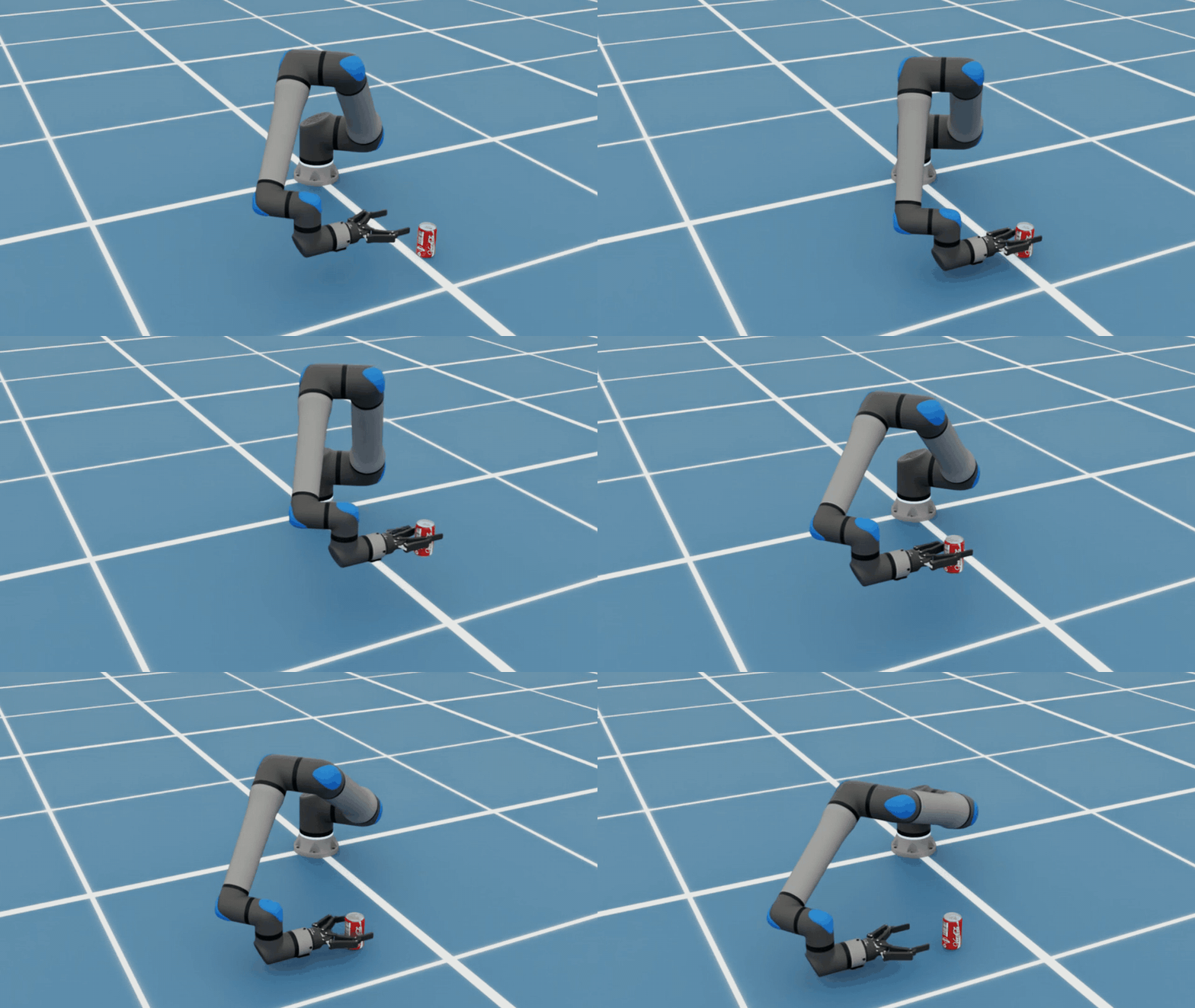
A recent walkthrough on robotics simulation shows why this matters. An industrial arm, a gripper, and a beverage can are assembled into a single scene, and an AI agent generates the control code for a pick-and-place task. The more interesting part is the foundation. The assets ship with authored collisions, mass, joints, and drive settings, and each is validated against a published profile. The authors also state their limits plainly. The grasp force was tuned in simulation, not calibrated to hardware, and the results don’t generalise to uncertain object positions or real-world payloads.
Standards Are the Real Productivity Layer
I have long believed that the biggest accelerant in software is not a better tool but a better interface agreement. What this walkthrough describes is exactly that, applied to physical assets. A profile defines the features, the features define requirements, and the requirements can be checked by a machine. That is a contract, much like an API schema.
Once that contract exists, two things become possible. First, reuse becomes safe. You no longer have to reverse-engineer someone’s joint limits before trusting their model. Second, AI agents become useful. An agent writing control code against well-described, validated assets has a fighting chance. Against a messy, undocumented model, it will hallucinate its way into a simulation that merely looks right.
Generative AI doesn’t remove the need for structure. It raises the price of not having it.
Validation Is Not Verification
The most architecturally mature point in the piece is a quiet one. Passing profile validation gives you a shared baseline, but the real test happens when arm, gripper, can, and controller interact in the assembled scene. Static checks and dynamic behaviour are different questions.
Enterprise teams make the same mistake with software. A passing unit test suite is not a working system. Compliance checks are not resilience. Whenever I review an architecture, I look for where the team has confused “the component is certified” with “the composition behaves.”
The authors’ caveats deserve credit too. A scripted waypoint path, a known can position, and no vision mean this is a demonstration of workflow, not proof of robustness. Good engineering culture states its assumptions in the open. That is rarer than it should be, especially in AI demos.
The Human Skill Gap Shifts
For students and young engineers, the lesson is that the valuable skill is moving up the stack. Writing the waypoint code is becoming the agent’s job. Your job is to inspect generated output, define success criteria such as placement error and grip retention, and know when a simulation is lying to you. Reading a joint drive configuration critically will matter more than typing a controller from scratch.
A Bharat Angle
Shared, validated asset libraries remind me of how Digital Public Infrastructure works: common rails that let smaller players build without starting from zero. For MSME manufacturers in Northeast India, whether in food processing, tea packaging, or light assembly, the barrier to automation is often the cost of experimentation. Simulating a workcell before buying hardware is frugal innovation in its purest form. But it only works if the underlying assets are trustworthy and openly accessible.
Takeaways
- Treat assets as contracts. Machine-checkable specifications make reuse and AI-assisted development safe.
- Separate validation from verification. Component compliance does not guarantee system behaviour.
- Document your assumptions. The simulation-to-reality gap is manageable only if it is declared.
- Upskill toward judgment. Reviewing, testing, and defining acceptance criteria will outlast code authoring.
- Think shared infrastructure. Open, validated libraries lower the cost of innovation for smaller enterprises.
The future of automation will not be decided by who builds the cleverest robot, but by who builds the most trustworthy shared foundations beneath it.
About the Author: Sanjeev Sarma is the Founder Director and Chief Software Architect at Webx Technologies. With a core focus on Generative AI integration, Cloud-Native Scalability, and Enterprise Software Architecture, he has spent over two decades driving digital transformation across Northeast India and beyond. Beyond his corporate leadership, Sanjeev is deeply invested in shaping the future of the IT industry. He serves as an Industry Expert on the Board of Studies for Assam Don Bosco University’s School of Technology, advises state technology committees, and actively mentors emerging tech startups at STPI. He brings a unique, dual perspective of high-level enterprise execution and future-ready academic curriculum development.