Beyond Deep Tunnel Thinking: Engineering for Climate Overload

Bigger Infrastructure Is Not Always More Resilient Infrastructure
A city can spend billions expanding its infrastructure and still become more vulnerable.
That sounds contradictory-until we recognise that capacity and resilience are not the same thing. A larger system built around yesterday’s assumptions can still struggle with tomorrow’s conditions.
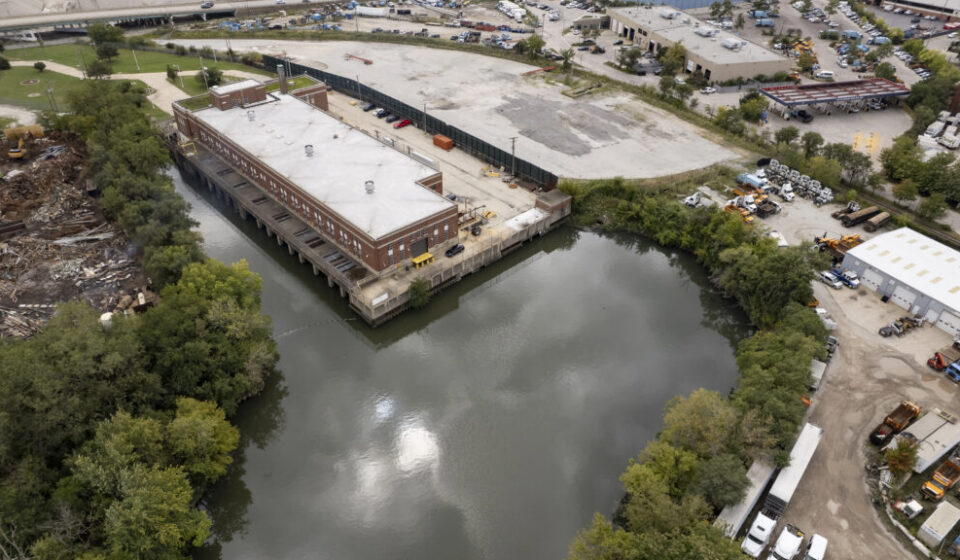
Brett Chase’s reporting for the Chicago Sun-Times describes how intense rainfall is overwhelming Chicago’s combined sewer infrastructure despite decades of investment in its Deep Tunnel system. When capacity is exceeded, untreated sewage is discharged into the river to reduce flooding in homes, transferring risk from one part of the city to another.
For me, this is more than an environmental infrastructure story. It is a lesson in architecture.
When the assumptions become the bottleneck
Every system has a design envelope: the conditions within which it is expected to operate reliably.
In enterprise software, that includes transaction volumes, concurrency, network availability and recovery times. In urban drainage, it includes rainfall intensity, storage capacity and the speed at which accumulated water can be treated.
The danger emerges when those conditions change faster than the architecture.
We often call this a capacity problem. But sometimes it is assumption debt: the accumulated consequences of designing around conditions that no longer hold.
Chicago’s experience does not mean large infrastructure is unnecessary. It means large infrastructure cannot carry the entire adaptation burden.
The enterprise parallel is familiar. Adding servers will not resolve every bottleneck if workloads remain tightly coupled, queues cannot drain fast enough, or failure in one component cascades through the system.
Design for recovery, not just peak capacity
One detail in the reporting deserves particular attention: reservoirs filling repeatedly, with stored water taking time to drain.
A buffer is useful only if it can recover before the next surge.
That principle applies equally to stormwater reservoirs, message queues and customer-support backlogs. Capacity planning must consider not just the largest event, but the interval between events and the rate of recovery.
For CTOs and public infrastructure leaders, the questions should therefore change:
- How quickly does the system return to a safe operating state?
- What happens if another surge arrives before recovery?
- Where does the excess load go-and who bears the consequences?
That last question is especially important. A system may protect one service while imposing unacceptable costs elsewhere.
Resilience should not be measured only at the boundary of the organisation operating it.
Intelligence helps-but cannot replace capacity
Better sensing and forecasting could help operators anticipate pressure, coordinate assets and communicate risks earlier.
But a dashboard cannot absorb floodwater. An AI model cannot create treatment capacity.
The strategic opportunity is to connect operational data with decisions: where to prioritise maintenance, which neighbourhoods need retention measures, when to issue warnings, and how to evaluate investments against changing rainfall scenarios.
For safety-critical operations, predictive systems also need uncertainty estimates, human oversight and reliable fallback procedures.
The goal is not an “AI-powered city.” It is a city that makes better decisions under stress.
A relevant lesson for Northeast India
For flood-prone cities such as Guwahati, the parallel is direct-but the solution cannot simply be imported.
Local terrain, wetlands, drainage connectivity, settlement patterns and maintenance capacity must shape the architecture. Digital mapping and monitoring should support that understanding, not substitute for it.
Distributed interventions-protecting retention areas, restoring drainage pathways and capturing rainfall closer to where it lands-can complement major infrastructure while reducing pressure on central systems.
For technology founders working with government, this also suggests a useful discipline: start with the operational decision that needs improving, not the platform you want to build.
What leaders should take away
Revisit design assumptions regularly. Measure recovery alongside capacity. Combine central investment with distributed risk reduction. And evaluate outcomes in human and ecological terms-not merely infrastructure delivered.
The most resilient architecture is not the one that never encounters its limits.
It is the one designed to recognise those limits, recover safely and adapt before yesterday’s assumptions become tomorrow’s crisis.
About the Author: Sanjeev Sarma is the Founder Director and Chief Software Architect at Webx Technologies. With a core focus on Generative AI integration, Cloud-Native Scalability, and Enterprise Software Architecture, he has spent over two decades driving digital transformation across Northeast India and beyond. Beyond his corporate leadership, Sanjeev is deeply invested in shaping the future of the IT industry. He serves as an Industry Expert on the Board of Studies for Assam Don Bosco University’s School of Technology, advises state technology committees, and actively mentors emerging tech startups at STPI. He brings a unique, dual perspective of high-level enterprise execution and future-ready academic curriculum development.