Beyond the Early-Adopter Curve: The Mainstreaming of Electric Vehicles

Technology Should Outlast the Excitement Around It
We often call technology mature when adoption accelerates. I believe the harder test is whether it remains useful when its users, owners, and operating conditions change.
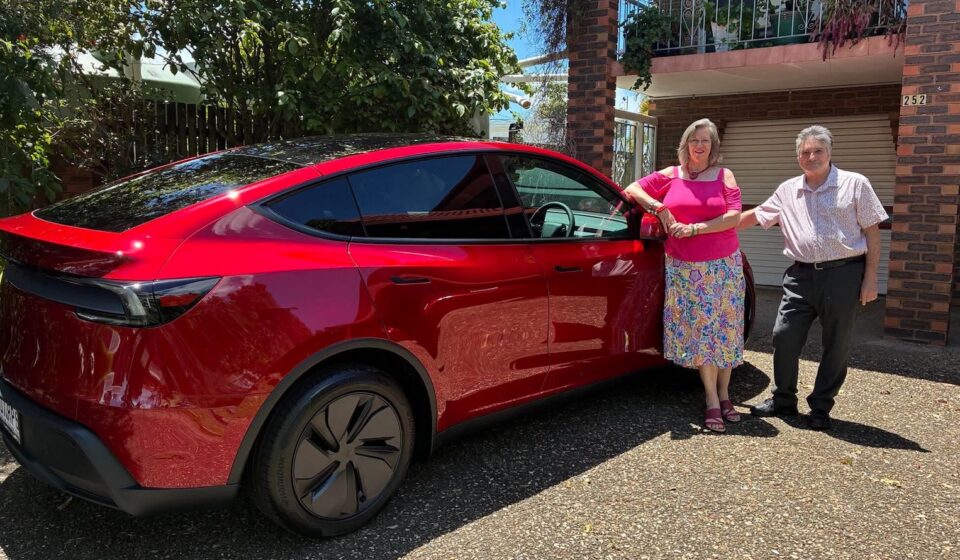
A recent CleanTechnica account describes an Australian couple replacing an electric vehicle that reportedly remained serviceable after more than 180,000 kilometres. The decision was driven not by technological failure, but by changing physical needs; their existing vehicle would pass to their daughter.
For an enterprise architect, this is more than a mobility story. It raises a question we too rarely ask during digital transformation:
Are we designing systems for the purchase decision-or for the entire life that follows?
Four Clocks, One System
Connected products operate on several clocks simultaneously.
Hardware wears out. Software evolves. Commercial entitlements change. Human needs shift.
These clocks rarely move together.
A mechanically sound asset can become frustrating because its software is unsupported. A platform can remain technically capable while becoming inaccessible to an ageing user. An upgrade can improve performance while removing familiar capabilities through a different subscription arrangement.
This is architectural debt expressed as customer friction.
In enterprise environments, we encounter similar problems when reliable equipment depends on an obsolete gateway, or when a cloud migration changes licensing assumptions that business workflows quietly relied upon.
The lesson is not to resist upgrades. It is to separate what must evolve quickly from what must remain dependable.
Stable interfaces, modular components, explicit entitlement policies, and credible support lifecycles make that separation possible.
Compatibility Is a Business Promise
I would argue that compatibility deserves a place alongside availability and security in architecture reviews.
Can an asset move to a second owner without losing essential functionality? Can operational data be exported in a usable format? What happens when a service provider withdraws support?
These are not merely procurement questions. They determine residual value, operational continuity, and the practical cost of switching.
For connected systems, responsible ownership transfer also requires secure identity separation: remove the previous user’s access and personal data without unnecessarily disabling the asset.
That principle applies equally to industrial equipment, building-management systems, and connected medical devices.
Not every feature must remain free forever. But the boundary between essential functionality and optional services should be explicit before deployment-not discovered during renewal or transfer.
Distributed Infrastructure Still Needs Engineering
The account also highlights how routine charging can shift from dedicated destinations to places where vehicles already spend time.
The broader architectural principle is powerful: distribute capability closer to demand.
But decentralisation does not eliminate infrastructure requirements. It changes where responsibility sits.
Home charging depends on suitable electrical capacity, safe installation, parking access, and sufficient dwell time. Public charging remains important for people without those conditions and for longer journeys.
Enterprise edge computing follows a similar logic. Moving processing closer to users can reduce latency and central bottlenecks, but it creates new requirements for monitoring, patching, capacity planning, and recovery.
Distributed does not mean infrastructure-free. It means differently governed infrastructure.
What Leaders Should Design For
For CTOs, founders, and researchers, three priorities follow:
- Evaluate lifecycle economics. Include support, subscriptions, migration, repair, and exit costs-not just acquisition costs.
- Test changing circumstances. Design for accessibility, ownership transfer, intermittent connectivity, and evolving user capabilities.
- Measure continuity. Alongside feature adoption, track how successfully people retain essential workflows through upgrades.
For young entrepreneurs, there is an opportunity here: making existing technology easier to maintain, transfer, and trust can create as much value as introducing something new.
The deepest sign of technological progress may not be that users find it extraordinary.
It may be that they can depend on it through ordinary life-and keep depending on it as life changes.
About the Author: Sanjeev Sarma is the Founder Director and Chief Software Architect at Webx Technologies. With a core focus on Generative AI integration, Cloud-Native Scalability, and Enterprise Software Architecture, he has spent over two decades driving digital transformation across Northeast India and beyond. Beyond his corporate leadership, Sanjeev is deeply invested in shaping the future of the IT industry. He serves as an Industry Expert on the Board of Studies for Assam Don Bosco University’s School of Technology, advises state technology committees, and actively mentors emerging tech startups at STPI. He brings a unique, dual perspective of high-level enterprise execution and future-ready academic curriculum development.