Beyond Charity: How Social Stock Exchange Listings Are Reshaping Impact Funding

Here is a thought leadership article based on the provided input, written from the perspective of Sanjeev Sarma.
The New Architecture of Impact: Why Social Outcomes Need a Data Stack
We often obsess over the “how” of technology-the libraries, the frameworks, the deployment pipelines. But as enterprise architects, we sometimes miss the forest for the trees. The real power of digital transformation isn’t just in building faster apps, but in building verifiable, trustworthy systems that can solve cognitive and social challenges.
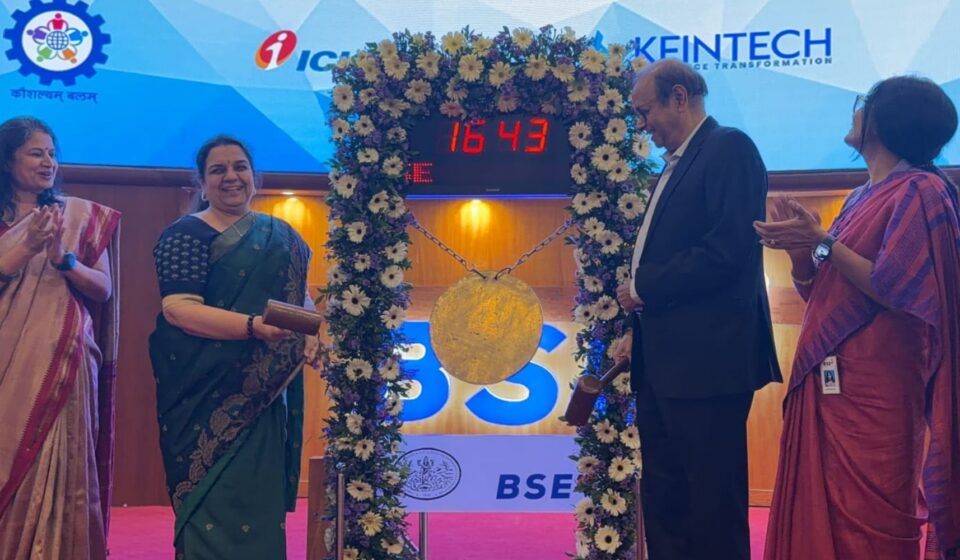
I recently came across a fascinating development in India’s social sector that perfectly illustrates this shift. Lighthouse Communities Foundation, a non-profit focused on youth livelihoods, recently listed on the BSE’s Social Stock Exchange (SSE) through Zero Coupon Zero Principal (ZCZP) instruments. This isn’t just a fundraising milestone; it is a fundamental shift in how we architect the “business of social good.”
The architecture of this funding model is what caught my eye. ZCZP instruments are not traditional investments-there is no interest and no principal return. Investors are essentially buying “outcomes.” The platform enforces a rigorous reporting framework where the organization must disclose exactly how funds are utilized and the progress achieved. This is, in essence, a transition from charity to a data-driven contract for social impact.
The Data-Driven Contract
This move from “trust-based” giving to “verifiable” giving is a significant architectural shift. For a non-profit like Lighthouse, which operates 51 centres and supports over 2.9 lakh youth, the operational complexity is immense. To satisfy the SSE disclosure requirements, they must integrate data from government portals, training partners, and employer systems. This requires a robust, cloud-native backend capable of handling multi-tenant data, ensuring privacy, and reporting in real-time.
The tech principle here is the Commoditization of Accountability. By using a regulated exchange, the foundation is forced to build a data pipeline that makes “impact” measurable. It’s a move away from anecdotal success stories toward structured data points. The 77% retention rate of placed youth becomes a metric to be verified, not just claimed.
This is a strategic implication for CTOs and founders. We are often asked to build systems that are agile. Here, the system must be resilient and immutable. It is the difference between building a prototype and building a banking system. The ZCZP route demands a high level of data integrity, ensuring that the “audit trail” is as strong as the “impact.”
A Lesson for Bharat’s Scale
I see a direct parallel between this and the Digital Public Infrastructure (DPI) we are building in India. The logic of the SSE-transparent, identity-verified, and outcome-based-is the same logic that drives Aadhaar and UPI, applied to social capital.
In Northeast India, where we often struggle with last-mile connectivity and the fragmentation of beneficiary data, this model is a blueprint. If we can architect systems where MSMEs and NGOs in the Northeast can upload their compliance and outcome data to a secure, regulated exchange, we can unlock corporate CSR like never before. The challenge isn’t the willingness to fund; it’s the lack of a verifiable data pipeline.
I have often argued in STPI and tech policy meetings that the next wave of enterprise architecture isn’t about building for the enterprise, but building for the ecosystem. The Lighthouse example is a prime case study of “System Integration for Social Impact.” It shows that the NGO of the future must be as tech-savvy as a fintech startup.
Key Takeaways for Leaders
- Architecture is Infrastructure: Whether you are building a SaaS product or a skilling program, the underlying data integrity is what attracts capital. The SSE listing proves that transparency is a feature, not a bug.
- The “Outcome” Economy: The separation of the funding from the “Return” (Zero Coupon) places the focus entirely on the “Outcome.” This is a shift from revenue-centric to outcome-centric metrics.
- The Regulatory Sandbox: We need to use our future regulatory sandboxes to test these “social” data pipelines in the Northeast, similar to how we test fintech solutions.
The bell-ringing at the BSE was a ceremonial moment, but it was also the “hello world” of a new system. It is a call for us to treat social governance with the same rigor, precision, and architectural excellence we bring to enterprise software.
We are past the era of the “fragile” NGO. The future belongs to the “solid” ones-built on data, architected for trust, and scaled for impact.
About the Author: Sanjeev Sarma is the Founder Director and Chief Software Architect at Webx Technologies. With a core focus on Generative AI integration, Cloud-Native Scalability, and Enterprise Software Architecture, he has spent over two decades driving digital transformation across Northeast India and beyond. Beyond his corporate leadership, Sanjeev is deeply invested in shaping the future of the IT industry. He serves as an Industry Expert on the Board of Studies for Assam Don Bosco University’s School of Technology, advises state technology committees, and actively mentors emerging tech startups at STPI. He brings a unique, dual perspective of high-level enterprise execution and future-ready academic curriculum development.