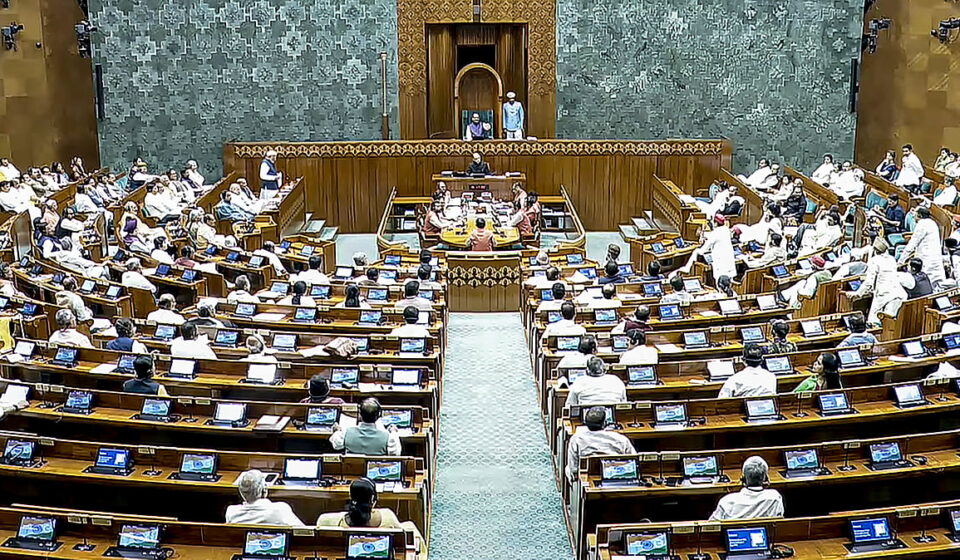

Prime Minister Narendra Modi emphasized the importance of including women in decision-making roles through the recently enacted women’s quota law, describing it as a pivotal moment in India’s development trajectory. Speaking to the Lok Sabha, Modi stated that as India strides into the 21st century, the nation’s progress isn’t just measured by its infrastructure but significantly by the genuine involvement of women in policymaking processes.
Modi expressed that history would look unfavorably upon those who oppose the reservation for women, warning that current detractors of the women’s quota bill could face political repercussions in the future. He assured those present that the implementation of the women’s reservation law would not disadvantage any state, reinforcing the commitment to equitable representation.
Encouraging a bipartisan approach, he urged all Members of Parliament to support the amendments to the women’s reservation law unanimously. “I give you a blank cheque for claiming credit on the passage of the women’s quota bill,” Modi said, particularly appealing for collaboration rather than partisanship. He stressed that the initiative should not be viewed through a political lens, asserting that a united front would ultimately fortify the democracy of the nation rather than serve individual party interests.
In a pointed remark directed at the DMK, who protested in black attire, Modi humorously thanked them for ‘putting a Kala Tika’ on the bills to ward off negativity. He highlighted his personal background, identifying as part of a “most backward community,” and expressed his determination to ensure inclusivity for all groups in society.
This endorsement of the women’s quota is part of a broader discussion around gender equality in India and represents a significant step towards empowering women in political spheres. As Modi articulated, the nation’s future hinges on meaningful participation from women, echoing a sentiment that resonates throughout the country.
By framing the women’s reservation as a paramount issue of national interest rather than a divisive political matter, Modi aims to foster a spirit of cooperation that could lead to more significant representation for women in governance. This legislative move is seen as crucial not only for social justice but also as a means of enhancing the democratic fabric of the nation.
The discourse on women’s representation aligns with ongoing global conversations around gender parity and equity in governance, making it a timely and relevant topic. As the bill moves through legislative processes, its implications for the political landscape of India remain a focal point for both supporters and critics of gender quotas.
Overall, the enactment of the women’s quota law signifies a potential shift in the dynamics of Indian politics, positioning women’s involvement at the forefront of the nation’s developmental agenda.
Original Source: https://www.newindianexpress.com/nation/2026/Apr/16/live-parliament-special-session-2
Category :
Tags:
Publish Date: 2026-04-16 23:58:00