
AI’s Last Mile Isn’t a Model – It’s a Service
We spent two decades architecting enterprise software to get the human out of the loop. The most telling signal from this week’s acquisition of CloudMoyo by HumanTronik is that the next decade of enterprise value lies in putting the human back in.
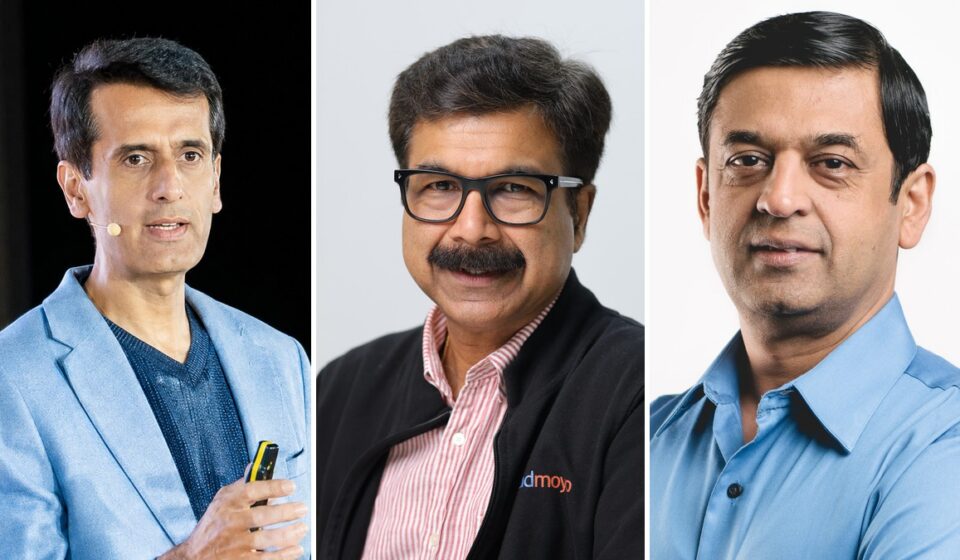
This week, HumanTronik – the AI startup founded by Icertis co-founder Monish Darda and investor Kabir Narang – acquired CloudMoyo, the enterprise services firm spun out of Icertis a decade ago. The combined entity is betting on what CloudMoyo CEO Manish Kedia calls “Service as Software”: AI agents trained on how specific executives think, wrapped in subscriptions with consultants embedded, and priced for outcomes rather than seats.
The Architectural Signal
For decades, we designed enterprise systems for scale and self-service. The hidden assumption was that the software contained the value and that users would adapt. What this deal signals is that the next frontier of AI value lies in the tacit layer – the unwritten heuristics of a procurement director, the negotiation instincts of a sales leader, the decision shortcuts of a CFO. HumanTronik calls these “human language models.” I prefer to call it the codification of organizational intuition into production-grade code.
It’s an elegant concept, but it carries serious architectural risk. If an agent learns from a single executive, it inherits that person’s biases and blind spots. How do you validate such a model? How do you version-control a decision layer that drifts as leadership styles evolve? And when pricing shifts from per-seat fees to outcomes – as the article describes – the vendor absorbs genuine business risk. That forces the architecture to include what most enterprise AI deployments conveniently skip: telemetry, bias evaluation, and an honest line of sight between a model’s action and a customer’s P&L.
This is why the industry is converging on the same thesis. Sequoia’s Julien Bek argues the next trillion-dollar company will be a software firm masquerading as a services company; Anthropic and OpenAI have both launched multi-billion-dollar services ventures. The model also inverts the vendor-client interface. Traditional software ships, then supports. Here, the software becomes a continuous listening loop – the agent’s decisions flow back into the customer’s business systems, the vendor’s roadmap, and the trust equation between them. There is no support ticket to hide behind. That is the most consequential shift for enterprise architecture I have seen in a decade.
A Blueprint for the Indian Services Ecosystem
For India – and I say this as someone watching the services industry from the Northeast – this is both a warning and a roadmap. CloudMoyo’s engineering center in Pune is a textbook example of Indian talent moving from implementation to co-creation. We have climbed from body-shipping to project delivery; the next rung is owning the intellectual property and charging for results, not hours. To the startups I mentor at STPI, the message is simple: don’t build a tool and hope it sells. Embed yourself in your customer’s outcome and make your software inseparable from it.
Takeaways
- Outcome-based pricing is not a commercial tweak; it forces architectural honesty. Build telemetry, governance, and feedback loops from day one.
- Any “human language model” raises the fundamental data question: whose judgment, whose bias, whose blind spots are you encoding?
- The line between software product and services engagement is dissolving. Plan your procurement, partnerships, and vendor risk accordingly.
In a world where AI can generate any answer, the differentiator is judgment. The enterprise that learns to encode and deliver the right human judgment – at scale, with integrity – is the one that will survive.
About the Author: Sanjeev Sarma is the Founder Director and Chief Software Architect at Webx Technologies. With a core focus on Generative AI integration, Cloud-Native Scalability, and Enterprise Software Architecture, he has spent over two decades driving digital transformation across Northeast India and beyond. Beyond his corporate leadership, Sanjeev is deeply invested in shaping the future of the IT industry. He serves as an Industry Expert on the Board of Studies for Assam Don Bosco University’s School of Technology, advises state technology committees, and actively mentors emerging tech startups at STPI. He brings a unique, dual perspective of high-level enterprise execution and future-ready academic curriculum development.