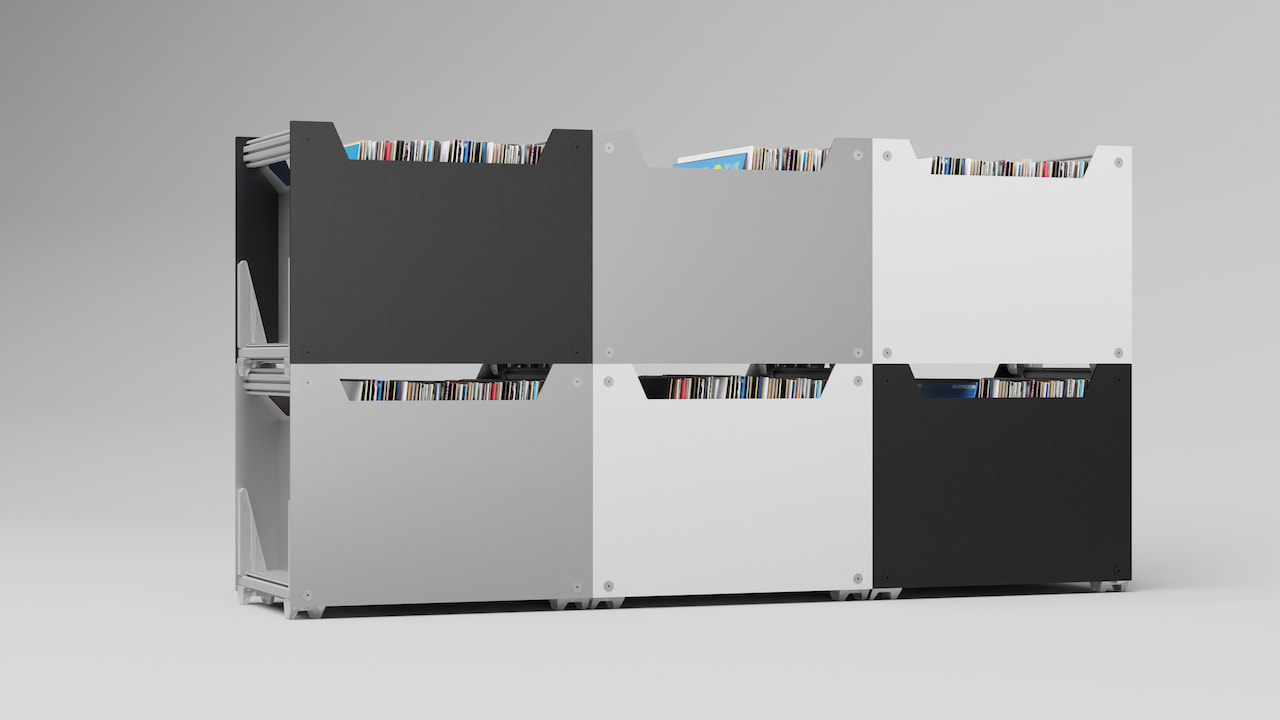

We live in an era that celebrates the ephemeral – streaming playlists, disposable apps, and licensing models that can disappear with a terms-of-service update. So when a product doubles down on the tangible – on ownership, ergonomics and longevity – it’s worth studying not because it’s retro, but because it exposes design and business principles too often neglected in tech.
Context: Toneoptic’s CAN is a modular, stackable crate system for vinyl collectors that emphasizes real-world usability: easy handling, optional rolling dollies, open access from both sides, honest materials (recycled aluminum, hardwoods) and local assembly in Los Angeles. It’s priced as a premium, intentional product aimed at people who treat physical media as an asset, not a subscription.
What this tells technologists and product leaders
1. Ownership versus access is a design axis, not a fad
– The CAN isn’t just storage; it’s a promise that the object you buy remains yours. In software terms, this mirrors the ongoing debate between perpetual licenses, self-hosted systems and cloud subscriptions. Users pay not only for functionality but for continuity and control. Products (digital or physical) that reduce the risk of sudden loss of access command a premium from customers who care about long-term value.
2. Solve the real ergonomic problem, not the perceived one
– Most solutions in the vinyl space were improvisations – milk crates, boxes, or shelf space. The CAN attacks the real pain: heavy lifting, awkward access, and poor display. This is the core product-design lesson for any CTO: shipping features that look good on a spec sheet is not the same as removing daily friction for the user. Prioritize human workflows and you’ll unlock willingness-to-pay.
3. Modularity scales both use and business
– Stackable, interoperable units simplify inventory, logistics and user customization. For product teams, modular design means shorter release cycles, easier maintenance, and a clearer upgrade path. For the business, it means repeat purchases (add-ons, accessories) and lower support complexity compared with bespoke one-off solutions.
4. Optional accessories are low-friction monetization
– The eze dolly illustrates a subtle commercial strategy: make the base product capable, then introduce inexpensive accessories that remove specific, high-pain points. This “core + peripherals” model converts users into repeat customers without forcing a higher entry price.
5. Materials and provenance matter – especially for premium segments
– Recycled aluminum, hardwood choices and assembly in the U.S. are not just marketing copy; they are signals about durability, repairability and supply-chain trust. That trust is increasingly valuable as consumers and enterprises weigh longevity and total cost of ownership over initial price.
6. Trade-offs are conscious – and communicable
– Choosing local assembly raises costs but reduces lead-time and supply-chain opacity. Choosing premium materials limits scale but preserves brand integrity. These are trade-offs any founder or architect must make deliberately and then communicate clearly to customers and partners.
A subtle India parallel (when it matters)
– For Indian founders and public-sector architects, the CAN’s emphasis on local assembly and durable materials resonates with “make-local” and lifecycle-first thinking. Whether you’re building hardware, a government digital service, or an enterprise platform, designing for maintainability and local supply resilience reduces long-term operational risk – a lesson especially pertinent for MSMEs and regional manufacturing ecosystems in Northeast India.
Actionable takeaways for CTOs and founders
– Start with the human friction; prototype to remove it before adding features.
– Design modularly: smaller, interoperable components speed iteration and monetize add-ons.
– Think lifecycle cost, not just unit price; provenance and repairability create trust.
– Use optional accessories to broaden revenue without raising entry barriers.
– Make trade-offs explicit to customers – clarity builds premium positioning.
Closing thought
– Whether it’s a vinyl crate or an enterprise platform, products that respect ownership, reduce daily friction and are honest about their trade-offs are the ones that build durable customer relationships – and, ultimately, sustainable businesses.
About the Author
Sanjeev Sarma is the Founder Director of Webx Technologies Private Limited, a leading Technology Consulting firm with over two decades of experience. A seasoned technology strategist and Chief Software Architect, he specializes in Enterprise Software Architecture, Cloud-Native Applications, AI-Driven Platforms, and Mobile-First Solutions. Recognized as a “Technology Hero” by Microsoft for his pioneering work in e-Governance, Sanjeev actively advises state and central technology committees, including the Advisory Board for Software Technology Parks of India (STPI) across multiple Northeast Indian states. He is also the Managing Editor for Mahabahu.com, an international journal. Passionate about fostering innovation, he actively mentors aspiring entrepreneurs and leads transformative digital solutions for enterprises and government sectors from his base in Northeast India.