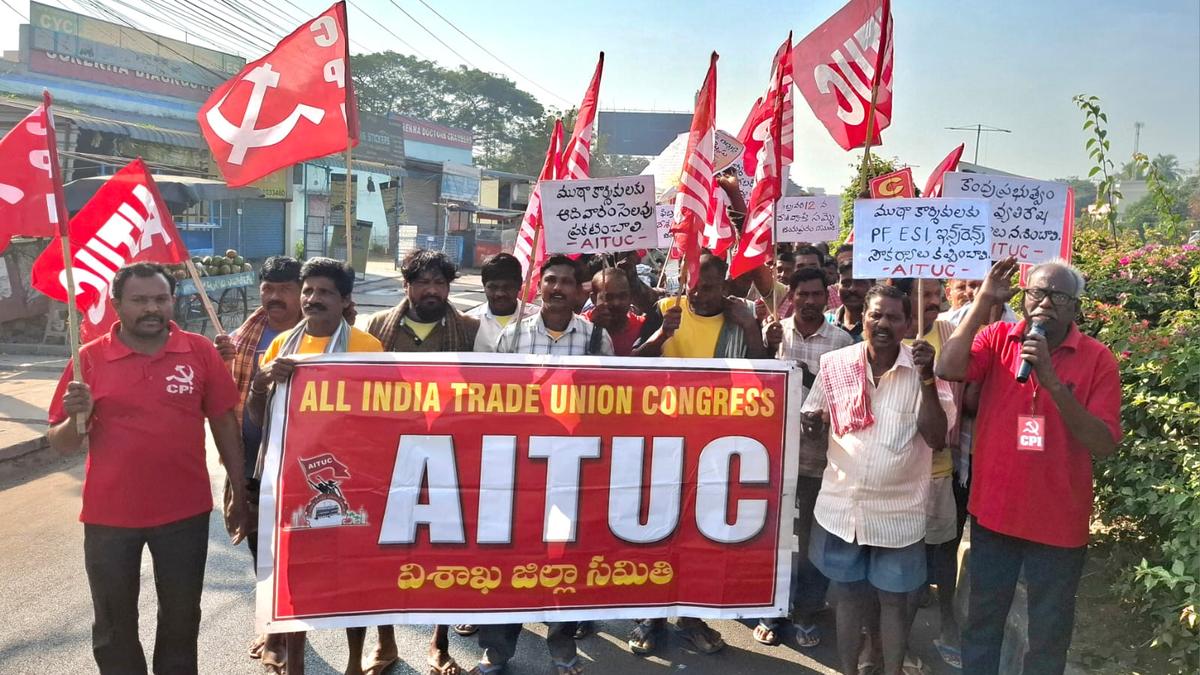

In Visakhapatnam, leaders and activists from the Communist Party of India (CPI) and the All India Trade Union Congress (AITUC) took to the streets on February 12, 2026, as part of a nationwide strike organized by central trade unions. The large protest march began at the Ambedkar Statue near the GVMC Zonal Office, progressing through key local areas like the Market Centre and Madhurawada.
This rally was a direct response to several critical issues, including opposition to the newly implemented four labor codes, cuts to funding for the Mahatma Gandhi National Rural Employment Guarantee Scheme (MGNREGS), and concerns surrounding the Electricity Amendment Bill of 2025. M. Paidiraju, a member of the CPI State Council and AITUC leader, expressed strong criticism of the central government’s policies, stating that the measures were detrimental to the working class.
The protesters articulated a series of demands focused on labor rights and social security. Among these were calls for the regularization of all contract and outsourcing positions, as well as workers in the unorganized sector. They insisted on a minimum wage of ₹26,000 per month, alongside provisions for Employees’ State Insurance (ESI), Provident Fund (PF), and gratuity benefits.
Additionally, the protesters urged the abolition of the contract system, advocating that salaries should be paid directly to workers. There was a strong emphasis on the need to fully restore the MGNREGS and prevent any further budget cuts that could affect rural employment. The rallying cry extended to the agricultural sector as well, with demands for increased support prices for all agricultural produce and better insurance measures for farmers.
The marchers also called for the reinstatement of the Old Pension Scheme (OPS), highlighting the plight of medical contract workers, whom they wish to see transitioned into permanent government employment. A key point of contention was the ongoing privatization efforts, particularly concerning Public Sector Undertakings (PSUs) such as the Vizag Steel Plant. Protesters demanded an immediate halt to the sale of shares and the privatization of these vital services.
The strike attracted significant attention, with participants eager to make their voices heard on issues that affect not just their livelihoods but also the broader socio-economic framework of the region. This demonstration is part of a larger wave of labor activism reflecting mounting frustrations over government policies that many perceive as increasingly unfavorable to workers’ rights.
As the All-India Strike unfolds, it highlights the ongoing struggle of organized labor in India, advocating for justice, improved working conditions, and a commitment from the government to safeguard the interests of workers across various sectors. The movement seeks not just policy changes, but a more equitable future for all members of society.
This event not only showcased the collective power of unions in the face of governmental challenges but also underscored a crucial point: the stakes are too high for workers to remain silent as their rights and livelihoods are negotiated and redefined. The protests in Visakhapatnam are a reflection of a national sentiment growing stronger each day, as workers unite to fight for their rights and demand meaningful change.
Original Source: https://www.thehindu.com/news/cities/Visakhapatnam/protest-in-visakhapatnam-against-central-governments-anti-labour-policies/article70622659.ece
Category : Visakhapatnam
Tags:
Publish Date: 2026-02-12 11:23:00