Empowering Discovery: India’s Aditya-L1 Joins Global Fight Against Solar Storms – A Landmark Achievement by ISRO!

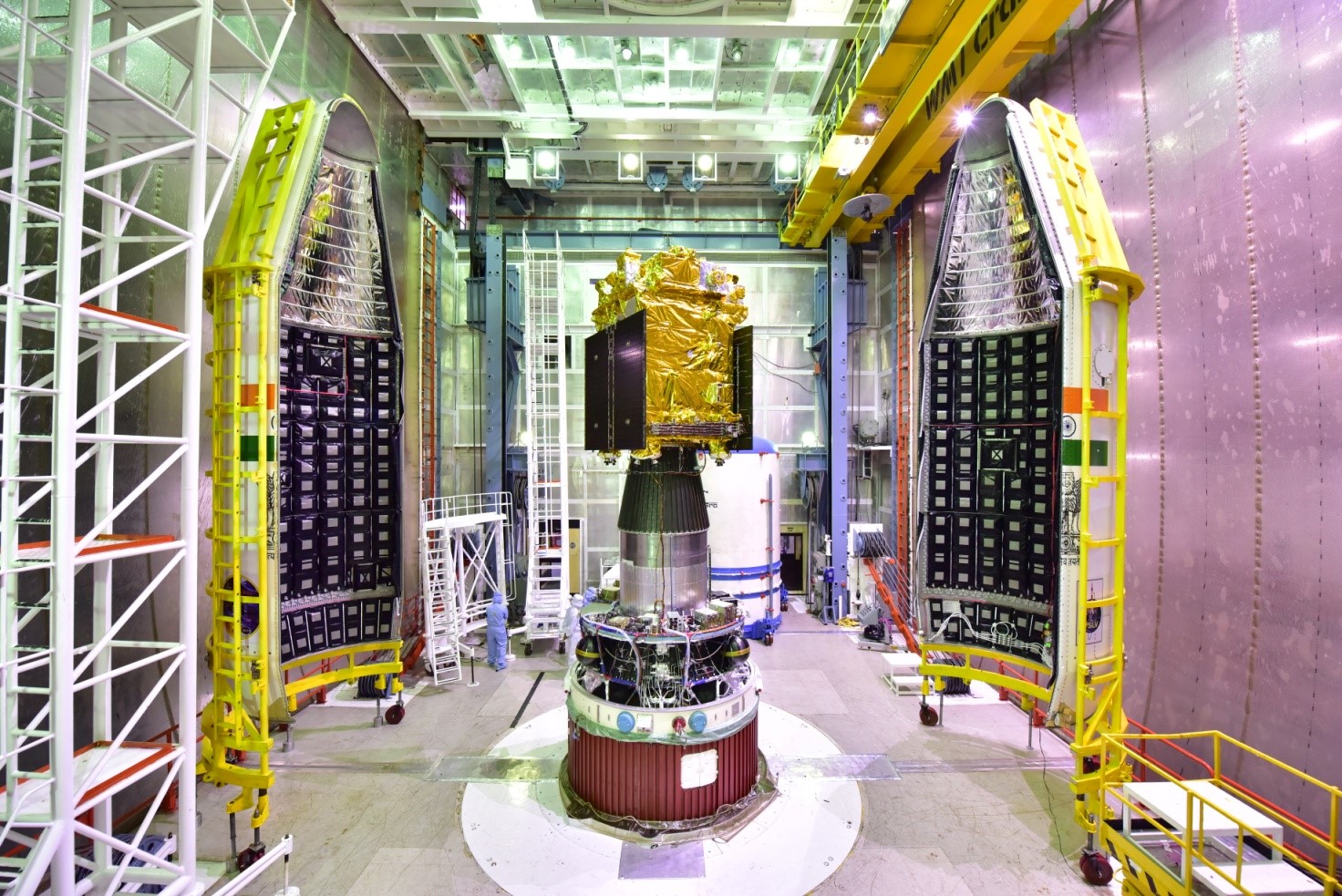
Bengaluru: India’s inaugural solar observatory, Aditya-L1, has played a pivotal role in unraveling the unusual behavior of the strongest solar storm in over two decades that hit Earth in May 2024. The Indian Space Research Organisation (ISRO) announced that this advanced spacecraft collaborated with six U.S. satellites, including NASA’s Wind, to provide precise magnetic field measurements that helped researchers investigate this rare event from multiple perspectives in space.
Known as “Gannon’s storm,” this formidable solar storm was triggered by a series of colossal explosions on the Sun, referred to as coronal mass ejections (CMEs). These CMEs, which are massive outflows of hot gas and magnetic energy from the Sun, can disrupt Earth’s magnetic shield upon impact, potentially leading to serious ramifications for satellites, communication systems, GPS, and power grids, according to ISRO.
A team of Indian scientists recently published a groundbreaking study in the Astrophysical Journal Letters, explaining the peculiar characteristics of the solar storm. They discovered that during the May 2024 event, the Sun’s magnetic fields-often likened to twisted ropes-were breaking and reforming within the storm itself. This deviation from typical solar behavior marked a significant finding, highlighting the storm’s complexity.
ISRO reported that while a standard CME usually carries a twisted “magnetic rope” that smoothly interacts with Earth’s magnetic shield, in this instance, two CMEs collided in space. This collision caused their magnetic fields to intertwine so tightly that the field lines within one CME snapped and reconfigured through a phenomenon known as magnetic reconnection. This sudden alteration in magnetic fields led to a more intense impact than scientists had anticipated, with satellites recording a sudden acceleration of particles, confirming the occurrence of magnetic reconnection.
“Thanks to Aditya-L1’s precise magnetic field measurements, researchers were able to study the same extreme solar storm from multiple angles in space,” ISRO remarked. The agency emphasized that the magnetic reconnection region they mapped spanned an astonishing 1.3 million kilometers-nearly 100 times the size of Earth. This unprecedented observation of a giant magnetic breakup and rejoining within a CME is a significant revelation in understanding solar storms.
This discovery is crucial as it greatly enhances our comprehension of how solar storms evolve while traveling from the Sun to Earth. It demonstrates India’s escalating prominence in global space science, as the findings from Aditya-L1 empower the nation to better understand and predict powerful solar storms.
Aditya-L1, launched in September 2023, is India’s first space-based mission dedicated to solar studies. Its contributions not only promote scientific inquiry but also position India as a leader in space research and solar science, enhancing its capacity to navigate future solar events.
With this unfolding saga of solar phenomena, Brennans are now better equipped to comprehend the complex dynamics of solar storms, reaffirming the significance of ongoing space exploration and research.
Original Source: https://www.deccanchronicle.com/technology/indias-aditya-l1-joins-global-effort-in-landmark-solar-storm-study-isro-1922804
Category :
Tags:
Publish Date: 2025-12-10 00:11:00