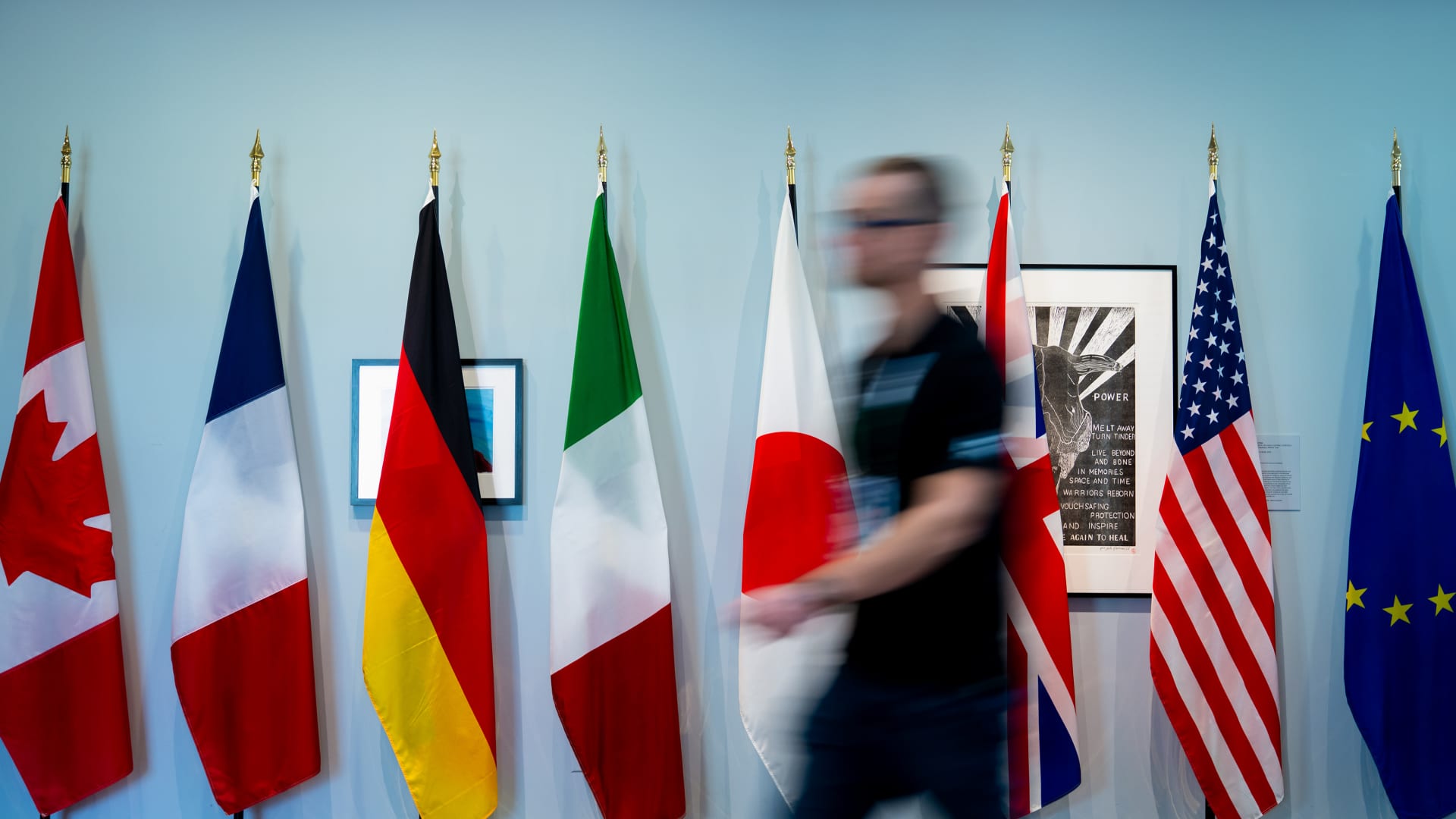

Leaders from the world’s leading economies are gathering in the stunning Canadian Rockies for the Group of Seven (G-7) Leaders’ Summit, set to commence on Sunday, June 14, 2025. This year’s summit is shadowed by escalating tensions in the Middle East and the ongoing trade conflicts initiated by U.S. President Donald Trump, signaling a period of significant uncertainty and potential discord among global powers.
Amidst the rising tensions stemming from Israel’s military actions against Iran and Tehran’s retaliatory strikes, British Prime Minister Keir Starmer underscored the urgent need for de-escalation during a flight to Canada. He noted his discussions with Trump and other world leaders, emphasizing the importance of addressing Iran’s nuclear ambitions while supporting Israel’s right to defend itself. “We do recognize Israel’s right to self-defense, but I am absolutely clear that this needs to de-escalate,” Starmer stated, anticipating “intense discussions” during the summit.
In a notable departure from tradition, Canadian Prime Minister Mark Carney has opted not to issue a joint communique following the summit. This change reflects apprehensions among delegates about Trump’s approach, which often favors bilateral discussions over unified resolutions. The dynamic surrounding Trump is particularly complex; his unpredictable nature and controversial statements pose unique challenges for other leaders seeking to engage him diplomatically.
French President Emmanuel Macron is en route to Canada, making a strategic stop in Greenland-a move perceived as a symbolic gesture amid ongoing tensions. Macron’s prior relationship with Trump adds a layer of complexity to the proceedings, as he will likely urge the U.S. President to moderate his more aggressive stances, especially regarding tariffs on European imports and security commitments concerning Ukraine.
As the summit approaches, Peter Boehm, a veteran G7 advisor, predicts a shift in focus towards foreign policy issues, particularly the conflict in Ukraine. He noted that discussions may be shaped significantly by the current geopolitical climate, hinting at a possible statement from leaders addressing these urgent matters.
Notably, several non-G7 leaders have also been invited to the summit, including heads of state from India, Ukraine, Brazil, South Africa, South Korea, Australia, Mexico, and the UAE. Their participation underscores the global stakes involved, as many seek to avoid the imposition of new tariffs that would complicate international trade.
While bilateral meetings will likely dominate the agenda, Trump’s interactions with global leaders can be fraught with tension. Former Prime Minister Jean Chrétien advised that if Trump behaves provocatively, leaders should remain composed. “He tends to be a bully,” Chrétien cautioned, suggesting that ignoring erratic behavior might be the best strategy for fostering productive discussions.
Starmer has been careful in his dealings with Trump, even as tensions simmer regarding Trump’s previously made remarks about making Canada the 51st U.S. state. Although criticized for his cautious approach, Starmer reassured that Canada is an independent and sovereign nation, stressing the importance of the U.K.’s relationship with its Commonwealth ally.
The war in Ukraine will remain a significant topic, with President Volodymyr Zelenskyy attending the summit and anticipated to meet with Trump, marking a significant opportunity for discourse following their previous contentious encounter.
As the G-7 Summit unfolds, the actions and decisions of its members will carry substantial implications for the international community, at a time when collaboration and unity could foster peace in an increasingly volatile world.
Original Source: https://www.cnbc.com/2025/06/15/g7-leaders-gather-in-canada-for-summit-overshadowed-by-crisis.html
Category :
Tags:
Publish Date: 2025-06-15 13:56:00