
When the Backup Plan Becomes the Architecture
The most expensive part of a legacy system isn’t always running it. Sometimes it’s discovering, on the day you planned to switch it off, that you still depend on it.
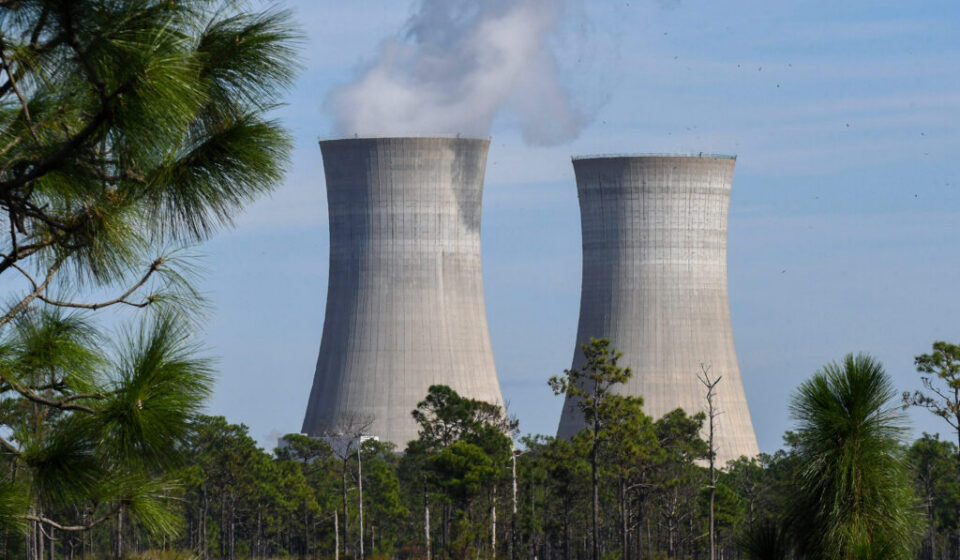
Federal emergency orders kept a coal-fired unit at Orlando’s Stanton Energy Center operating beyond its planned shutdown. The Environmental Defense Fund estimates that the extensions cost ratepayers $25.6 million; the utility disputes the assumptions behind the estimate. The U.S. Department of Energy cited reliability concerns, including a cold snap that strained the utility’s resources and anticipated demand from data centres.
The dispute raises a question every architect should recognise: What evidence tells us that a system is ready to retire?
A retirement date is not an exit strategy
In software, it’s tempting to declare a migration complete when the new platform goes live. But the old system may still handle month-end reconciliation, serve a customer whose integration never moved, or provide the only recovery path when the new platform fails. The replacement works. The dependency remains.
The grid has a similar distinction. Adding enough capacity on paper does not establish that the replacement portfolio can deliver power where and when it is needed. A battery can help cover an evening peak, but its contribution depends on how long the shortfall lasts and whether it can recharge before the next one. Equally, keeping an older plant available does not prove it will perform when called upon. Both options need to be assessed against the same conditions.
I would treat retirement as a readiness decision, with a date attached-not a date with a readiness review attached. Define what the replacement must deliver under plausible stress, test it, and make the remaining gaps visible before committing to the cutover.
AI capacity planning starts at the power connection
For CTOs planning large AI deployments, the Florida case is a reminder that a cloud capacity forecast is also, somewhere, a power forecast. But not every megawatt of projected demand has the same operational implications. Interactive inference may need to stay online around the clock. Some training runs and batch workloads can move across time or regions, provided latency, data residency and operational constraints allow it.
That flexibility is an architectural choice, not something to discover after signing a capacity contract. Separate workloads that must run immediately from those that can wait. Model how much demand can actually shift during a constrained period. And distinguish committed capacity from speculative growth before using either to justify infrastructure that customers may pay for over decades.
Put an exit condition on the exception
An emergency extension can be a prudent bridge. Repeated renewals should prompt a harder question: what has changed since the first one? If the same gap remains, the organisation needs to name it, assign an owner and fund a way to close it. Otherwise, a temporary decision quietly becomes a long-term investment.
Three questions belong in any retirement review, whether the asset is a power plant or an enterprise platform:
- What would make us postpone retirement? Agree on measurable thresholds before the deadline, not under pressure on the day.
- Who pays for the fallback? Compare the cost of retaining it with credible alternatives, and show who bears the cost of getting the decision wrong.
- What ends the exception? Name the capability that must be in place, who will deliver it, and how readiness will be verified.
Good architecture gives us a fallback when something goes wrong. Better governance makes sure we know when we no longer need it.
About the Author: Sanjeev Sarma is the Founder Director and Chief Software Architect at Webx Technologies. With a core focus on Generative AI integration, Cloud-Native Scalability, and Enterprise Software Architecture, he has spent over two decades driving digital transformation across Northeast India and beyond. Beyond his corporate leadership, Sanjeev is deeply invested in shaping the future of the IT industry. He serves as an Industry Expert on the Board of Studies for Assam Don Bosco University’s School of Technology, advises state technology committees, and actively mentors emerging tech startups at STPI. He brings a unique, dual perspective of high-level enterprise execution and future-ready academic curriculum development.