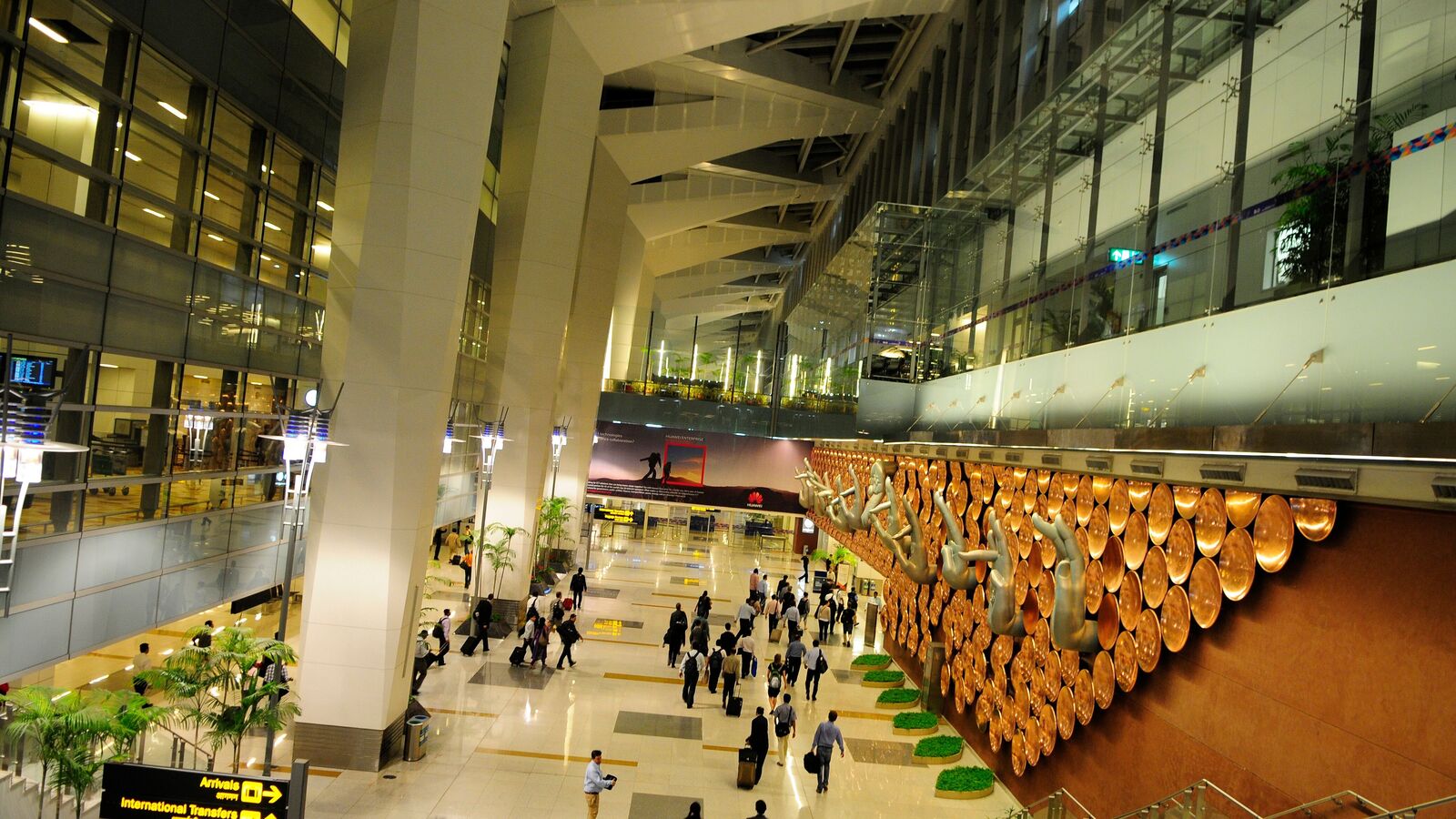

Delhi International Airport, managed by the GMR Group, is facing a projected slowdown in passenger growth due to looming capacity constraints and the rise of new competition. As the airport approaches its saturation point, the upcoming Noida International Airport in Jewar, Uttar Pradesh, is increasingly poised to attract some of the traffic. This shift is anticipated as Noida International Airport offers a strategic location advantage, particularly for travelers from eastern Uttar Pradesh and parts of Haryana who might enjoy shorter travel times compared to reaching Delhi.
DIAL’s recent consultation paper indicates that as Delhi’s capacity hits its limits, there will be a natural spillover to Noida International Airport. Within the context of these constraints, Delhi International expects domestic passenger growth to hover around 5.26% in FY26 and 6.72% in FY27. However, this growth is expected to decelerate, dropping to 5.74% in FY28 and further to 4.63% in FY29. The international segment reflects a similar pattern, with a 4.84% increase anticipated in FY26, rising to 5.37% in the following year before slowing to 4.70% in FY28 and down to 3.99% in FY29.
Mark Martin, founder and CEO of Martin Consulting, notes that while increasing capacity is critical, it can only be achieved by constructing a new Terminal 4, a potential but unconfirmed solution. Meanwhile, the situation contrasts with Mumbai’s Chhatrapati Shivaji Maharaj International Airport, operated by the Adani Group. Mumbai is set to experience a temporary decline in passenger numbers due to renovations at Terminal 1, with a 12.93% dip forecast for FY26 and a 6.30% decline in FY27.
Despite this temporary dip, Mumbai is less worried about competition from the future Navi Mumbai International Airport, which will also be under the Adani Group’s management. This familial relationship between the two airports diminishes competition worries, with Mumbai expected to rebound strongly from FY28 onwards. Projections indicate a 21.36% increase in domestic traffic and a 1.04% rise in FY29, with international travelers increasing 4.09% in FY28 and 14.01% in FY29. By FY30, Mumbai’s capacity is projected to reach 65 million passengers annually, while Navi Mumbai is anticipated to handle about half that volume.
As new players enter the NCR and Mumbai regions, strong demand is expected to buoy all nearby airports, ensuring that spillover traffic from bustling metro areas like these will be significant. Manish Chheda, managing partner and India CEO at YCP Auctus, emphasizes that while new infrastructure could lead to a redistribution of passengers, the overall effect will be complementary rather than directly competitive.
This anticipated distribution underscores the importance of strategic infrastructure investments and planning by Delhi and Mumbai airports to sustain and grow their market shares amidst evolving regional dynamics.
Original Source: https://www.livemint.com/news/delhi-international-airport-gmr-group-mumbai-airport-adani-group-noida-airport-jewar-domestic-passenger-traffic-11742370458254.html
Category :
Tags:
Publish Date: 2025-03-19 15:20:00