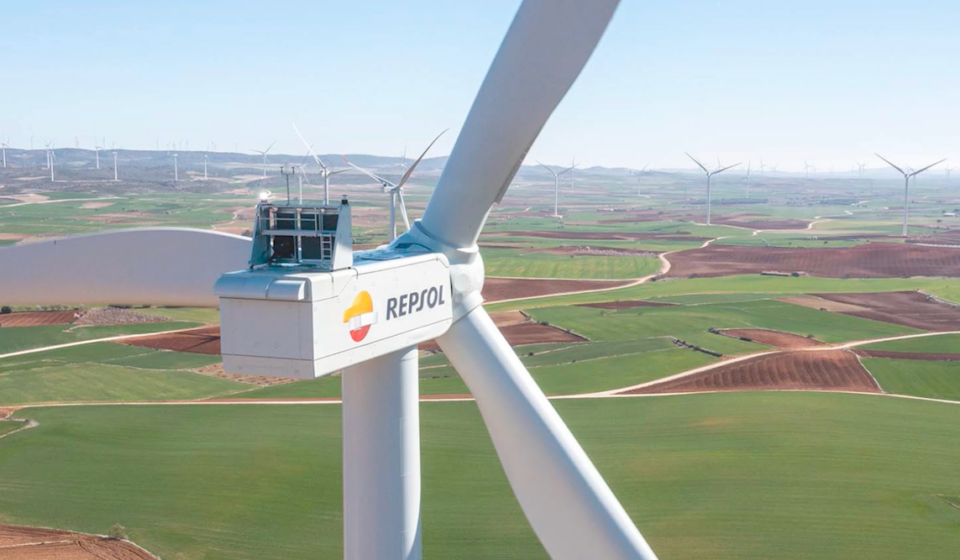
The Policy-Resilient Grid: Why Onshore Wind Endures Federal Headwinds

When Policy Becomes the Bottleneck: What a Wind Farm Teaches Us About Resilient Systems
A $1.5 billion project can be stalled by a single unsigned form. That is not an engineering failure. It is an architectural one.
The Signal
A 500-megawatt wind project in Peoria County, Illinois, has cleared a key county approval, even though the federal approval pipeline has been disrupted. Since August 2025, the Department of Defense has reportedly stopped countersigning routine mitigation agreements. That left dozens of onshore projects in limbo until a federal court ordered the process to resume. The developer kept filing paperwork anyway, and the project advanced through local governance.
A Single Point of Failure, Dressed as Process
I look at this story as a systems architect, not an energy analyst. The wind industry’s approval workflow has the same weakness I see in poorly designed enterprise platforms: a synchronous dependency on a single, centralized node.
The process is simple on paper. A developer files with one agency, which refers the project to a second, which negotiates mitigation. Nothing in the design anticipated that the second node might simply stop responding. In distributed systems terms, there was no timeout, no fallback, and no circuit breaker. Capital worth billions waited on one blocked queue.
Engineers know this pattern well. We call it tight coupling, and we pay for it every time a “temporary” dependency becomes a permanent chokepoint.
What the Developer Got Right
The developer’s behavior is the more instructive part. It started filing one week after the court order, before the downstream agency had shown any real willingness to move. It did not wait for certainty. It positioned itself to be ready when the gate reopened.
That is optionality-driven architecture. Good teams do this with technical debt, cloud vendor risk, and regulatory change. They keep the pipeline warm and the documentation current, and they build relationships with the layers of governance they can actually influence. Here, that meant local boards, unions, and school districts, which are the layers where legitimacy is built.
The local vote is a lesson in stakeholder design too. A board member weighed the people in the room against the thousands who were not, and cited schools and household utility bills. Every architect should understand that argument. Your loudest users are not your whole user base. Good system design serves the silent majority, whose needs show up in aggregate outcomes rather than in feedback forms.
The Compliance Tax on Long Timelines
Approval is not completion. The project still needs construction permits and could take years to break ground. It also carries 36 conditions governing construction and operations.
Enterprises know this reality. Every regulated build, from fintech to healthcare to e-governance, has its own conditions, audits, and phased approvals. Compliance cost is not a one-time gate. It is a continuous operating expense that favors well-capitalized players. A large developer can absorb five years of uncertainty. A small one usually cannot.
The Bharat Lens
India’s digital and energy transitions face a similar tension. Northeast India has significant renewable potential, especially hydro and solar, but approvals pass through many layers of land, forest, environmental, and grid authorities. Digital Public Infrastructure offers a way forward. Transparent, API-driven, time-bound approval workflows, with deemed-approval logic or escalation triggers when a node stalls, would take much of the arbitrariness out of the process. If we can build UPI for payments, we can build single-window systems with SLAs that the system itself enforces.
Takeaways
- Audit your dependency graph. Identify any single approver, vendor, or API whose silence could halt your business.
- Design for graceful degradation. Build timeouts, escalation paths, and alternates into workflows, whether technical or institutional.
- Prepare before certainty arrives. Readiness is a competitive advantage when gates reopen.
- Invest in legitimacy at the local layer. Adoption is won where users actually live.
- Budget for compliance as a recurring cost, not a launch-day checkbox.
Closing Thought
Infrastructure, physical or digital, is rarely defeated by a lack of ambition. It is slowed by fragile processes, and the builders who last are the ones who design around that fragility.
About the Author: Sanjeev Sarma is the Founder Director and Chief Software Architect at Webx Technologies. With a core focus on Generative AI integration, Cloud-Native Scalability, and Enterprise Software Architecture, he has spent over two decades driving digital transformation across Northeast India and beyond. Beyond his corporate leadership, Sanjeev is deeply invested in shaping the future of the IT industry. He serves as an Industry Expert on the Board of Studies for Assam Don Bosco University’s School of Technology, advises state technology committees, and actively mentors emerging tech startups at STPI. He brings a unique, dual perspective of high-level enterprise execution and future-ready academic curriculum development.