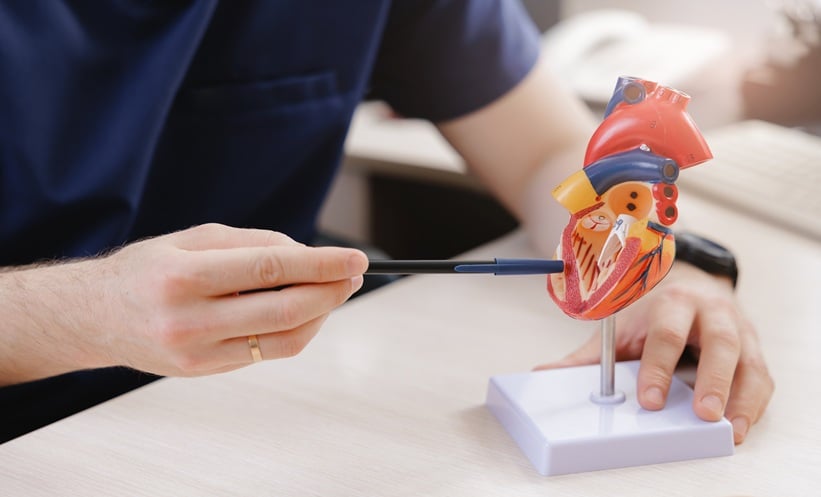

Infective endocarditis — a potentially life-threatening infection of the heart valve — was significantly less frequent after transcatheter aortic valve replacement (TAVR) than after surgical valve replacement, according to large-scale US data presented at IDWeek 2026. Among more than 373,000 aortic valve procedures performed between 2018 and 2025, the risk of the infection was 51% lower with the catheter-based approach, adding robust new evidence to a comparison that has previously produced conflicting results.
Researchers conducted a retrospective study using a US electronic health record database, identifying 373,946 aortic valve replacements performed between January 1, 2018, and December 31, 2025. Of these, 262,465 were transcatheter aortic valve replacements and 111,481 were surgical aortic valve replacements (SAVR). Cases of endocarditis were captured using ICD-10 codes, with noninfectious causes excluded, and were classified as early — occurring within 3 months of the procedure — or late, developing after 3 months.
Overall, 3.44% of patients developed infective endocarditis. The incidence was 2.63% after TAVR compared with 5.37% after SAVR, a statistically significant difference (p<0.001). Early infective endocarditis trended upward over the study period in both groups (p=0.027 for TAVR; p=0.028 for SAVR), while late infections rose initially in both cohorts before falling sharply after 2023, likely reflecting shorter available follow-up. The pathogen profile also differed between the two approaches. Staphylococcus aureus was the most common bloodstream pathogen in both groups but occurred less often after TAVR than after surgery (29.7% vs 36.1%; odds ratio, 0.75; 95% confidence interval, 0.68 to 0.82). Enterococcus faecalis was the second most frequent organism, identified in 20.3% and 15.7% of cases, respectively. Women accounted for a notably larger share of infections after TAVR, making up 41.3% of cases compared with 28.0% after SAVR (p<0.001). Striking differences in patient characteristics emerged as well. TAVR recipients were considerably older, with 40.3% aged 80 years or older versus just 5.9% of surgical patients, and they were also less socioeconomically vulnerable. Among patients who did not develop endocarditis, 12-month mortality was higher after TAVR than after SAVR (7.15% vs 5.05%; p<0.001). Once infective endocarditis developed, however, mortality did not differ significantly between the two groups (7.98% vs 8.71%; p=0.134). The researchers suggest that the older age of TAVR recipients may explain the higher 1-year mortality observed in that group. Importantly, the lower rate of infective endocarditis after transcatheter replacement does not eliminate the risk entirely. The findings, reported by Estrada and colleagues using the Epic Cosmos database and presented at IDWeek, held October 21-24, 2026, underscore the importance of effective infection prevention measures after aortic valve replacement — whichever approach is used. Original Source: https://www.emjreviews.com/microbiology-infectious-diseases/news/infective-endocarditis-after-tavr-is-less-common-than-after-savr/ Category: Tags: Publish Date: 2026-10-27 20:23:00