The Clean Energy Divide: China’s Industrial Surge, America’s Strategic Retreat

Energy Transition Is an Architecture Problem, Not a Subsidy Contest
We often treat the energy transition as a race for the biggest capacity target, the cheapest subsidy, or the newest factory announcement. That framing misses the decisive variable: institutional throughput. The winning economy will be the one that consistently converts policy into permitting, transmission, manufacturing, skills, and bankable projects-not necessarily the one making the most ambitious announcements.
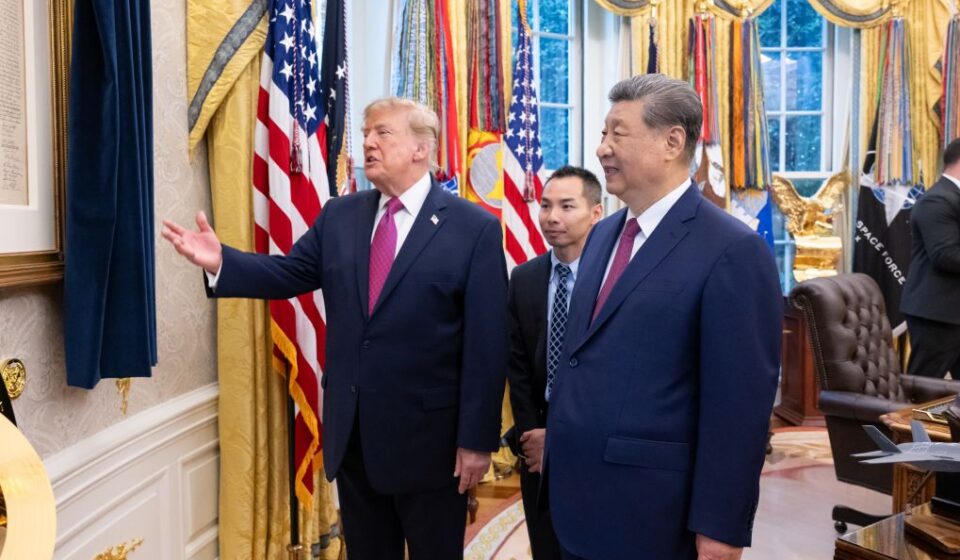
A recent analysis of U.S.-China strategic competition argues that senior-level engagement prioritized critical minerals, trade, AI, semiconductors, and security rather than joint climate goals. It contrasts China’s coordinated renewable build-out with U.S. policy reversals that are making capital, grid connections, and domestic manufacturing harder to sustain.
The Real Moat Is an Ecosystem
China’s strength, as presented, extends beyond cheaper panels or turbines; it encompasses the ability to connect demand forecasts, state-backed capital, manufacturing scale, ultra-high-voltage transmission, and local supply chains. The 2026–2030 roadmap described in the analysis-spanning solar, onshore and offshore wind, and geothermal-illustrates this systems approach.
For architects, generation is only one layer. A renewable system becomes economically useful when connected to adequate transmission, storage, forecasting, demand response, flexible generation, and market mechanisms. Without them, installed capacity can become stranded or unreliable. This is the energy equivalent of modernizing a legacy platform while leaving data ownership, integration patterns, operating processes, and change governance untouched.
AI can improve forecasting, dispatch, equipment maintenance, and energy trading. However, it cannot substitute for transmission lines, transformers, storage, or firm capacity. Intelligence at the control layer is valuable, yet it cannot compensate for an inadequate physical foundation.
The U.S. weakness, meanwhile, is less a lack of invention and more a lack of continuity. It has exceptional research institutions, deep capital markets, advanced software capabilities, and specialized manufacturers. My concern is whether state intervention is coherent and durable, independent of the state intervention itself. When tax incentives, grants, tariffs, and permitting expectations change repeatedly, long-lived investments become harder to finance.
Announcements Are Not Architecture
Claims that recovery will take five to fifteen years should be treated as structural warnings rather than universal forecasts. The actual timeline will depend on policy stability, electricity demand, grid access, storage costs, technological learning, and the predictability of demand.
A factory financed on the assumption that incentives will continue is not a bankable factory. It is a policy bet.
The same discipline applies to national targets. Capacity announced is not capacity commissioned; capacity commissioned is not capacity dispatched; and hardware installed is not an industrial ecosystem. Decision-makers must assess five dependencies separately: minerals and processing, manufacturing scale, grid integration, firming resources, and long-term offtake. This framework is more useful than political declarations because it identifies where the architecture is actually breaking.
Designing for Resilience, Not Autarky
For enterprises, investors, and researchers, the practical response involves constructing scenarios around mineral concentration, trade restrictions, component lead times, cyber-physical risks, and regional grid constraints, moving past the attempt to predict a single winner. The better architectural posture is modularity: interoperable systems, diversified suppliers, transparent data, distributed storage where appropriate, and designs capable of shifting between centralized and decentralized deployment models.
India’s strategic choice is not to clone either model. It needs predictable regulation, competitive markets, stronger grids, storage, local skills, and time-bound transmission delivery. For Northeast India, well-designed solar-storage hybrid systems can strengthen resilience for clinics, schools, connectivity, and small enterprises-provided deployment respects hydrology, land rights, and community ecosystems. Energy sovereignty ultimately means reliable and affordable access, not only domestic production.
Strategic priorities for energy leadership
Policy credibility functions as essential infrastructure, just as physical capacity does. Firming capability and grid architecture matter as much as generation targets. Analysts and leaders must distinguish announcements from operational, bankable capacity. Developing adaptable ecosystems remains preferable to depending on any single technology or policy cycle.
The real energy contest will not be won in press releases. It will be won by institutions capable of turning ambition into infrastructure, generation after generation.
About the Author: Sanjeev Sarma is the Founder Director and Chief Software Architect at Webx Technologies. With a core focus on Generative AI integration, Cloud-Native Scalability, and Enterprise Software Architecture, he has spent over two decades driving digital transformation across Northeast India and beyond. Beyond his corporate leadership, Sanjeev is deeply invested in shaping the future of the IT industry. He serves as an Industry Expert on the Board of Studies for Assam Don Bosco University’s School of Technology, advises state technology committees, and actively mentors emerging tech startups at STPI. He brings a unique, dual perspective of high-level enterprise execution and future-ready academic curriculum development.