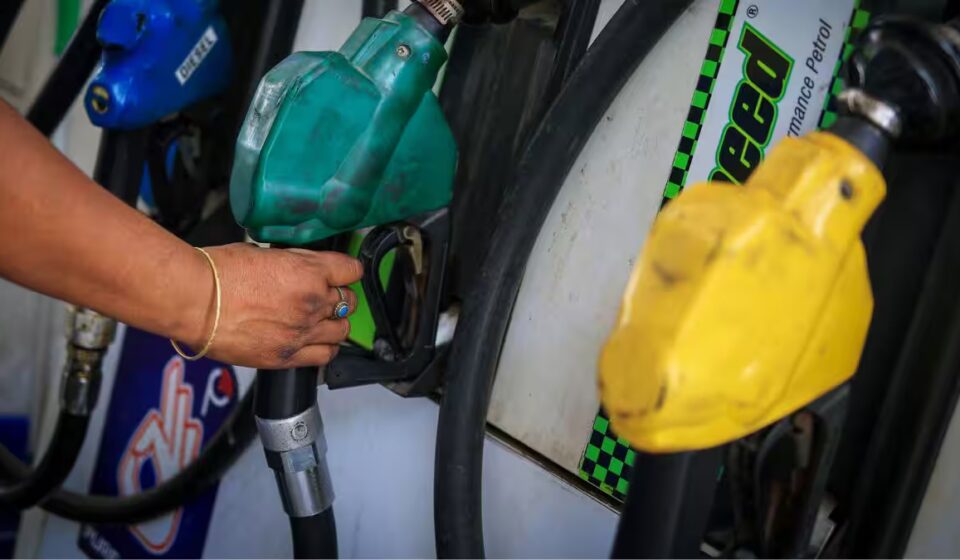

India’s nationwide rollout of 20 per cent Ethanol Blended Petrol (E20) has moved from a policy milestone to a heated public debate after viral clips last week of a Supreme Court hearing in which Attorney General R. Venkataramani described the rollout as an “experiment.” The government has since said the AG was referring to supply logistics, not a reversal of the national mandate that made E20 mandatory at fuel stations across the country.
Ethanol is a renewable, plant-based biofuel produced mainly from sugarcane, maize and surplus food grains. It is mixed with petrol in varying ratios: E10 (10% ethanol) was the baseline for nearly a decade; E20 (20% ethanol) is now the standard; higher mixes such as E25–E30 are under testing, while E85 and E100 are reserved for specially built flex-fuel vehicles. All passenger vehicles sold after April 1, 2023 — aligned with BS6 Phase 2 rules — are designed to be E20-compliant.
Technical and consumer concerns center on ethanol’s different chemistry. The Automotive Research Association of India (ARAI) reported that E20 can cause deterioration, swelling and cracking in non-metallic fuel-system parts over time, potentially leading to leaks and pressure loss, though metallic components and their coatings showed no adverse effects. ARAI’s engine durability tests produced mixed results: two‑wheelers performed acceptably; a BS4 four-wheeler showed tolerable wear after 400 hours; tests on a BS6 turbocharged engine revealed early anomalies at 265 hours and an exhaust-valve thermomechanical failure by 809 hours. Experts note comprehensive durability assessments typically require up to 2,000 hours.
Ethanol’s hygroscopic nature — its tendency to absorb water — raises another risk. If vehicles sit with low fuel during humid monsoon months, water can accumulate, causing phase separation where an ethanol-water layer sinks below the petrol. If drawn into the engine, this mix can cause sputtering, stalling, injector corrosion and hard cold starts.
Fuel-economy loss is a primary grievance. Ethanol has lower energy density than gasoline, meaning engines consume more fuel for the same power. ARAI data and consumer telemetry indicate a 2–6% drop in efficiency when moving from E10 to E20; government and manufacturers have estimated roughly a 3–3.5% reduction. Retail petrol prices have not been lowered to offset this, effectively making motorists pay the same per litre for fewer kilometres.
Manufacturers and officials have moved to calm fears. Maruti Suzuki and Toyota India reassured owners that many pre-2023 vehicles have safety margins against E20 damage. Maruti said servicing of over 15 million older cars in recent years revealed no fuel-related issues tied to E20. Rahul Bharti, Maruti Suzuki’s senior executive officer for corporate affairs, said the company tested pre‑2023 E10 cars on E20 and “have not found anything of concern.” Authorities also said at least one widely shared engine-failure claim was due to contaminated fuel, not standard E20.
The government continues to defend E20 for macroeconomic gains, citing savings of more than Rs 1.90 lakh crore in foreign exchange by displacing estimated crude imports since 2014. For now, officials say any move above 20% ethanol would require fresh rounds of testing. Meanwhile, motorists with older vehicles are advised to monitor fuel lines, replace filters more frequently and avoid leaving tanks nearly empty during humid weather.
Original Source: https://www.firstpost.com/explainers/petrol-ethanol-blends-vehicle-compatibility-mileage-engine-impact-explained-14029829.html
Category: India
Tags:
Publish Date: 2026-07-08 16:45:00