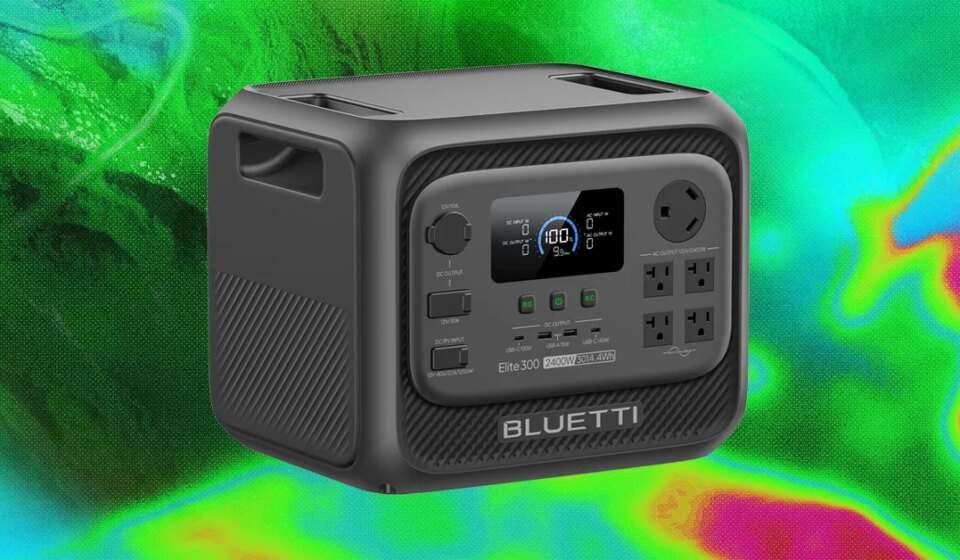
Architecting Resilient Distributed Energy: Lessons from Portable Power Stations

When we talk about digital resilience, we usually mean software: redundancy zones, multi-cloud failovers, and CI/CD pipelines. Yet a recent comparative review of portable power stations reminds us that physical energy – portable, reliable, and controllable – is an equally strategic component of any resilient architecture. What looks like a consumer gadget actually exposes several enduring design and procurement questions for architects, CTOs, and infrastructure teams.
The signal: a wide-ranging review compared dozens of portable power stations across capacity, battery chemistry, charging modes, thermal behavior, expandability, and usability. The core takeaway is not which model wins, but the technical trade-offs that determine whether a portable battery becomes a tactical backup or a long-term operational liability.
Core technical trade-offs every architect should know
- Battery chemistry vs longevity: LiFePO4 (LFP) batteries offer more charge cycles and thermal stability at lower energy density; Li‑NMC packs higher density but age faster and carry greater thermal risk. Choose LFP when lifecycle, safety, and frequent deep cycling matter; choose higher-density chemistries when weight and footprint constraints dominate.
- Power capability vs portability: Higher watt-hours and surge capacity are attractive, but they bring weight and cooling complexity. For true mobility, expect to trade run-time for carryability – and design workflows accordingly (hot-swap packs, modular expansions, or fixed home batteries).
- Thermal and acoustic design are operational signals: persistent fan noise or overheating under modest loads points to constrained thermal margins. That’s not a trivial comfort issue – it signals throttling risk, shortened battery life, and user friction when devices are co-located with people.
- Multi-input charging and management: Fast charging (multi-input, AC + PD USB-C + solar) shortens downtime but increases charger complexity and cost. Reliable solar integration requires careful matching of panel voltage/current to HPP or MPPT inputs and realistic expectations about weather and charging duration.
- Interoperability and standards: A healthy ecosystem favors common ports (USB-C PD, standard barrel connectors, SAE/MC4) and clear battery-expansion interfaces. Closed or proprietary expansion schemes raise long-term vendor lock-in and maintenance costs.
- Observability and security: Wi‑Fi and app control add remote management but introduce attack surfaces. For enterprise deployments, prefer devices with secure update mechanisms, audit logs, and network segmentation.
Implications for enterprise architecture and procurement
Portable power can be more than emergency lighting. Think of them as portable edge batteries: buffering intermittent renewables, sustaining last‑mile connectivity, or enabling mobile telemetry and edge compute during outages. When integrating such devices, shift procurement criteria from headline capacity to lifecycle TCO: expected cycle life, replacability of modules, warranty terms, thermal performance under real loads, and field-repairability.
For CTOs and founders building resilient products, treat portable energy as another layer of your SLA calculus. How quickly can you recharge? Do you have replacement packs? Can you orchestrate a fleet of devices to hand off load? The design choices here – modular packs, standard interfaces, and graceful degradation – mirror software patterns (statelessness, graceful fallbacks, orchestration) and should be incorporated into runbooks.
Relevance to Northeast India and rural deployments
In regions with intermittent grid supply, such as many parts of Northeast India, portable power stations have practical, immediate value for clinics, telecom microwave links, refrigerated vaccine storage, and small enterprises. However, success depends on system design: pairing LFP-based units with community-scale solar, designing for maintainability (local spares, trained technicians), and aligning procurement with service contracts that cover battery degradation.
Practical takeaways
- Specify chemistry and cycle life, not just Wh. Demand rated cycle curves from vendors.
- Prioritize thermal behavior and real-load testing over marketing surge figures.
- Insist on standard interfaces and documented expansion protocols to avoid lock-in.
- Treat management apps as operational software: require secure OTA, auditability, and network controls.
- Evaluate warranty and end-of-life pathways – recycling and battery replacement planning matter to TCO and sustainability.
Closing thought
Energy is the substrate of digital services; treating portable storage as a first-class architectural concern turns ad-hoc resilience into predictable operational capacity.
About the Author: Sanjeev Sarma is the Founder Director and Chief Software Architect at Webx Technologies. With a core focus on Generative AI integration, Cloud-Native Scalability, and Enterprise Software Architecture, he has spent over two decades driving digital transformation across Northeast India and beyond. Beyond his corporate leadership, Sanjeev is deeply invested in shaping the future of the IT industry. He serves as an Industry Expert on the Board of Studies for Assam Don Bosco University’s School of Technology, advises state technology committees, and actively mentors emerging tech startups at STPI. He brings a unique, dual perspective of high-level enterprise execution and future-ready academic curriculum development.