
Venezuela’s political landscape has entered a period of tumult following the U.S. capture of President Nicolás Maduro, an event hailed by former President Donald Trump as “stunning.” As uncertainty looms over who will lead the oil-rich nation, the spotlight shifts to Vice President Delcy Rodriguez. Trump announced on Saturday that Rodriguez had been sworn in following Maduro’s arrest, suggesting she might assume control. According to Venezuela’s constitution, Rodriguez is the acting president in Maduro’s absence, and the country’s top court officially directed her to take the role late Saturday.
However, Rodriguez quickly countered Trump’s remarks, appearing on state television alongside her brother, Jorge Rodriguez, the head of the National Assembly, as well as Interior Minister Diosdado Cabello and Defense Minister Vladimir Padrino Lopez. They emphasized that Maduro remains Venezuela’s legitimate president, indicating a temporary unity among the leadership that has been ruling under Maduro’s shadow.
Trump also pivoted to opposition leader Maria Corina Machado, a Nobel Prize laureate considered by many to be Maduro’s most formidable rival. Trump dismissed any prospect of collaboration with her, citing a lack of domestic support. After Machado was barred from the 2024 elections, observers noted that her substitute candidate secured a landslide victory, despite the Maduro administration claiming otherwise.
For more than a decade, the true power in Venezuela has resided within a select group of senior officials who are enmeshed in corruption and surveillance. The balance of power is delicately split between civilian and military factions. Rodriguez and her brother represent the civilian interests, while Cabello and Padrino are aligned with the military. Experts warn that dismantling Venezuela’s entrenched regime requires more than just removing Maduro; it involves addressing multiple influential actors across different levels of power.
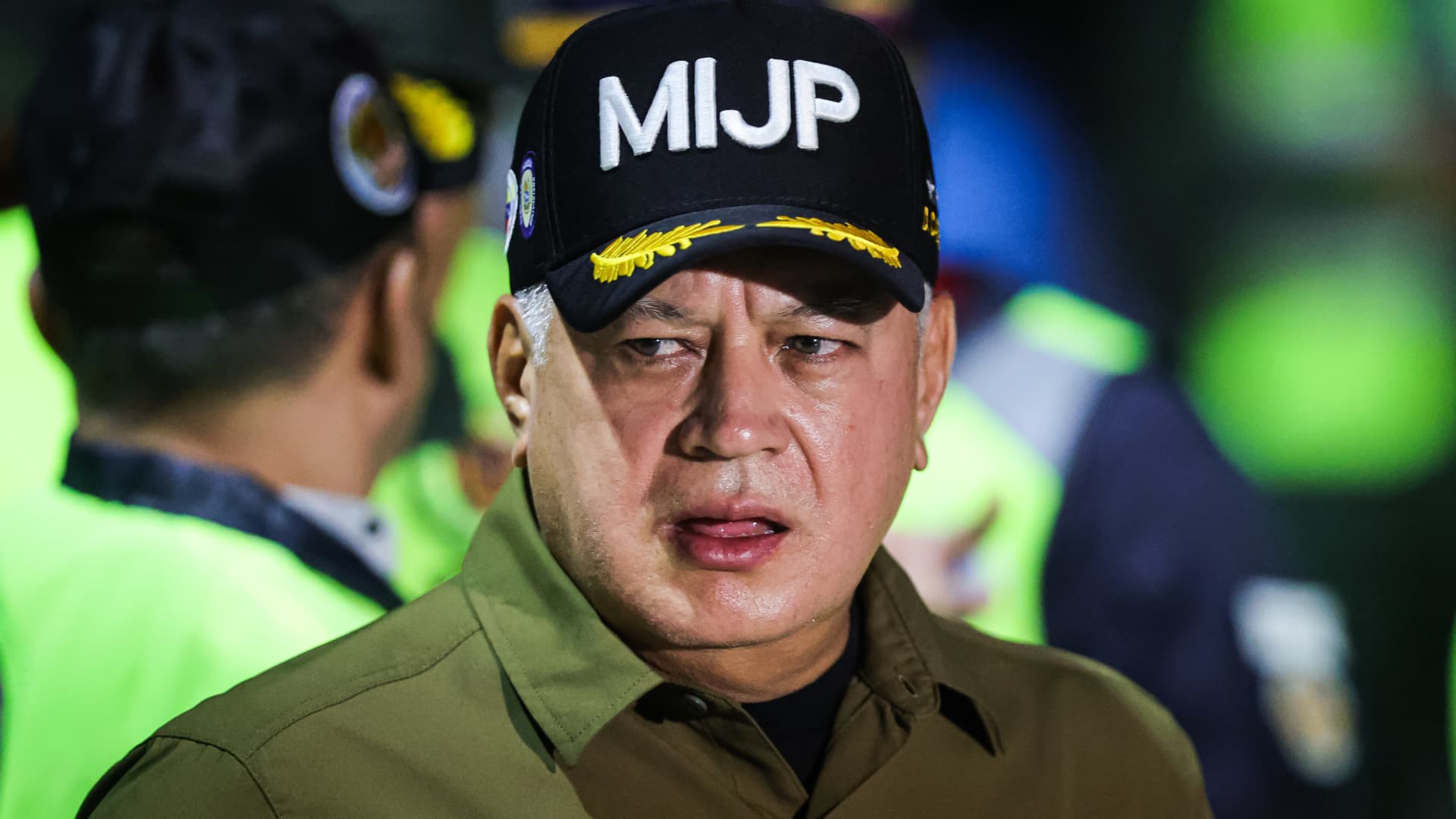
Diosdado Cabello, who has significant influence over both military and civilian intelligence agencies, has been flagged as a critical figure to watch. Analysts describe him as the most ideological and unpredictable member of the regime. The United Nations has condemned both SEBIN, the civilian intelligence agency, and DGCIM, their military counterpart, for crimes against humanity committed to suppress dissent.
Recent reports recount harrowing accounts of torture, including electric shocks and sexual abuse, inflicted by DGCIM personnel. Meanwhile, as the U.S. ramps up its military presence in Latin America, Cabello has been overtly aggressive, recently commanding DGCIM to target perceived “terrorists” and frequently appearing on state television donned in protective gear and flanked by armed guards.
Cabello’s ties with pro-government militias, particularly motorcycle-riding groups known as colectivos, further complicate the political dynamics. Despite Defense Minister Padrino being at the formal helm of the military for over ten years, Cabello maintains substantial control. This military apparatus is vast, with an estimated 2,000 generals who oversee critical sectors including food distribution, raw materials, and the state oil company PDVSA.
Defectors and legal representatives indicate that the military’s involvement in illicit trade contributes significantly to power retention for prominent figures like Cabello. Reports suggest a number of military leaders might be seeking a way out, potentially reaching out to U.S. authorities for asylum in exchange for intelligence. However, insiders close to Cabello indicate he currently lacks interest in negotiating his position.
As Venezuela grapples with uncertainty in its leadership and aims for stability, the interplay of civilian and military interests remains paramount in shaping the nation’s trajectory.
Original Source: https://www.cnbc.com/2026/01/04/maduro-is-out-but-his-top-allies-still-hold-power-in-venezuela.html
Category :
Tags:
Publish Date: 2026-01-04 13:56:00