Architecting IPO-Ready, Profitable Marketplaces: Building Tech Moats at Scale

The Contrarian: capital raises are not just about money – they are a moment of truth for an architecture.
Why this matters
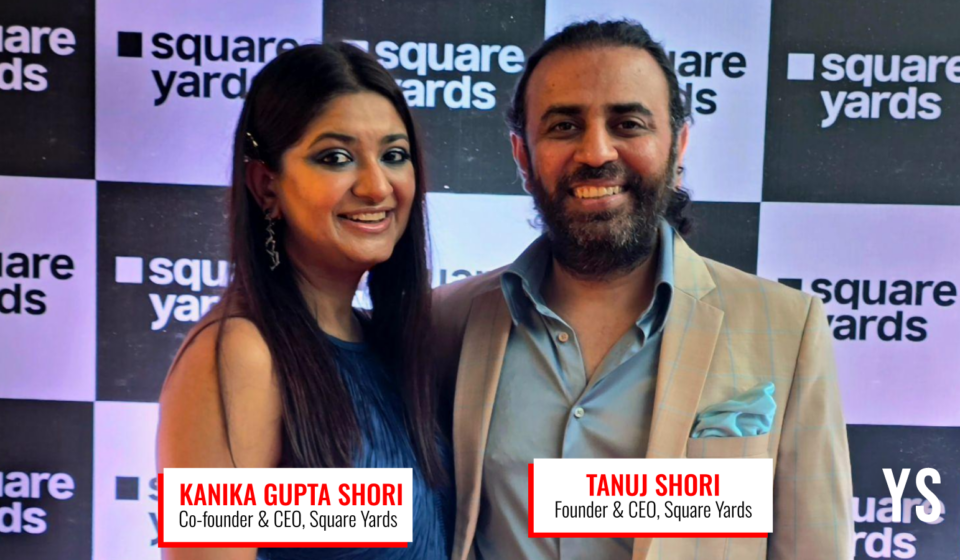
I recently read about Square Yards’ Rs 900 crore capital infusion and its reported leap to unicorn valuation. Beyond the headline – revenue growth, profitability and talk of an IPO – what interests me is the architectural implication of a primary-brokerage turned vertically integrated property ecosystem raising growth capital while claiming operating profitability.
The signal (brief)
Square Yards has transitioned from a transactional brokerage to a multi-service platform spanning property search, home loans, interiors and property management across several countries. The fresh capital is being positioned to strengthen balance sheets and accelerate tech‑led expansion.
Architectural implications for platform leaders
-
Platformization at scale requires composability, not monoliths.
Vertical integration – bundling search, lending, interiors and post-sale services – multiplies domain complexity. The only sustainable way to manage that is a composable architecture: domain-driven microservices for lending, listings, payments and post-sale services; a unified API layer for partners; and event-driven flows to maintain eventual consistency across domains (e.g., loan approval triggering inventory/state updates). CTOs must resist patching a monolith with feature flags; instead design bounded contexts that can scale independently. -
Data is the real competitive moat – but it’s also the largest operational risk.
Owning cross‑service customer journeys creates rich datasets for credit underwriting, propensity models, and dynamic pricing. The trade-off: legal/regulatory exposure and privacy obligations rise sharply. Implement a data mesh with clear ownership, cataloging and access controls; build ML pipelines with explainability and drift detection; encrypt and tokenise PII; and bake privacy impact assessments into every product lifecycle before an IPO or cross-border expansion. -
ML and automation need production rigor.
Mortgage automation, fraud detection and personalised recommendation are high-value use-cases – but production ML demands MLOps: reproducible training, A/B experimentation, model governance and quick rollback. Prioritise feature stores, model monitoring and human-in-the-loop controls for high-risk decisions (credit declines, pricing exceptions). -
Financial controls and observability are non-negotiable when courting public markets.
Capital raises and IPO plans shift scrutiny from growth metrics to unit economics and controls. Beyond traditional financial ERP, teams must instrument end-to-end observability (tracing, metrics, logs) across revenue-critical flows. Implement SRE practices, capacity planning, and disaster recovery validated by runbooks and game days. Automated reconciliation between product events and finance ledgers will reduce audit risk. -
International expansion compounds compliance complexity.
Operating across jurisdictions multiplies AML/KYC, tax, land-record and consumer protection regimes. Architect for policy-driven behavior: feature flags and policy engines that can adapt flows per jurisdiction without code forks.
Bharat connection (practical, not rhetorical)
For Indian innovators, the same levers apply – and India’s digital rails (UPI, e-KYC, digitised land records where available) create opportunities to glue offline processes into a digital flow. However, many Indian states still have fragmented land registries and offline transfer rituals; platform architects must design hybrid offline-online workflows, robust verification queues and a field‑agent orchestration layer to close last‑mile gaps – especially relevant for entrepreneurs building from smaller cities or the Northeast.
Concrete takeaways for CTOs and founders
- Treat capital raises as a boardroom validation of your architecture: prepare for deep technical due diligence.
- Move from feature velocity to sustainable velocity: adopt domain-driven design, event-driven comms, and strong CI/CD with canaries.
- Invest early in data governance, MLOps and model explainability to avoid regulatory surprises.
- Bake observability and finance reconciliation into transactional flows before scaling internationally.
- Design hybrid, policy-driven systems to handle jurisdictional variation and offline realities in India.
Closing thought
Funding accelerates opportunity – but the longer-term value resides in how well the engineering choices translate that capital into resilient, compliant, and defensible platforms.
About the Author: Sanjeev Sarma is the Founder Director and Chief Software Architect at Webx Technologies. With a core focus on Generative AI integration, Cloud-Native Scalability, and Enterprise Software Architecture, he has spent over two decades driving digital transformation across Northeast India and beyond. Beyond his corporate leadership, Sanjeev is deeply invested in shaping the future of the IT industry. He serves as an Industry Expert on the Board of Studies for Assam Don Bosco University’s School of Technology, advises state technology committees, and actively mentors emerging tech startups at STPI. He brings a unique, dual perspective of high-level enterprise execution and future-ready academic curriculum development.