Is India’s Landmark Rural Jobs Guarantee Scheme at Risk? Uncover the Troubling Truth Behind G RAM G!

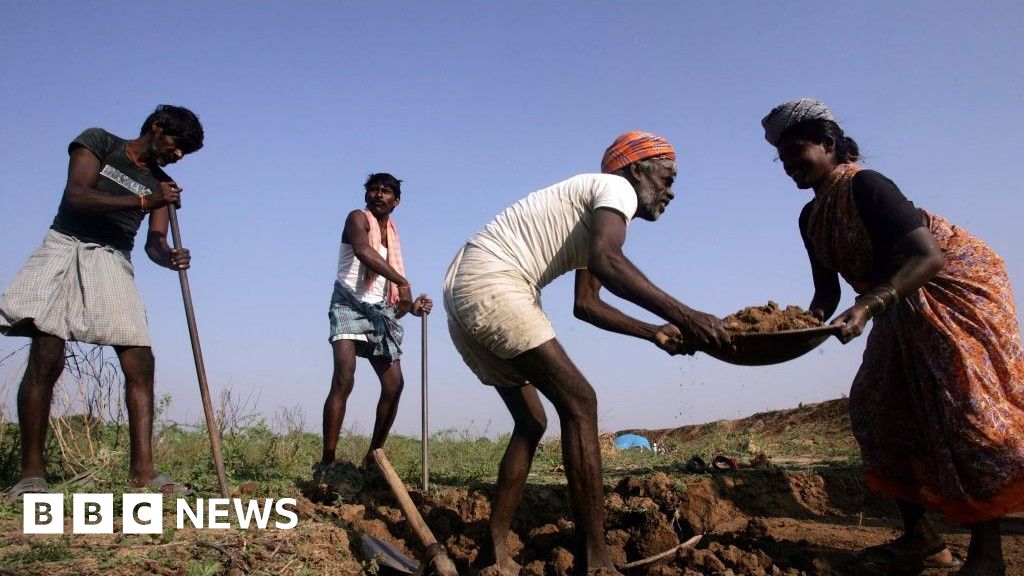
India hosts one of the most ambitious social initiatives globally, the National Rural Employment Guarantee Scheme (NREGS), which grants every rural household the legal right to paid work. Launched in 2005 by a Congress-led government, this scheme allows rural families to demand up to 100 days of paid manual labor annually at a minimum wage. This initiative is crucial in a nation where 65% of its 1.4 billion citizens reside in rural areas, with nearly half dependent on farming, which contributes merely 16% to India’s GDP.
The prevailing economic conditions have made NREGS a backbone of rural livelihoods, particularly during crises like the COVID-19 pandemic when a mass return of migrants escalated the demand for work. Economists note that the scheme has lessened poverty, improved school attendance, and increased private-sector wages in certain regions.
Recently, the Modi government rebranded the scheme, now known as G RAM G, while repealing the previous nomenclature honoring Mahatma Gandhi, generated significant political discourse. The new law raises the annual employment guarantee from 100 to 125 days per household and preserves the provision for unemployment allowances if jobs are not provided within 15 days. However, funding will shift from a federal-state split of approximately 90:10 to a more burdensome 60:40 model, increasing the financial responsibility of states.
As the federal government allocates $9.5 billion for the current financial year, states remain legally bound to provide either employment or unemployment allowances. Federal Agriculture Minister Shivraj Singh Chouhan argues that these reforms are designed to modernize the scheme and bolster its efficacy for the impoverished. Critics, including academics and opposition parties, caution that the new structure could erode a vital legal right in India’s welfare framework. They argue it centralizes control under the federal government and effectively turns employment guarantees into a discretionary scheme.
Jean Dreze, a prominent development economist, labels the increase to 125 workdays as a “red herring,” emphasizing that a mere 7% of rural households received the previously guaranteed 100 days of work in the 2023-24 period. He contends that raising the work ceiling serves no purpose without addressing underlying financial constraints.
Concerns about the program’s viability have caught the attention of international scholars who have petitioned the Indian government, warning against dismantling what has proven to be a model of success in poverty reduction and employment generation. Highlights from a study by Muralidharan, Niehaus, and Sukhtankar reveal that the scheme has boosted household earnings by 14% and reduced poverty by 26%.
Despite facing chronic challenges like underfunding and delayed wage payments, recent data reinforces the scheme’s influence in addressing rural distress. Yet, critics argue that the scheme merely alleviates symptoms of a deeper issue: India’s difficulty in generating sufficient non-farming jobs. The stagnant agricultural growth compared to the broader economy raises questions about sustainability and long-term impacts.
The government’s Economic Survey suggests discrepancies in fund allocation, indicating that less impoverished states receive disproportionate resources. This inefficiency potentially undermines the scheme’s original intent. As the world’s largest jobs guarantee program continues to evolve, its ability to address the pressing issues of low-income rural work remains paramount. Whether the revamped version will enhance or weaken its impact on the livelihoods of millions is a question that will unfold in the coming years.
Original Source: https://www.bbc.com/news/articles/c1lr980vvjpo
Category :
Tags:
Publish Date: 2025-12-23 05:03:00