Architecting Ambient Home Displays: Balancing UX, Subscriptions, and Privacy

Title: The quiet revolution of ambient displays – what a consumer “digital calendar” reveals about future enterprise architecture
Hook – a contrarian nudge
We obsess about faster chips, bigger foundation models, and flashy headsets – and yet one of the most instructive shifts in human-computer interaction today is far quieter: ambient, always-on displays that slot into daily life. A Prime‑day story about consumer digital wall calendars is not about a “nice-to-have” kitchen gadget; it is a microcosm of design choices and architectural trade‑offs every CTO and enterprise architect must reckon with.
Context – the signal, not the noise
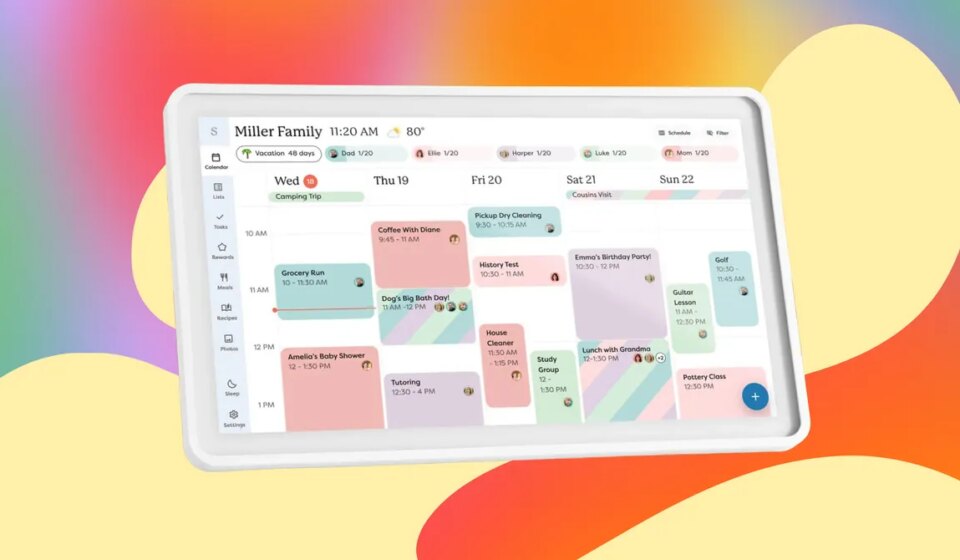
A recent consumer piece highlighted digital wall calendars that blend calendar data, family tasks, recipes and photo modes – often behind subscription services. That product trend surfaces three signals worth unpacking: ambient UX, edge/cloud interaction patterns, and a subscription-driven platform model that monetizes utility and data.
Analysis – implications for enterprise systems and architects
-
Ambient-first UX is an architectural requirement, not an interface afterthought.
Enterprises designing digital experiences for people at home, at the factory floor, or at a rural health center must move beyond “app-first” thinking. Ambient displays demand low-latency updates, graceful offline behaviour and contextual notifications that don’t overwhelm. Architecturally, that means pushing decision logic and small ML models to the edge, adopting event-driven sync with the cloud, and treating devices as first-class nodes in your system topology. -
Edge vs cloud: trade-offs re-emerge at scale.
Edge processing preserves privacy (local inference, ephemeral state) and improves responsiveness, but increases device complexity, OTA update burden, and long‑term maintenance costs. Cloud-hosted features enable rapid product innovation and large-scale analytics, yet create lock‑in and data residency questions. The right pattern for enterprises is hybrid: keep sensitive, latency-critical inference on-device; use cloud for model updates, orchestration, and aggregated insights – but design for portability and vendor-neutral formats to limit technical debt. -
Subscription economics shape platform design – and risk fragmentation.
Consumer devices frequently gate advanced features behind subscriptions. For enterprises this model translates into questions about dependency and procurement: do you build vertically integrated appliances or compose capabilities from interoperable services? Subscription-driven platforms can be attractive for quick time-to-value, but they amplify vendor lock‑in risk and make lifecycle budgeting more complex. Architectures should therefore factor in modularity, standards-based integration (APIs, common messaging), and clear exit strategies. -
Security, identity and lifecycle management scale differently here.
Every always-on display is an exposed endpoint: device identity, secure bootstrap (zero-touch provisioning), signed OTA updates, and least-privilege credentials must be baked into the design. Zero Trust principles should extend down to constrained devices; certificate rotation, supply-chain verification and incident telemetry are non-negotiable. Ignoring these creates a sprawling attack surface that will come back to haunt large deployments.
Localization – where this matters in Bharat
There’s a direct, practical parallel for India’s last-mile digital efforts. Ambient displays – whether in anganwadis, primary health centres or local panchayat offices – can be powerful communication and workflow tools if they are affordable, multilingual, and offline-resilient. But public procurement should prioritise open standards, local-language UX, and non‑subscription models that align with Digital Public Infrastructure principles to avoid long-term vendor dependence.
Takeaways – for CTOs, product leaders and builders
- Design device architectures as hybrid systems: on-device inference + cloud orchestration.
- Prioritise secure device identity, signed OTA pipelines and lifecycle monitoring from day one.
- Avoid architectural lock‑in: insist on open APIs, exportable data formats and modular billing options.
- Optimize for constrained networks and multilingual UX when targeting public or rural deployments.
- Treat ambient UX as a distinct discipline – it changes interaction patterns, retention and operational costs.
Closing thought
The rise of unobtrusive, always‑on displays is more than consumer convenience; it’s an architectural bellwether. How we design for presence, privacy and maintainability in these small, persistent devices will shape trust, resilience and cost for the next generation of distributed systems.
About the Author: Sanjeev Sarma is the Founder Director and Chief Software Architect at Webx Technologies. With a core focus on Generative AI integration, Cloud-Native Scalability, and Enterprise Software Architecture, he has spent over two decades driving digital transformation across Northeast India and beyond. Beyond his corporate leadership, Sanjeev is deeply invested in shaping the future of the IT industry. He serves as an Industry Expert on the Board of Studies for Assam Don Bosco University’s School of Technology, advises state technology committees, and actively mentors emerging tech startups at STPI. He brings a unique, dual perspective of high-level enterprise execution and future-ready academic curriculum development.
