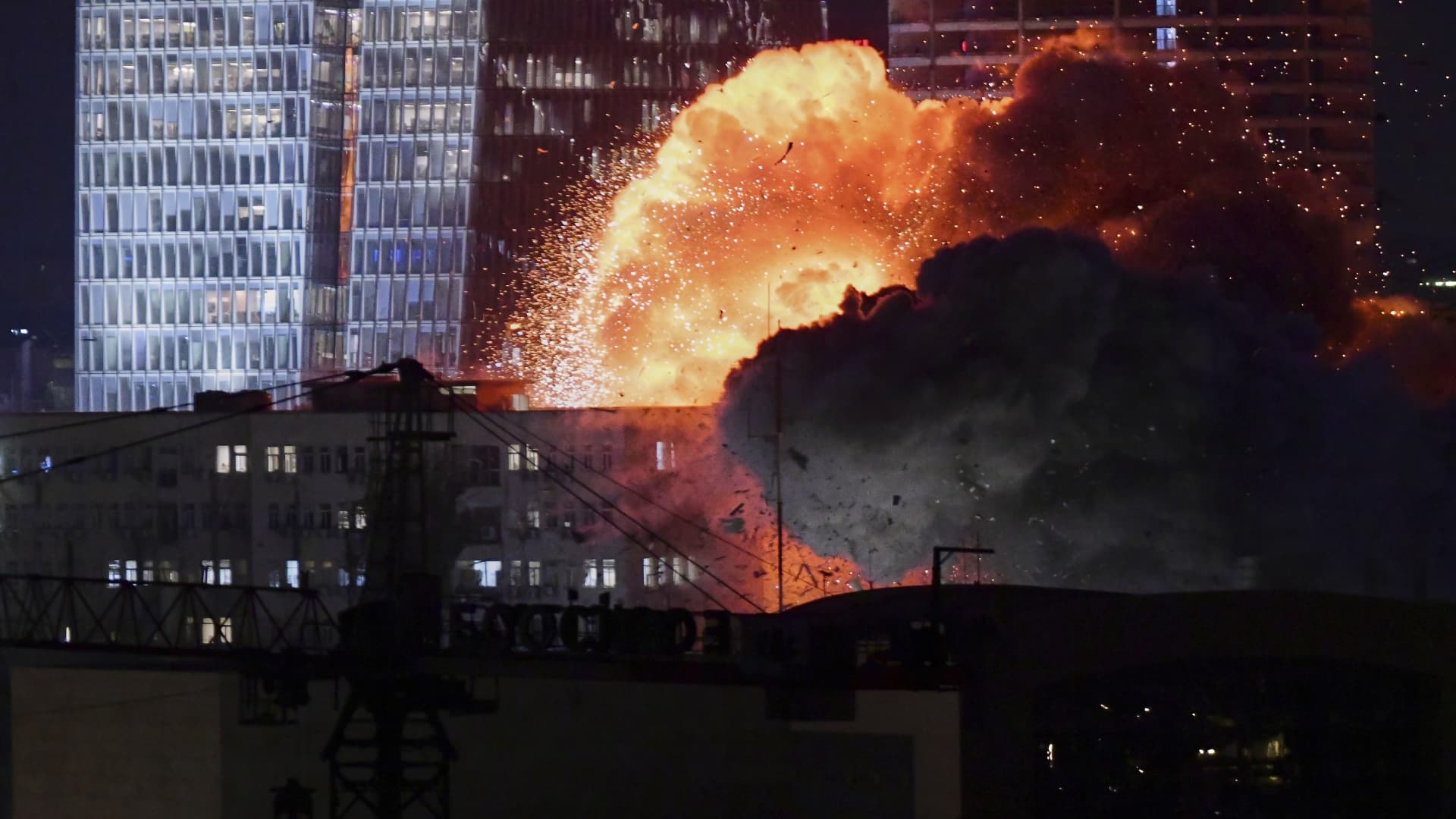

Israel and Iran have escalated their military confrontations, with missile attacks and airstrikes erupting overnight into Saturday morning in the region. Air raid sirens blared across Israel-prompting citizens in cities such as Tel Aviv and Jerusalem to seek immediate shelter. Iranian officials announced their intention to continue strikes against Israel, even hinting at potential attacks on U.S. bases, according to a report from Reuters citing senior military representatives speaking to Iran’s Fars news agency.
The Israeli Defense Forces (IDF) reported a new wave of missile bombardments from Iran early Saturday. Meanwhile, Iranian state media noted that air defenses in Tehran were mobilized to counter incoming threats. The latest missile exchanges occurred after Israel’s airstrike campaign, which targeted Iranian military and nuclear installations on June 13, followed by a retaliatory missile strike from Iran.
The IDF instructed Israeli citizens to stay in secure buildings as the “Iron Dome” missile defense system worked to intercept incoming projectiles. An NBC crew stationed in Tehran reported pervasive sounds of drones, missiles, and fighter jets as Iran bolstered its defensive posture.
This surge in hostilities comes after Israel launched what it termed a “preemptive strike” to disrupt Iran’s nuclear ambitions and related military infrastructure, seeking to neutralize what it perceives as a looming threat. Footage from Tel Aviv depicted the Iron Dome successfully intercepting missiles, reflecting Israel’s robust defense capabilities.
The United States has reportedly provided support to Israel by assisting in intercepting Iranian missile threats, according to American officials. The Pentagon had deployed military assets, including U.S. Navy destroyers, to the region, aimed at countering potential Iranian retaliatory actions.
Former President Donald Trump weighed in, telling The Wall Street Journal that the U.S. was aware of Israel’s strikes and expressed satisfaction with Israel’s military performance, citing superiority in American defense technology.
In an aggressive response, Iran officially announced the commencement of a “Hard Retaliation operation,” indicating that it had launched hundreds of ballistic missiles toward Israeli territories. Ayatollah Ali Khamenei, Iran’s Supreme Leader, warned that consequences for Israel would be significant, asserting that any response from Iran would be decisive.
Amidst this ongoing conflict, U.S. stock markets experienced a downturn, with the Dow Jones Industrial Average dropping over 700 points due to rising tensions and fears of a wider regional conflict.
Furthermore, Iran declared its withdrawal from the upcoming nuclear negotiations scheduled in Oman, signaling a breakdown in diplomatic efforts. Iranian state media also reported explosions near key nuclear sites, including Fordo, which could suggest heightened defensive measures or retaliatory actions.
Despite these events, aspirations for a diplomatic resolution persist, with U.S. officials publicly maintaining hope for renewed talks. However, reports indicate a bleak outlook as Iran has decisively shifted focus toward military retaliation instead of dialogue.
As this situation evolves, the potential for further escalation looms large, with both sides exchanging threats and demonstrating their military readiness. The ongoing conflict remains a pivotal point of concern, not just for Israel and Iran, but for broader regional and global stability.
Original Source: https://www.cnbc.com/2025/06/13/trump-urges-iran-to-reach-nuclear-deal-before-there-is-nothing-left-.html
Category :
Tags:
Publish Date: 2025-06-14 13:36:00