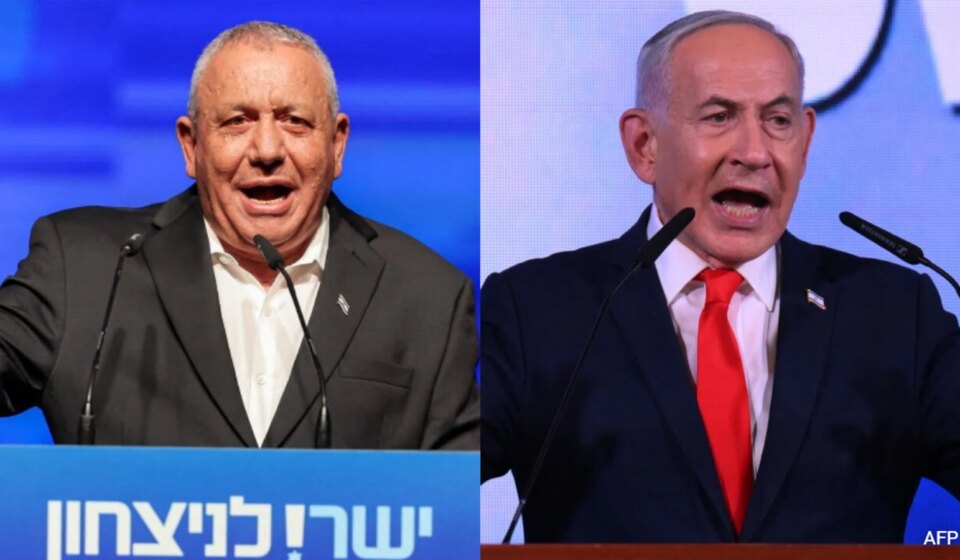

Israeli President Isaac Herzog has tasked former Israel Defense Forces chief and Yashar party leader Gadi Eisenkot with forming the country’s next government, dealing a setback to Benjamin Netanyahu’s bid to retain power after the October 27 election left no bloc with a clear majority. Backed by 67 lawmakers, Eisenkot now has 28 days to build a coalition and potentially unseat Israel’s longest-serving prime minister.
Herzog made the decision after consulting parties in the 120-seat Knesset and speaking with both Netanyahu and Eisenkot. The mandate will be formally handed over at a ceremony at the President’s Residence in Jerusalem on Sunday, November 8, at 5 pm local time. Eisenkot now gets the first shot at forming a coalition and, with it, a chance to end Netanyahu’s long hold on Israeli politics.
The consultations were not close. Sixty-seven lawmakers recommended Eisenkot, 46 backed Netanyahu and seven recommended no one. Eisenkot’s support includes 48 lawmakers from the Change Bloc, seven from the Arab party Ra’am and 12 from the Joint List. Netanyahu drew support from his right-wing and religious allies, while the seven members of United Torah Judaism sat out the consultations. The result showed that more lawmakers were willing to back an alternative under Eisenkot than to stand behind Netanyahu, though recommendations alone are not a governing majority.
Eisenkot, a former IDF chief of staff, entered politics in 2022 and became Netanyahu’s main rival in this election, running a campaign that brought together parties from the center-left to the right, largely united by opposition to Netanyahu. His Yashar party finished second with 21 seats, while the wider Change Bloc won 48. The two Arab-led factions, which together took a record 19 seats, recommended him to Herzog, and their votes decided the outcome.
The hard part now begins. The Arab parties say they would back an alternative to Netanyahu from outside the government rather than join it, and relying on them remains sensitive, with several parties in Eisenkot’s own camp reluctant to depend on Arab lawmakers. The ultra-Orthodox parties could also matter: UTJ’s refusal to recommend Netanyahu opens a door, though disputes over military conscription could close it again. Eisenkot could lead a minority government propped up from outside by Arab lawmakers, cut a deal with the ultra-Orthodox parties or seek a broader national unity government. Each path has its problems.
Netanyahu has not conceded. The caretaker prime minister is still pushing for a national unity government and has warned against any government that relies on Arab-led parties, calling them supporters of terrorism. Eisenkot’s party hit back, criticizing Netanyahu for portraying Arab lawmakers as a security threat and urging Likud members to rethink their alliance with far-right partners. The dispute plays out against deep divisions over the Gaza war, national security, the future of the military and Netanyahu’s leadership.
Eisenkot briefly sat in Netanyahu’s wartime cabinet after Hamas’s October 7, 2023, attack before returning to the opposition. He has since become one of Netanyahu’s loudest critics over how the war was run and has ruled out serving in any government led by Netanyahu. His security record has been central to his pitch. If he succeeds, he would be Israel’s first Mizrahi prime minister, from the community with roots in the Middle East and North Africa.
Once Eisenkot formally accepts the mandate, he has 28 days to assemble a coalition, with the president able to add 14 more if needed. If he fails, the mandate could go to someone else, and Netanyahu could get another turn depending on how events unfold. If repeated attempts fail, Israel could head to another election, possibly in early 2027. For now, Herzog’s choice marks a major moment: Netanyahu, Israel’s longest-serving prime minister, faces the real possibility of losing office after his coalition lost its majority. Winning 67 recommendations was the easy part for Eisenkot; building a coalition that can survive its first real argument will be much harder. The question is no longer just whether Netanyahu can hang on, but whether the forces that united against him can agree on what to do next.
Original Source: https://www.ndtv.com/world-news/israel-elections-gadi-eisenkot-gets-mandate-to-form-israel-government-benjamin-netanyahu-fights-for-survival-12298820#publisher=newsstand
Category:
Tags:
Publish Date: 2026-11-08 07:05:00