Venture Capital’s Concentration Paradox: Pacing, Liquidity, and Power Law Risk

For over two decades, I’ve watched enterprise ecosystems grapple with the delicate balance between scale and resilience. Right now, a fascinating parallel is playing out not in our server rooms, but in the boardrooms of Silicon Valley.
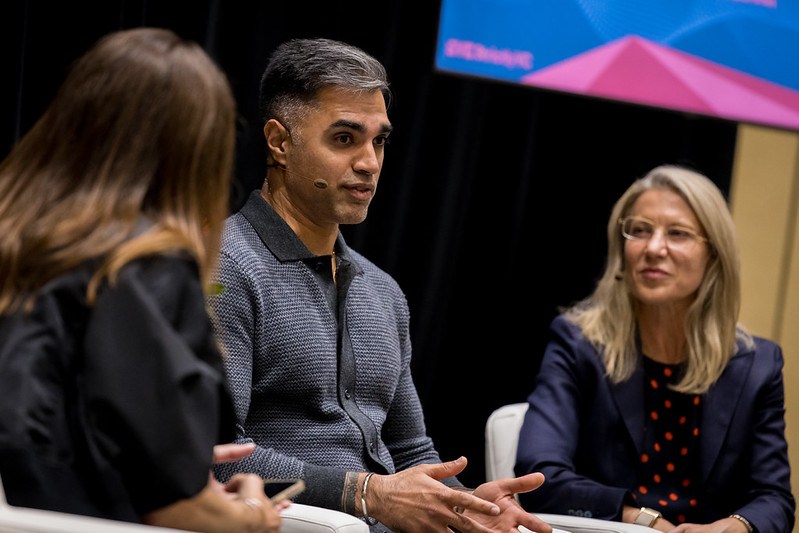
A recent panel discussion between Limited Partners (LPs) Beezer Clarkson and Amit Bhatti revealed an unprecedented concentration of capital into two AI giants-OpenAI and Anthropic. They noted that venture funds are returning to market at breakneck speeds, shrinking traditional 24–36 month cycles down to 12–18 months, prompting a “yellow light” warning regarding systemic risk.
As a Chief Software Architect, I view capital allocation through the lens of system design. What these LPs describe is a classic “monolith vs. microservices” dilemma applied to finance. Betting heavily on OpenAI and Anthropic is akin to building an enterprise tech stack where 80% of your infrastructure relies on two massive, centralized monoliths. Yes, the venture “power law” dictates that a few outliers return the entire fund. That is a feature. But when every fund piles into the same nodes simultaneously, we introduce severe systemic risk to the ecosystem.
Furthermore, the acceleration of fundraising cycles creates a terrifying pipeline problem. If capital is deployed faster than the startups’ underlying software maturity can support, we risk building massive architectural debt. Scaling prematurely is exactly how legacy systems crash. Massive capital influxes often force founders to hire aggressively and build brittle infrastructure, prioritizing hyper-growth over sustainable design.
Interestingly, the rise of secondary markets in venture capital is the API layer the ecosystem has long needed. By allowing early liquidity, it transforms a highly illiquid asset class into a dynamic system. It gives fund managers the optionality to de-risk without completely abandoning the platform.
The Startup Ecosystem: Lessons in Frugal Innovation
This brings me to an important lesson for the founders and students I mentor across Northeast India and the broader Indian ecosystem. We often suffer from “mega-fund envy,” believing we need $50M to $100M to compete globally. But the article highlights the quiet strength of $5M to $10M micro-VCs.
In India, our true strength lies in frugal innovation. Emerging managers and young founders should not try to climb a massive hill on day one. Instead, they should build a track record with modest capital, prove the thesis, validate the product architecture, and let success beget success. The Northeast tech ecosystem, particularly through incubators like STPI, is perfectly positioned to embrace this. We need more small, thesis-driven funds that can back local, AI-native founders who understand ground-level problems-whether in agritech, logistics, or e-governance.
Strategic Takeaways:
- Concentration is a double-edged sword: While it maximizes potential returns, it introduces systemic risk. Diversify your capital allocation and your enterprise architecture.
- Speed needs stability: Rapid capital deployment must be matched by sustainable tech maturity. Never sacrifice architectural integrity for artificial hyper-growth.
- Liquidity enables evolution: Secondaries and micro-VCs are modernizing the venture landscape, making it more adaptable.
In software architecture, we know that a single point of failure is always a critical risk. In capital allocation and ecosystem building, the same rule must apply. Build resilient, decentralized systems-whether in code or in capital.
About the Author: Sanjeev Sarma is the Founder Director and Chief Software Architect at Webx Technologies. With a core focus on Generative AI integration, Cloud-Native Scalability, and Enterprise Software Architecture, he has spent over two decades driving digital transformation across Northeast India and beyond. Beyond his corporate leadership, Sanjeev is deeply invested in shaping the future of the IT industry. He serves as an Industry Expert on the Board of Studies for Assam Don Bosco University’s School of Technology, advises state technology committees, and actively mentors emerging tech startups at STPI. He brings a unique, dual perspective of high-level enterprise execution and future-ready academic curriculum development.