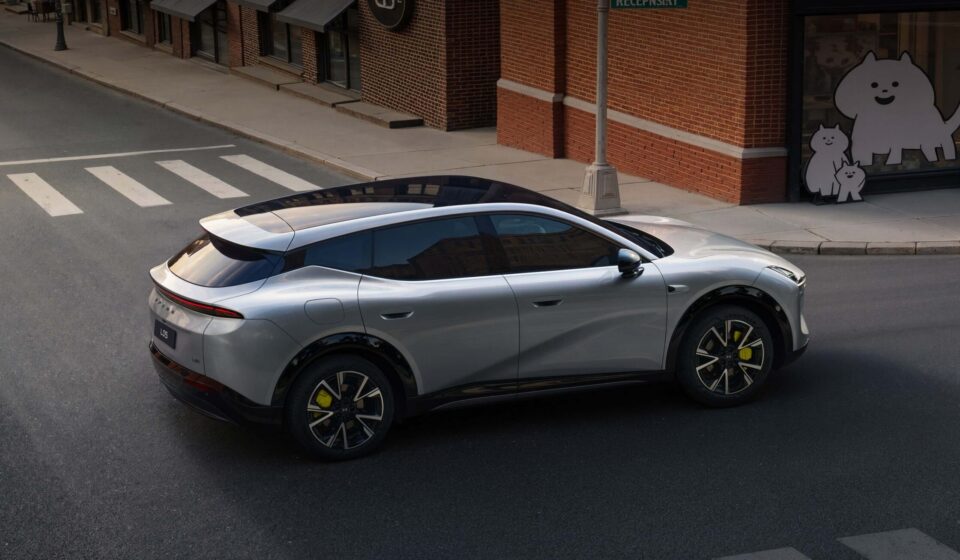
XPENG L05 and the Strategy of Scaling One Platform Across Market Tiers

The Architect’s View: Why “Good Enough” Tech Often Wins the Enterprise Race
We tend to obsess over the bleeding edge. In architecture circles, we are often drawn to the highest voltage, the lowest latency, and the most sophisticated stack. But in the real world of enterprise deployment, the “best” technology rarely wins. The technology that wins is the one that hits the sweet spot between capability, cost, and reliability.
I was reminded of this recently while reading a detailed analysis of XPENG’s new L05 launch in China. The automotive sector is a fascinating parallel to enterprise IT right now. It is a brutal, high-stakes environment where the “software-defined vehicle” is no longer a buzzword but a survival requirement. The specific vehicle details-the L05 being a slightly longer, heavier version of the L03-serve as a useful case study in platform economics.
The 400V Reality Check
The immediate takeaway from the XPENG L05 is its adherence to a 400V architecture, even as competitors move to 800V systems for faster charging. From a pure spec-sheet perspective, the 400V system is the “inferior” technology; it charges slower than the high-voltage elites.
However, from an Enterprise Architect’s perspective, this is a textbook example of managing technical debt and market segmentation. XPENG is leveraging an existing, proven platform (the L03) to create a new product (the L05) with minimal R&D overhead. By stretching the chassis and adding features like rear tray tables and a larger screen, they are maximizing the value of their existing engineering investment.
For a CTO or a Founder, the lesson here is profound: you do not always need to rebuild your stack from scratch to launch a new product line. Sometimes, the smartest move is to extend the existing architecture to capture a slightly different market segment-in this case, families needing more space-rather than killing your margins on a ground-up rebuild. The 400V architecture is “good enough” for the L03 and L05 segment, allowing XPENG to reserve the expensive 800V technology for their premium G6 and G9 lines.
The Battle of the Middle Ground
The article highlights a fascinating conflict: the L05’s top trim is priced identically to the G6, a premium vehicle with an 800V platform and more power. This creates internal cannibalization. This is a classic portfolio management challenge. In software, we see this when a legacy feature set is priced the same as the modernized microservice version.
As architects, we must ensure differentiation. If the underlying compute or battery technology overlaps too much, the value proposition becomes muddy. The L05 distinguishes itself through sheer physical space and specific features (like the entertainment screen), while the G6 relies on raw performance and charging speed. This mirrors the enterprise debate between scaling “up” (more features on a legacy monolith) versus scaling “out” (a more efficient, modern distributed system).
The Global Compliance Layer
The analysis estimates that the L05’s €38,000 price tag in Europe will be largely determined by the “compliance stack”-VAT, countervailing duties, and tariffs. This is identical to the challenges of deploying digital public infrastructure or SaaS products across borders. The underlying technology is only one part of the cost equation; the regulatory and logistical architecture often dictates the final viability.
Strategic Takeaways
- Platform Reuse is a Strategic Asset: Don’t chase the 800V equivalent in every project. Extending a mature, reliable 400V architecture to serve a new user segment is often the highest ROI strategy.
- Beware Internal Cannibalization: When launching a new product, ensure you aren’t pricing it against your own premium offerings without clear architectural differentiators. If the L05 and G6 cost the same, the value proposition becomes a race to the bottom, not a leap forward.
- Frugal Engineering: The L05 offers “9 carry-on suitcases” of space and rear entertainment at a fraction of the premium EV cost. In the Indian context-whether in the Northeast or elsewhere-frugal innovation is paramount. Building for the “middle class” of the market (cost-conscious but tech-hungry) is where the volume and sustainability lie.
The Closing Thought
In the end, the L05 is not trying to be a spaceship. It is trying to be a very good car for a specific family. In our rush to build the next AI-driven, 800V-equivalent enterprise architecture, we must remember that the most successful systems are often the ones that solve the immediate problem reliably, without breaking the bank.
About the Author: Sanjeev Sarma is the Founder Director and Chief Software Architect at Webx Technologies. With a core focus on Generative AI integration, Cloud-Native Scalability, and Enterprise Software Architecture, he has spent over two decades driving digital transformation across Northeast India and beyond. Beyond his corporate leadership, Sanjeev is deeply invested in shaping the future of the IT industry. He serves as an Industry Expert on the Board of Studies for Assam Don Bosco University’s School of Technology, advises state technology committees, and actively mentors emerging tech startups at STPI. He brings a unique, dual perspective of high-level enterprise execution and future-ready academic curriculum development.