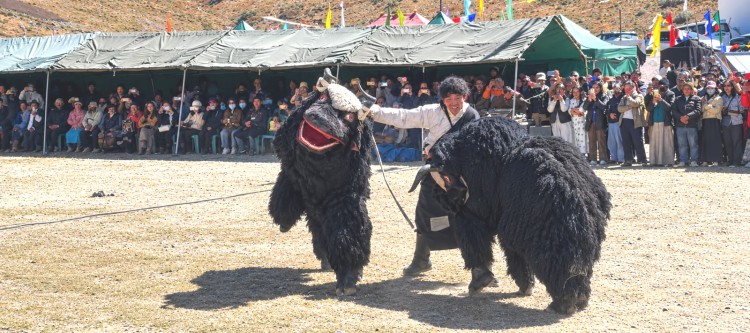

Sikkim hosted its first-ever Yak Festival at Gnathang Valley on Wednesday, a high-altitude gathering near the Indo-China border that placed the spotlight on conserving the Himalayan yak and securing the future of the pastoral communities whose livelihoods depend on the animal. Organised by the State government’s Animal Husbandry and Veterinary Services Department, the event brought together yak herders, researchers, livestock experts, conservation organisations and government representatives to explore how traditional yak rearing can be preserved while opening new economic opportunities for remote border villages.
According to estimates cited during the festival, Sikkim has a yak population of 5,312, underscoring the importance of protecting the species and supporting the pastoral families who have sustained the tradition across generations. The festival’s central message was clear: saving the yak also means sustaining the people who depend on it.
Speaker of the Sikkim Legislative Assembly M.N. Sherpa attended as chief guest. Among those present were Puran Gurung, Minister for Animal Husbandry and Veterinary Services; Pamin Lepcha, MLA; Sandup Lepcha, Minister for Social Welfare; and MLA Erung Lepcha, along with departmental secretaries, officials and other dignitaries.
For generations, yaks have been indispensable to life in the high Himalayas. Adapted to cold temperatures and rugged terrain, they provide milk, meat, fibre and hides, and serve as pack animals in areas where transporting goods is a formidable challenge. The festival explored how these traditional resources can become new sources of income: yak milk can be processed into butter, cheese and other dairy products, while yak fibre and hair can be turned into ropes, blankets, carpets, mats and clothing. With improved processing, packaging and branding, these products could reach markets well beyond the remote villages where they originate. For herding families, such opportunities could mean more reliable incomes and a stronger incentive for younger generations to stay connected to their traditional livelihoods. The challenge, organisers noted, is to make yak rearing economically viable without losing the indigenous knowledge that has sustained it for centuries.
The festival also served as a platform for exchanging knowledge among stakeholders in yak conservation, research, animal husbandry and product development. Participants from Himalayan regions, including Arunachal Pradesh, and from outside India added a wider dimension to the gathering. Exhibition stalls showcasing yak-rearing practices, conservation initiatives and yak-derived products drew interest from local residents and tourists alike. Discussions highlighted challenges common to high-altitude pastoral communities, including harsh weather, difficult grazing terrain, animal health concerns and mounting pressure to make traditional livelihoods financially sustainable.
Gnathang Valley’s location gave the event significance beyond livestock conservation. In Sikkim’s high-altitude border region, sustaining livelihoods is closely linked to keeping communities and traditional occupations alive. Border villages, participants stressed, are living spaces shaped by local culture, indigenous knowledge and resilience. The festival’s closing message was that the future of the yak cannot be separated from the future of the people who rear it, and that conservation works best when it protects both nature and the communities that depend on it.
Original Source: https://www.sikkimexpress.com/news-details/more-than-a-mountain-animal-sikkims-first-yak-festival-champions-conservation-and-border-livelihoods
Category:
Tags:
Publish Date: