Silicon Anodes Go Global: Battery Supply Chains Enter a New Geopolitical Era

The Most Underrated Component in the Battery Revolution Isn’t a Material-It’s the Manufacturing Supply Chain
We often talk about next-generation batteries as if the hero is the chemistry. Silicon anodes. Higher energy density. Faster charging. But when I read about Group14 Technologies-the battery-materials startup that just raised another $169 million to build a plant in Spain, bringing its total funding to $1.26 billion-I was less struck by the material science and more by the strategic discipline of its supply-chain architecture.
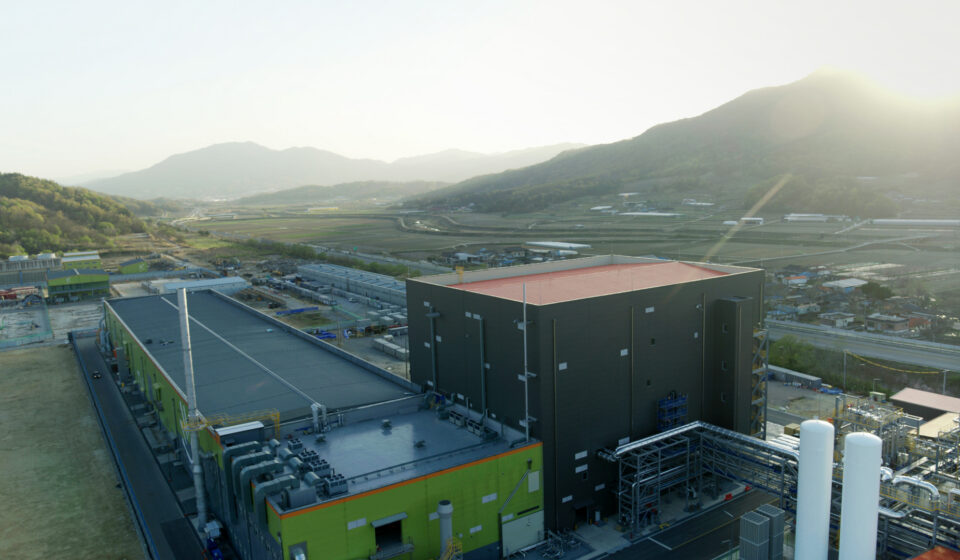
Group14 is developing silicon-carbon anode material that could replace graphite in lithium-ion batteries. It has operations in Washington state, a facility in South Korea, a German acquisition to secure silane gas, and now plans for a new site in Sagunto, Spain. The company is expanding into Europe because, as its CEO said, a global player in a global industry needs a global footprint. That is not just expansion strategy. It is resilience architecture.
But the most instructive part of the story is what happened at home. BAM-2, its Washington factory, was supposed to start production in late 2024. Then early 2026. Now mid-2027. There were layoffs and furloughs along the way. The CEO admitted the installation and commissioning were far more complicated than planned. I have watched enterprise projects suffer the same fate: a pilot works beautifully in a controlled environment, but production exposes all the hidden dependencies-data migration, integration contracts, rollout sequencing, human behavior. For a chemical plant, those constraints are even more unforgiving. You cannot “Ctrl+C, Ctrl+V” a kiln. You cannot hot-patch commissioning.
This is the lesson every CTO should internalize: innovation is cheap; hardening is expensive. From silicon anode manufacturing to AI systems, the last 10% of going to production is often 50% of the actual cost. We need to plan for it, not just celebrate the pilot.
There is also an architectural signal in Group14’s growing interest in data-center battery backup. AI workloads don’t just need compute; they need power that doesn’t stutter. Batteries are becoming load-balancing infrastructure. In the same way we design microservices with failover and queue depth, we should design AI infrastructure with energy buffers. This is no longer a facilities issue. It is a systems architecture issue.
For India, this report carries a relevant reminder. We are investing heavily in local cell manufacturing, data centers, and EV adoption. But many of these programs assume that once the plant is built, the output follows automatically. Group14’s timeline shows the opposite: industrial maturity is a journey, and it starts with humility about commissioning curves. The Northeast, with its hydropower advantage, has the potential to host storage-adjacent computing infrastructure-but only if we think of batteries as part of the national digital architecture, not as peripheral gadgets.
Takeaways:
- Geopolitical risk demands multi-region production strategy. A global footprint is a valid architectural pattern for infrastructure companies, not only cloud platforms.
- Physical production and software deployment share a hard truth: scaling is where plans meet reality.
- Energy storage must be designed into data-center AI systems from day one, not bolted on after load tests fail.
- India’s battery and data-center ambitions must include the same patience and planning that Group14 is being forced to practice.
The chemistry matters. But in the end, the energy transition will be won by whoever can commission factories, secure upstream materials, and serve multiple regions-not by whoever files the most patents. For every entrepreneur and CTO building infrastructure, that is the real brief.
About the Author: Sanjeev Sarma is the Founder Director and Chief Software Architect at Webx Technologies. With a core focus on Generative AI integration, Cloud-Native Scalability, and Enterprise Software Architecture, he has spent over two decades driving digital transformation across Northeast India and beyond. Beyond his corporate leadership, Sanjeev is deeply invested in shaping the future of the IT industry. He serves as an Industry Expert on the Board of Studies for Assam Don Bosco University’s School of Technology, advises state technology committees, and actively mentors emerging tech startups at STPI. He brings a unique, dual perspective of high-level enterprise execution and future-ready academic curriculum development.