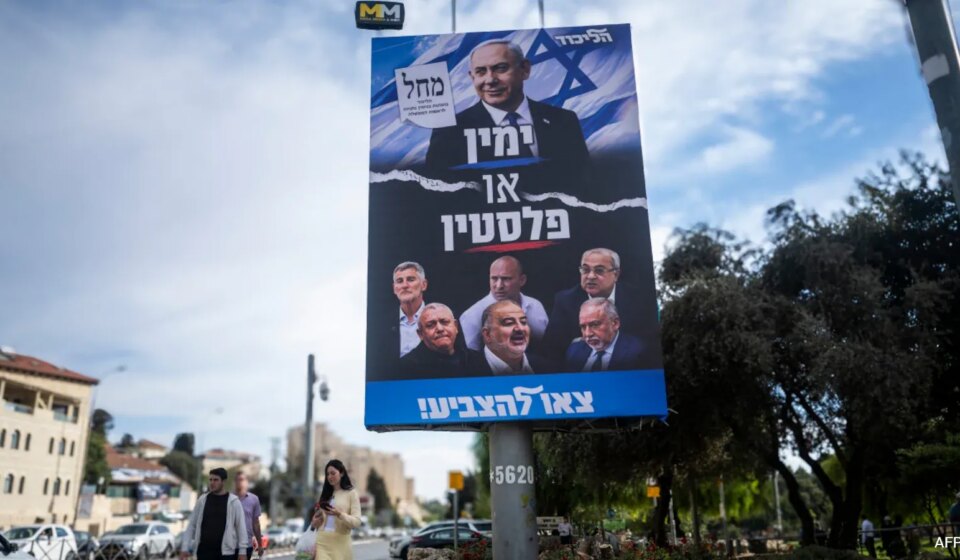

Israel’s general election on October 27 will decide whether Benjamin Netanyahu, the country’s longest-serving prime minister, remains in power, with voters choosing all 120 members of the Knesset, Israel’s parliament, through a nationwide proportional representation system.
Israeli law stipulates that elections must be “general, national, direct, equal, secret, and proportional”. The entire country, home to roughly 7.3 million eligible voters, forms a single constituency. In the last election, held in November 2022, turnout stood at 70.6 percent. Knesset members serve four-year terms, but parliament can be dissolved early by a simple majority vote, a frequent occurrence in Israel, while in exceptional circumstances its term can be extended beyond four years with the backing of 80 members.
Voters cast a single ballot for one party list of candidates, with no option to rank preferences. Seats are allocated in proportion to the votes each list receives, but only lists clearing an electoral threshold of 3.25 percent of valid votes, equivalent to four seats, enter the Knesset. Votes cast for lists that fall short are “neutralised”, with seat shares then calculated on the remaining votes: a party holding 20 percent of them would win 20 percent of the seats, or 24 members.
Because dividing vote proportions rarely produces whole numbers, the process leaves unallocated seats and so-called “excess” votes when parties fall just short of gaining another seat. Parties can strike agreements to combine their excess votes to secure some of these seats, while the rest are distributed under the Bader-Ofer method, a mathematical formula similar to Europe’s d’Hondt system that awards each remaining seat to the party with the highest average of votes per seat, tending to reward larger parties.
That allocation proved decisive in the last election, when the equivalent of 300,000 ballots, or six percent of the vote, were effectively redistributed. Despite near-parity between the two main blocs in votes cast, Netanyahu’s camp ultimately secured a comfortable majority of 64 seats thanks to the reallocation.
The Israeli electorate is deeply fragmented. Thirty-eight lists are competing this year, according to the Central Elections Committee, though two have announced they are dropping out. Alongside historic movements such as the right-wing Likud and the left-wing Labour Party, now renamed the Democrats, the field includes lists representing ultra-Orthodox Jews, citizens from the former Soviet bloc, the religious Zionist movement, and Druze and Arab voters.
The sheer number of parties makes it virtually impossible for any single list to win the absolute majority of 61 seats needed to form a government, meaning coalition negotiations begin once the ballots are counted. President Isaac Herzog is legally responsible for appointing the list leader best placed to build a coalition, based on recommendations submitted by the parties. In 2021, after the fourth election in less than two years, Netanyahu failed to form a government, and it was Naftali Bennett who became prime minister at the head of a varied coalition, even though his party had won just six seats.
Original Source: https://www.ndtv.com/world-news/ineligibility-thresholds-coalitions-inside-israels-electoral-system-12234889#publisher=newsstand
Category:
Tags:
Publish Date: 2026-10-26 00:44:00