Insight-Led Scale: How Emerging Brands Win India’s Fashion Moment

When a Marketplace Becomes an Operating System: Lessons from Myntra’s Emerging Brands
The Strategic Zoom-Out
Ten years ago, if you told a small-town garment manufacturer that a software dashboard would decide next season’s catalogue, they would have laughed. Today, that is precisely how thousands of Indian brands run their businesses. I was reading about Myntra’s Big Fashion Festival this year – 21,000 emerging brands, 13,000 of them first-timers, and a catalogue that has doubled year-on-year – and what struck me wasn’t the scale. It was what the scale implies about the architecture of Indian commerce itself.
The Signal
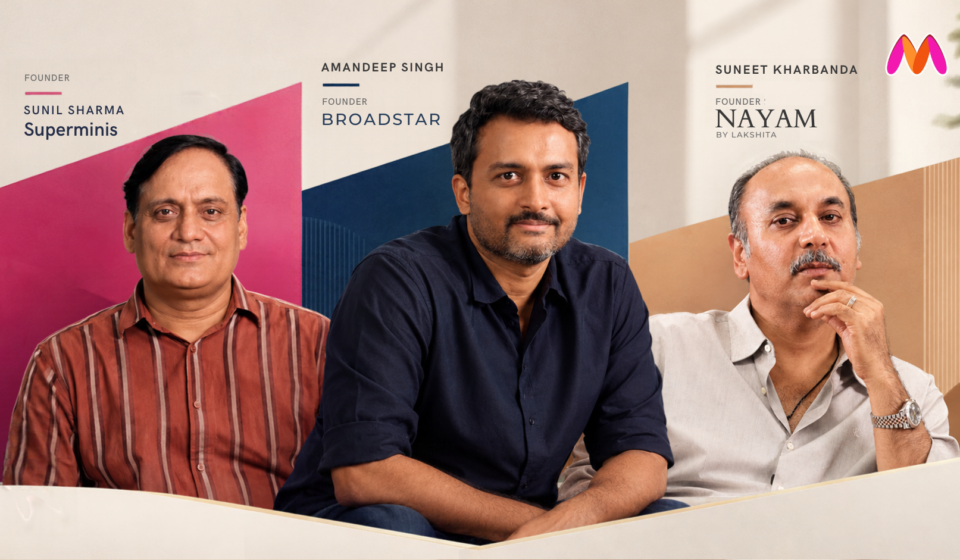
The story profiles three brands – a kidswear label, an ethnic wear line, and a western wear brand – all of which attribute their growth to the same underlying force: access to platform-native data. Sales uplifts of 1.2–1.8X during festival events, assortment planning guided by shopping behaviour, and inventory decisions driven by growth dashboards. Strip away the fashion, and what you’re left with is a masterclass in data-mediated commerce.
The Analysis: Data Is No Longer a Byproduct – It’s the Product
Here is the insight most coverage misses: these brands aren’t merely selling on a platform. They are thinking through one. The Partner Portal, trend analytics, fulfilment tooling – these aren’t features; they are cognitive extensions for businesses that historically ran on intuition and seasonal guesswork.
From an enterprise architecture standpoint, this represents a profound shift. The platform has effectively become a vertical operating system: it abstracts demand forecasting, customer insight, logistics, and even merchandising intelligence. A first-time brand with no analytics team can now make decisions that previously required a data science function. That is the democratisation of capability – the same pattern we saw when cloud removed the capex barrier, now applied to market intelligence.
But let me raise the trade-off every founder should sit with. There is a difference between borrowed intelligence and owned intelligence. When your assortment strategy, pricing instincts, and customer understanding all flow through one platform’s tooling, you are building on rented ground. I always advise founders: use the platform’s data to bootstrap your learning, but invest early in first-party customer relationships and your own data capture. Architectural debt in business strategy looks exactly like it does in software – invisible until it isn’t.
There’s also a systems design lesson here for CTOs building marketplace and platform products. The reason these brands stay engaged isn’t the transaction engine – it’s the feedback loop. Insight-as-a-service is stickier than commerce-as-a-service. If you’re architecting any two-sided platform, remember: the seller who learns from you is the seller who never leaves.
The Bharat Connection
This is where the Indian context genuinely matters. The same pattern we see in fashion commerce – platform-mediated intelligence lifting MSMEs – is the blueprint for Digital Public Infrastructure more broadly. A weaver in Sualkuchi or a food processing unit in Mizoram doesn’t need a BI team; they need a Partner Portal equivalent for their domain. The e-commerce playbook – lower the insight barrier, not just the distribution barrier – is exactly how India’s next hundred million small businesses come online. I’ve argued in STPI mentorship sessions that our startup ecosystem underestimates this: the biggest opportunity isn’t building another marketplace, it’s building the intelligence layer for the ones that exist.
Takeaways
- Platforms that teach, win. Insight delivery is the deepest moat in marketplace design.
- Data-mediated decisions are the new MSME baseline. Founders should treat platform analytics as a temporary scaffold, not a permanent dependency.
- For enterprise architects: the “seller success stack” – dashboards, feedback loops, fulfilment tooling – deserves the same rigour as the consumer-facing layer.
Closing Thought
The most transformative technology of this decade won’t be the one that sells to consumers – it will be the one that quietly teaches a small business how to think.
About the Author: Sanjeev Sarma is the Founder Director and Chief Software Architect at Webx Technologies. With a core focus on Generative AI integration, Cloud-Native Scalability, and Enterprise Software Architecture, he has spent over two decades driving digital transformation across Northeast India and beyond. Beyond his corporate leadership, Sanjeev is deeply invested in shaping the future of the IT industry. He serves as an Industry Expert on the Board of Studies for Assam Don Bosco University’s School of Technology, advises state technology committees, and actively mentors emerging tech startups at STPI. He brings a unique, dual perspective of high-level enterprise execution and future-ready academic curriculum development.