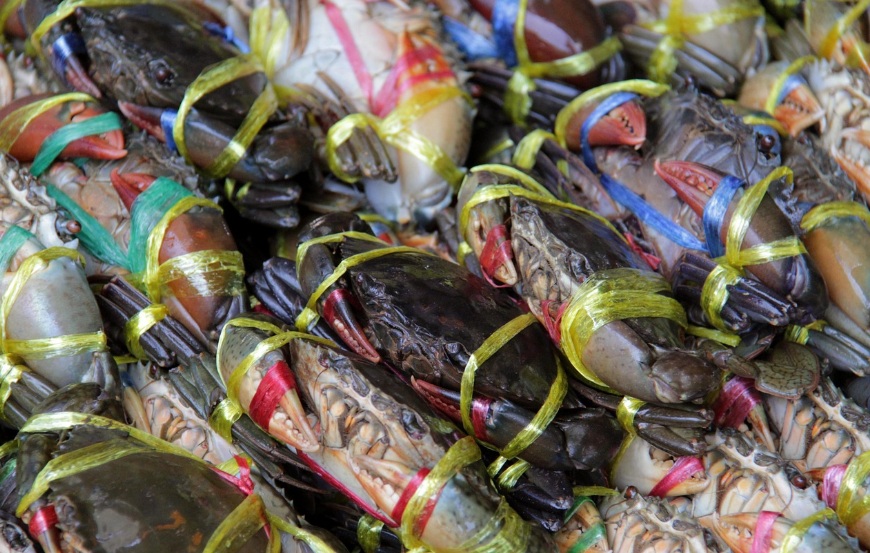

Goa is exploring the expansion of scientific mud crab farming as an alternative source of income for its coastal communities, drawing on practices from Andhra Pradesh, where commercial cultivation can generate net returns of nearly Rs 68,000 per acre per crop.
The ICAR–Central Coastal Agricultural Research Institute (CCARI) in Old Goa is developing a farming model suited to the state’s coastal ecosystem after studying commercial crab cultivation in Andhra Pradesh’s Krishna district. The study focused on a mud crab farming cluster in Koduru Mandal, where a farm-level assessment recorded an operating expenditure of Rs 1.02 lakh per acre per crop against gross earnings of Rs 1.70 lakh.
With a harvest of 160 kg, the net return stood at Rs 67,960, translating into a benefit-cost ratio of 1.67. Market rates varied according to crab size, ranging from Rs 400 per kg for smaller specimens to Rs 1,700 per kg for those weighing more than 750 grams.
CCARI now plans to adapt suitable practices to Goa’s khazan lands, estuarine banks and mangrove fringes. The initiative aligns with the state government’s Financial Assistance Scheme for Setting up Mud Crab Culture Units, which seeks to encourage scientific cultivation across the coastal state.
The proposed programme will include demonstration farms at the institute’s Ela facility and on farmers’ fields. Training will be provided to beneficiaries of the state scheme, with a focus on women’s self-help groups, fishing families and rural youth. Farmers are also to be organised into clusters to facilitate collective procurement of crab seed and improve access to markets, while the institute intends to connect producers with hotels, restaurants and businesses in the tourism sector.
The initiative is expected to create additional livelihood opportunities, put underutilised coastal land to productive use and reduce Goa’s dependence on crab supplies from other states.
Alongside efforts to promote farming, the state has also highlighted the need to conserve wild crab populations. Chief Minister Pramod Sawant recently appealed to residents, particularly traditional crab harvesters, to avoid catching and consuming berried female crabs carrying eggs, stressing the importance of protecting stocks for long-term sustainability.
In a related effort to strengthen aquaculture practices, CCARI, in collaboration with The Energy and Resources Institute (TERI), conducted a four-day training and awareness programme in Andhra Pradesh on climate-resilient fish farming and financial literacy under an Asian Development Bank-funded project. The programme covered climate-smart aquaculture, disease management, farm operations, insurance and financial services.
Field visits exposed participants to commercial farming of Pangasius, seabass, shrimp and crabs, while also highlighting challenges such as poor-quality seed, rising temperatures, deteriorating water conditions, high feed expenses and marketing difficulties. A total of 146 farmers, including 27 women, took part in the programme.
The lessons from the training are expected to guide future capacity-building and technical support aimed at improving climate resilience and strengthening the livelihoods of smallholder fish farmers.
Original Source: https://nenews.in/goa/goa-explores-mud-crab-farming-to-boost-coastal-livelihoods-cut-reliance-on-other-states/68779/
Category: Goa,Andhra Pradesh,CCARI,Crab farming,Cultivation model
Tags:
Publish Date: 2026-10-24 20:46:00