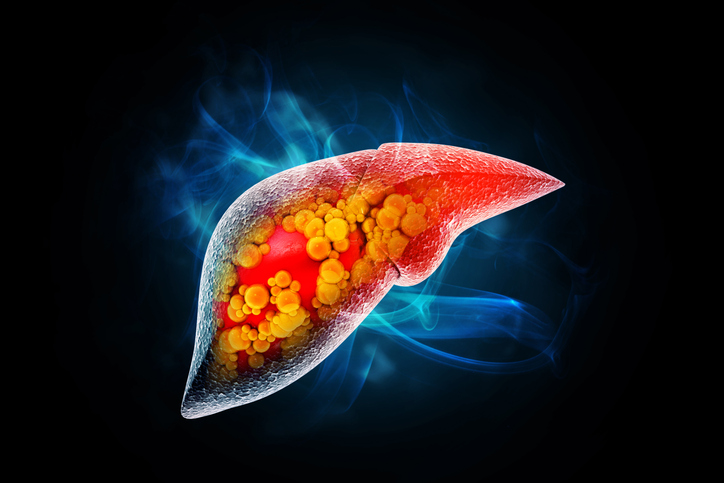

Fibrosis stage is the strongest predictor of death among patients with MASLD, the liver condition formerly known as nonalcoholic fatty liver disease (NAFLD), according to a large systematic review and meta-analysis led by Syed Muhammad Hassan Bukhari, MBBS, of Darlington Memorial Hospital NHS England. The findings were presented at the British Association for the Study of the Liver (BASL) Annual Meeting 2026, and the abstract was published in the journal Gut.
The investigators set out to identify predictors of mortality and unfavorable outcomes in MASLD, with a particular focus on high-risk phenotypes, cardiometabolic burden, fibrosis stage, and noninvasive markers. They also examined predictors of death driven by both hepatic complications, meaning those originating in the liver, and extrahepatic complications arising elsewhere in the body.
Among the 131 studies included in the analysis, advanced fibrosis, or scarring of the liver, was linked to a significant increase in both all-cause and liver-related mortality. The findings also showed that Fibrosis-4 (FIB-4) scores and other noninvasive biomarkers predicted unfavorable outcomes, offering clinicians simpler tools to flag patients at greatest risk without the need for invasive procedures.
Notably, cardiovascular mortality proved more prominent than liver-related mortality across the selected study populations, underscoring that heart disease remains a leading killer of patients with fatty liver disease.
The analysis identified several significant risk amplifiers, including cardiometabolic burden, chronic kidney disease (CKD), and type 2 diabetes (T2D). In a particularly striking finding, lean MASLD was associated with increased mortality despite patients having a lower body mass index, suggesting that a slim body profile does not protect against poor outcomes.
Methodologically, the review was performed according to Preferred Reporting Items for Systematic reviews and Meta-Analyses (PRISMA) guidelines, drawing on data from PubMed and PubMed Central published between 2010 and 2026. Eligible studies were those reporting mortality outcomes for patients with MASLD or its earlier designation, NAFLD. All studies were screened against predefined inclusion criteria, with information on fibrosis stage, liver stiffness, lean phenotype, cardiometabolic risk, type 2 diabetes, chronic kidney disease, and FIB-4 score extracted for qualitative analysis and pooled estimates.
Overall, the investigators concluded that the primary drivers of MASLD mortality are progression of fibrosis and systemic metabolic dysfunction. They suggested that future risk stratification in MASLD care should incorporate assessments of both fibrosis and cardiometabolic burden to better identify patients at heightened risk of death.
Highlighting the real-world significance of the research for patient care, the investigators concluded, “Early identification of high-risk patients is essential to reduce future disease burden.”
Original Source: https://www.docwirenews.com/post/key-drivers-of-mortality-in-masld
Category:
Tags:
Publish Date: 2026-10-24 01:31:00