Why Microsoft’s Best Innovation Program Never Promised a Billion Dollars

When Innovation Is a Potluck, Not a Chocolate Fountain
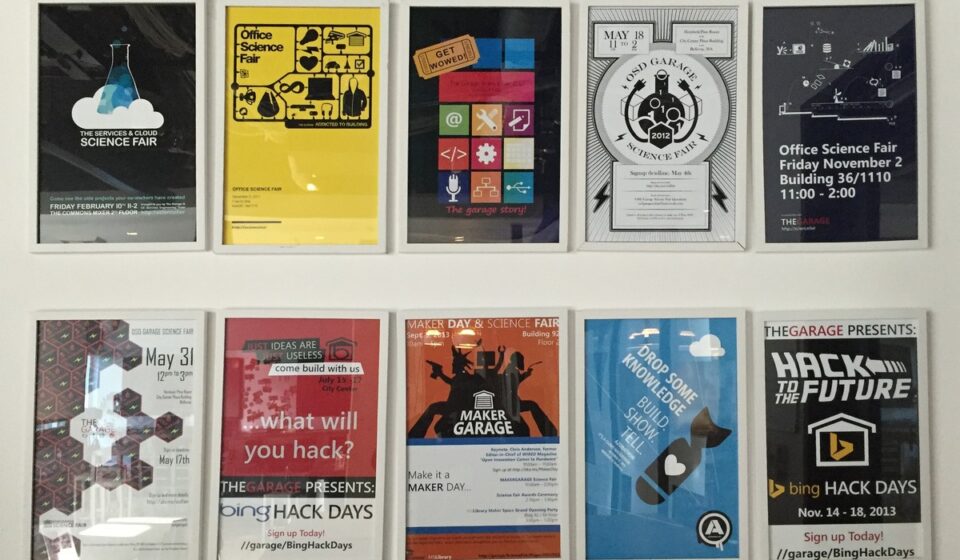
We obsess over innovation budgets, yet the most enduring grassroots innovation lab in tech history ran on pizza money and poster boards. Microsoft Garage is shutting down after 17 years, and its co-founder’s farewell reflection on why it worked is one of the most honest pieces on corporate innovation I have read in a long time.
The four principles he distills – doers not talkers, make it a potluck, don’t worry about the billions, and do epic shit – deserve a wider audience. Let me unpack them through the lens of someone who spends his life thinking about enterprise architecture and the organisational cultures that build it.
Fund the doers, not the proposal-writers. Most corporate innovation programs are built on idea submission, voting, and selection. Committees are terrible at spotting special insights. CodeFlow, Mouse Without Borders, Small Basic – none of these would have won a popularity contest, yet all shipped and scaled across Microsoft. In enterprise architecture, we design systems for predictability. But innovation is fundamentally unpredictable. The honest lesson: invest in people who build, not in the bureaucracy that evaluates.
Scarcity is a feature, not a bug. The Garage had almost no budget, so it forced local teams to self-fund their science fairs. The magic? The leaders who paid for it treated it as theirs. They showed up, they championed it. There is a profound architectural principle hidden here: ownership is a function of investment. A potluck creates more buy-in than a chocolate fountain. When transformation is dictated centrally, it dies quietly. When teams co-sponsor it, they defend it.
The billion-dollar question is a poison. Ballmer’s legendary question – “Where’s my next billion-dollar idea?” – still haunts corporate strategy rooms. The uncomfortable reality is that billion-dollar businesses never look like that at inception. They begin as tiny tools that solve one person’s painful problem. By demanding exponential scale at the starting line, you filter out precisely the experimental, human-sized projects that produce long-term value. The Garage never promised billions, so nobody could ask. That is a lesson for boards, CTOs, and founders obsessed with valuations before they even have a product.
And yes, epic shit matters. The provocative sticker, the volcano, the laser cutter – these look like noise, but they are signal. They defined a culture separate from the mothership. For a company of Microsoft’s scale, such subcultures are not a threat. They are the R&D engine for social capital.
India’s DPI journey was never a committee-driven billion-dollar program. It was doers solving specific, painful problems. In Northeast India’s startup ecosystem, I see the same hunger. The young founders I mentor at STPI are building potluck solutions for real local challenges. Our job is to not kill that with the billion-dollar question.
The takeaways for CTOs and founders:
- Stop demanding billion-dollar ROI before the first line of code ships.
- Make innovation programs a potluck – force contributors to bring their own skin into the game.
- Measure success by culture and shipped artifacts, not just revenue.
The Microsoft Garage is closing. Its principles are not. In fact, they matter more now than ever – especially in a world where every enterprise is trying to engineer serendipity.
About the Author: Sanjeev Sarma is the Founder Director and Chief Software Architect at Webx Technologies. With a core focus on Generative AI integration, Cloud-Native Scalability, and Enterprise Software Architecture, he has spent over two decades driving digital transformation across Northeast India and beyond. Beyond his corporate leadership, Sanjeev is deeply invested in shaping the future of the IT industry. He serves as an Industry Expert on the Board of Studies for Assam Don Bosco University’s School of Technology, advises state technology committees, and actively mentors emerging tech startups at STPI. He brings a unique, dual perspective of high-level enterprise execution and future-ready academic curriculum development.