The Default Is the Decision: Rethinking AI Vendor Strategy After Replit’s Pivot

The Model Is Not the Moat
The tech world spent this week arguing about which AI model “won.” I think that’s the wrong debate entirely. The real headline is far quieter – and far more consequential for anyone designing systems today: a platform whose core product intelligence is rented just swapped its landlord almost the way you’d flip a configuration setting. And the market barely flinched.
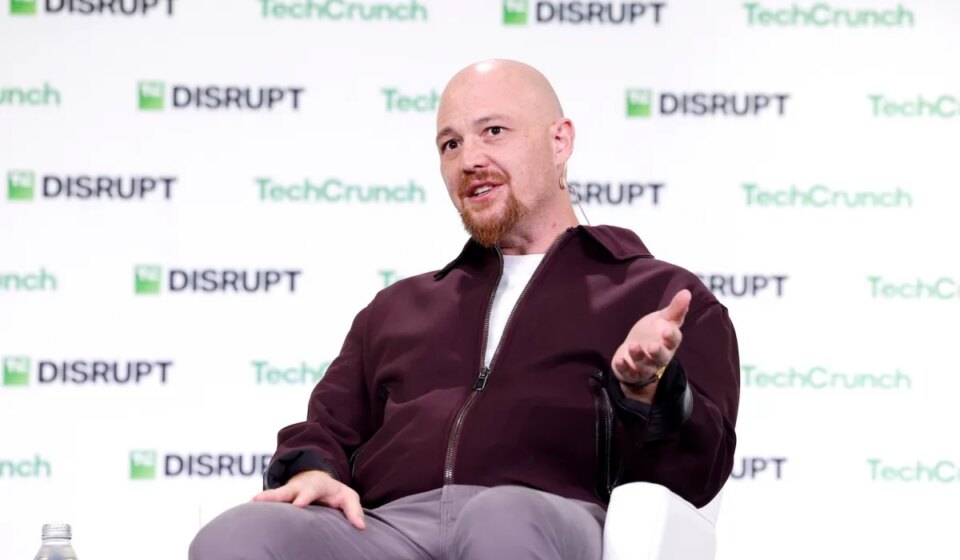
The signal, stripped of noise: at TechCrunch Disrupt, Replit’s CEO Amjad Masad said OpenAI’s models are now the default powering Replit Agent, displacing Anthropic – a company Replit had reportedly counted among its top five customers – citing cost, partnership strength, and internal benchmark performance. Anthropic models remain accessible; insiders dispute how final the break really is. Whether it’s a divorce or a demotion almost doesn’t matter. The direction does.
Intelligence Just Became a Utility
I’ve watched this pattern before. Over two decades of architecting enterprise systems, we saw servers commoditized, then storage, then compute. The model layer is simply next in line. When your differentiation can be swapped out by a partnership decision, your only rational move as an architect is to engineer switching costs toward zero – abstraction layers, model gateways, routing infrastructure.
But let’s be honest about the trade-off. Clean abstraction always blunts peak performance: context-caching tricks, tool-use quirks, fine-tuning nuances – every provider’s magic is slightly different. The mature answer isn’t purist model-agnosticism. It’s an explicit routing layer where cost, latency, and capability trade-offs are conscious engineering decisions, not accidents of whoever you signed with last year.
Defaults Are Decisions, Not Settings
Here’s the detail I found most instructive: Masad himself noted that most customers never change the default model. Which means the default is simultaneously a commercial contract, a UX decision, and a governance decision – and most organizations treat it as none of the three.
Equally telling is Replit’s benchmark discipline: internal evaluation harnesses to decide performance, with public benchmarks as a secondary layer. That’s the right posture. Public leaderboards are marketing. An evaluation harness built on your own workloads is engineering. If your enterprise is selecting foundational models without one, you’re effectively outsourcing a strategic decision to someone else’s press release.
Agents Need a Habitat, Not a Hero
The line that deserves to outlive this news cycle: agents, like humans, need a habitat – orchestration, error recovery, sandboxing, networking, identity, authorization. Masad is right, and it’s exactly where architect attention belongs. Models churn every six months. The habitat is the durable asset. We learned this lesson with databases and runtimes; AI is teaching it again, faster.
This matters acutely for those of us watching India build its AI stack. Whether it’s the IndiaAI mission’s foundational model push or state-level deployments, sovereignty will not come from signing with any single model vendor. It will come from the habitat – data boundaries, identity layers, orchestration that keeps us pluggable. Build the platform layer. Treat the model as a tenant, not the landlord.
What I’d Tell Every CTO Right Now
- Abstract now, before economics forces you to. A model gateway is cheap insurance against a renegotiation you don’t control.
- Build evals on your own data. Benchmarks are procurement evidence, not marketing collateral.
- Audit your defaults. That’s where spend, risk, and vendor leverage quietly accumulate.
- Invest in the habitat – orchestration, sandboxing, observability, identity. The brain will churn; the environment persists.
- Plan for a multi-model estate. Routing by cost, latency, and capability is the new load balancing.
The messy insider disputes around this story only prove the point: real enterprises live in multi-vendor ambiguity, not clean narratives.
We spent twenty years learning that infrastructure gets rented while differentiation gets built. AI has simply compressed that lesson into a quarterly billing cycle.
About the Author: Sanjeev Sarma is the Founder Director and Chief Software Architect at Webx Technologies. With a core focus on Generative AI integration, Cloud-Native Scalability, and Enterprise Software Architecture, he has spent over two decades driving digital transformation across Northeast India and beyond. Beyond his corporate leadership, Sanjeev is deeply invested in shaping the future of the IT industry. He serves as an Industry Expert on the Board of Studies for Assam Don Bosco University’s School of Technology, advises state technology committees, and actively mentors emerging tech startups at STPI. He brings a unique, dual perspective of high-level enterprise execution and future-ready academic curriculum development.