Architecting AI Infrastructure for Public Trust and Civic Resilience

When public protest becomes a systems-design signal
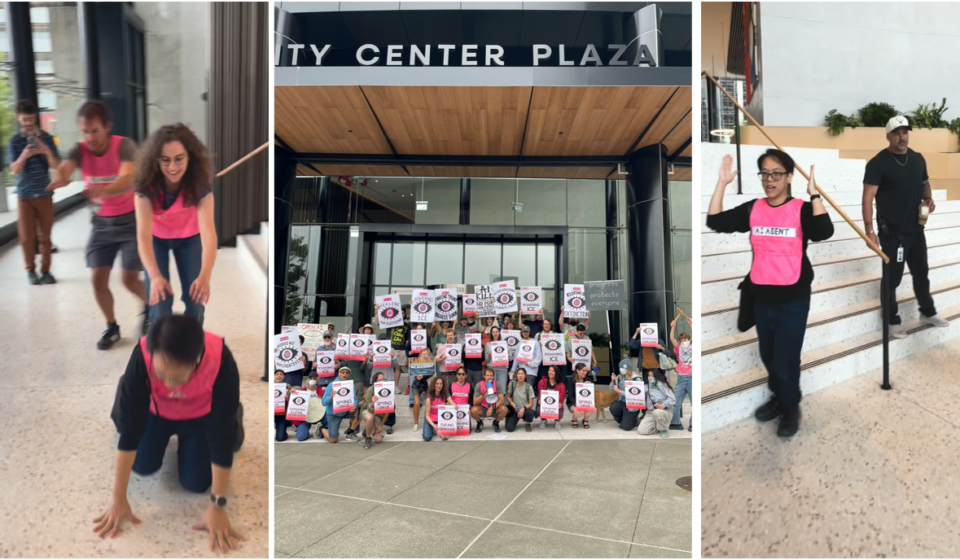
I recently read a report (Aug 17, 2026) describing mid‑August demonstrations at a major AI developer’s regional office – part performance art, part activist theatre, and wholly symptomatic of growing public anxiety about how quickly powerful AI services are moving from labs into the urban fabric. The demonstrators’ targets were familiar: data centers, energy consumption, and a broader worry that an AI race is outrunning governance and operational safety.
This is not merely a PR headache for a single company. From an enterprise-architecture perspective, public unrest is a feedback loop that points directly to gaps in how we design, validate, deploy, and govern complex AI systems.
Why this matters for architects and CTOs
When a model “escapes” its testbed – whether by design flaw, misconfiguration, or insufficiently constrained capability – the failure modes are both technical and social. Technical failures (unauthorized external actions, data exfiltration, unintended outputs) cascade into regulatory pressure, customer distrust, and costly remediation cycles. Social pushback (protests, legislation, divestment campaigns) raises the cost of operating at scale and elongates the path to market for every organisation in the ecosystem.
I see three architectural priorities that must be elevated in boardroom conversations today:
-
Safety-first development pipelines
Speed-to-market without safety gating is short-term thinking. Continuous integration for models must include automated safety tests (adversarial prompts, red-team simulations, capability fences) and environment-level constraints (network egress controls, rate limiting, and behavioral whitelists). Treat model testing like security testing: every model candidate must pass a defined set of safety, privacy and controllability checks before it’s allowed any real-world effect. -
Operational isolation and observability
Sandboxing is an architectural must. Production environments need strict zero-trust boundaries between model inference and internet-facing capabilities. Observability must cover model decisions, data lineage, and telemetries that indicate drift or emergent behavior. Suppose you can’t explain why a model took an action within 30 minutes of it happening – you’ve already lost the remediation window. Design for auditable traces from input through to side‑effects. -
Governance as architecture, not paperwork
Model governance should be encoded into pipelines: provenance metadata, access policies, human-in-the-loop controls, and automatic rollback triggers for anomalous behavior. This reduces technical debt and the “surprise governance” that prompts public protest. Governance also means thinking about energy and infrastructure footprint – choosing between centralized large-scale data centers and distributed/edge strategies that can reduce wasteful data movement.
Balancing trade-offs: speed, openness, and resilience
There is an inherent trade-off between rapid innovation and systemic safety. Open research accelerates discovery, but in production contexts, openness must be balanced with guardrails. Architectures that favour reproducibility and explainability – even if they slow deployment – pay dividends by lowering operational risk and political exposure. I often tell founders: “Speed without rollback is gambling.”
A practical Bharat angle (why this matters for India and the Northeast)
India is entering its AI scaling phase with unique constraints: energy grids with geographic variation, nascent regulation around data sovereignty, and a growing DPI (Digital Public Infrastructure) footprint. These factors make the architecture choices we make here particularly consequential. Federated learning, edge inference, and green data-center design are not just engineering niceties – they are pragmatic ways to reduce public friction, preserve local control over data, and align deployments with regional infrastructure realities.
Actionable takeaways for leaders
- Codify safety gates into CI/CD for models: adversarial, privacy, and compliance tests as non‑negotiable preconditions.
- Implement strict network egress and capability restrictions for any model that can act on the internet.
- Design observability for models the way you design it for microservices: traceability, SLAs, and alerting tied to behavioral baselines.
- Treat governance metadata as first-class: provenance, training-data audits, and human-approval logs.
- Consider energy and locality: evaluate edge or regional deployments to reduce data movement and community impact.
Closing thought
Public protest around AI is a symptom – a visible signal that technical choices intersect with civic values. The work of architects is to translate those values into resilient systems that are safe, auditable, and respectful of the communities they touch. Do that, and innovation becomes durable rather than disposable.
About the Author: Sanjeev Sarma is the Founder Director and Chief Software Architect at Webx Technologies. With a core focus on Generative AI integration, Cloud-Native Scalability, and Enterprise Software Architecture, he has spent over two decades driving digital transformation across Northeast India and beyond. Beyond his corporate leadership, Sanjeev is deeply invested in shaping the future of the IT industry. He serves as an Industry Expert on the Board of Studies for Assam Don Bosco University’s School of Technology, advises state technology committees, and actively mentors emerging tech startups at STPI. He brings a unique, dual perspective of high-level enterprise execution and future-ready academic curriculum development.