Demographic Fuel: Immigration Policy and the Housing Demand Cycle

The Housing Forecast Has a Hidden Dependency
A city can revise its population forecast in an afternoon. It cannot move a half-built apartment block to a neighbourhood where demand is rising. That mismatch-between how quickly assumptions change and how slowly commitments can be unwound-is the most interesting part of the US housing debate.
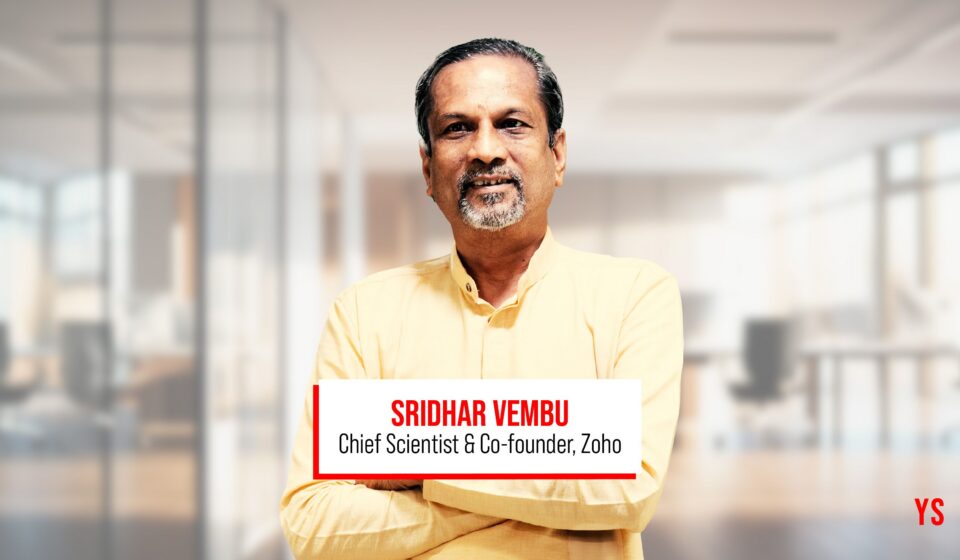
Zoho co-founder Sridhar Vembu has suggested that a reversal in US immigration policy could revive a source of housing demand that weakened as migration slowed. The US Census Bureau estimates that net international migration fell from 2.7 million in the year to June 2024 to 1.3 million in the year to June 2025. A policy reversal is a scenario, not a forecast, and the migration figures alone do not tell us where rents or prices will go.
The same variable moves both sides of the market
I would challenge the idea that immigration is simply a demand tap. Harvard’s Joint Center for Housing Studies found that immigrants accounted for 55% of US household growth in 2023. That tells us how significant immigration was to household formation in that year. It does not tell us how much of a given city’s rent increase was caused by migration.
Household formation is not the same as homebuying. A new household may rent for years, and the effect on rents depends on where that household settles and what is available there. Meanwhile, slower migration can also mean slower labour-force growth, making it harder to expand construction capacity in some markets. The result is less intuitive than “fewer arrivals, cheaper housing.” Demand can soften while the supply response gets weaker, too.
Build for a change in assumptions, not just a change in volume
As an architect, I see a familiar failure mode here. We design systems to scale when transaction volumes rise, but we rarely ask whether the decisions those systems support can adapt when the underlying assumptions change.
Consider a housing agency using last year’s population growth to allocate inspection staff, estimate permit volumes and plan infrastructure. If those forecasts share a single assumption buried in a spreadsheet, a revision can mean weeks of reconciliation. Worse, teams may update their own numbers and start making decisions from different versions of reality.
A better design separates observed data, scenario assumptions and decision rules. Migration estimates, local vacancy rates and permit backlogs should retain their geography, date and revision history. Teams should be able to test lower- and higher-growth scenarios without changing the operational systems that process permits or allocate work. This doesn’t require a new platform. It requires clarity about what was observed, what was assumed and who can change each input.
Put a decision next to every scenario
For CTOs, founders and public-sector leaders, I’d start with three questions:
- Which decision actually changes? If two plausible scenarios lead to the same staffing or investment decision, don’t spend another quarter refining the forecast.
- What local signal would make us act? A sustained permit backlog may justify shifting inspection capacity. A change in a national migration estimate, on its own, probably doesn’t.
- How expensive is it to be wrong? Reallocating staff is easier to reverse than committing to a capital project. The more permanent the decision, the more evidence it should require.
The goal isn’t to predict the next turn in immigration policy. It’s to shorten the time between discovering that an assumption was wrong and changing course. In housing, as in enterprise architecture, that is a more useful measure of resilience than the precision of any single forecast.
About the Author: Sanjeev Sarma is the Founder Director and Chief Software Architect at Webx Technologies. With a core focus on Generative AI integration, Cloud-Native Scalability, and Enterprise Software Architecture, he has spent over two decades driving digital transformation across Northeast India and beyond. Beyond his corporate leadership, Sanjeev is deeply invested in shaping the future of the IT industry. He serves as an Industry Expert on the Board of Studies for Assam Don Bosco University’s School of Technology, advises state technology committees, and actively mentors emerging tech startups at STPI. He brings a unique, dual perspective of high-level enterprise execution and future-ready academic curriculum development.