
A study commissioned by the North Eastern Development Finance Corporation Ltd (NEDFi) under its Techno Economic Development Fund (TEDF) has warned of a growing threat from microplastic pollution along the Brahmaputra’s shorelines and recommended field-tested remediation measures. The report, “Survey and Studies on Remediation of Microplastic on Shorelines of Brahmaputra River,” was released during OCTAVATE 2026 — the North East’s technology conclave held at IIT Guwahati from August 10–12 — and announced in a press release dated August 15.
The ceremonial release was attended by North Eastern Council Secretary Satinder Kumar Bhalla, Ministry of DoNER Director Vijay Kumar Goel, NEST Cluster Chairman and IIT Guwahati Director Prof. Devendra Jalihal, senior NEDFi officials, representatives of NITs, foreign delegates, IIT faculty, students and other stakeholders, the release said.
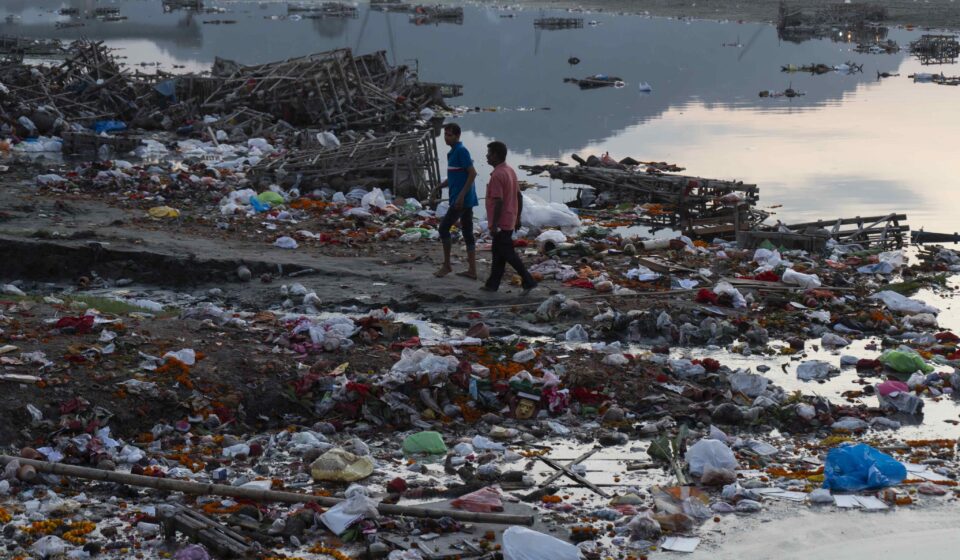
Led by Prof. Vimal Katiyar and his team at IIT Guwahati, the study mapped the extent of microplastic contamination along the river and assessed practical cleanup options for real-world conditions. Researchers say microplastic pollution is now a major threat to freshwater ecosystems worldwide and poses risks to the Brahmaputra’s biodiversity and the livelihoods that depend on the river.
Fieldwork covered more than 20 strategically selected sites — including residential, rural, industrial, sewage treatment plant and airport-influenced locations — with samples analysed using microscopy and Fourier-transform infrared (FTIR) spectroscopy. FTIR is a laboratory technique that identifies polymer types by measuring their characteristic infrared absorption spectra.
Investigators found shoreline contamination from fragmented plastics such as polyethylene, polypropylene and polyvinyl chloride, and identified likely contributors including urban runoff, industrial effluents and hydrological processes that transport and break down larger debris.
To address the problem, the team evaluated practical remediation approaches suitable for field deployment, notably floating barriers to trap surface plastics and biofilm‑assisted degradation, which leverages naturally occurring microbial films to accelerate breakdown of certain plastics. The study emphasises solutions that are scalable and environmentally compatible.
The report aims to strengthen environmental resilience, protect Brahmaputra biodiversity and support a plastic‑resilient future for the Northeast. Dignitaries at the event praised NEDFi’s TEDF for commissioning the field-based study and for developing policy recommendations and strategies based on its findings.
Original Source: https://assamtribune.com/assam/brahmaputra-shorelines-face-microplastic-threat-nedfi-backed-iit-guwahati-study-1615666
Category: Assam
Tags:
Publish Date: 2026-08-15 10:29:00