Architecting Resilient Systems for Climate-Driven Vector-Borne Diseases

When the tropics arrive on your doorstep: why enterprises must treat vector-borne disease as a systems problem
Context
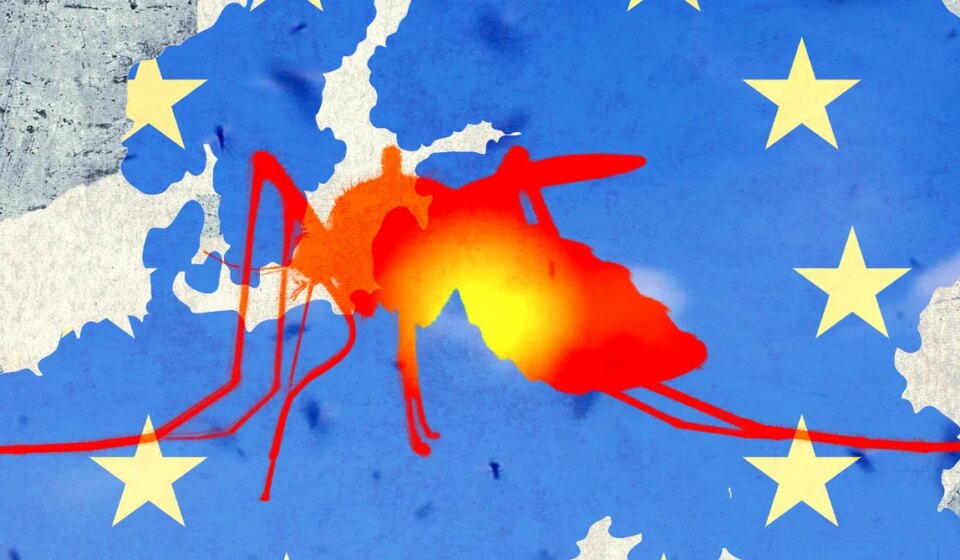
In September 2024 a cluster of dengue cases in Fano, Italy, – eventually totalling 199 reported infections between mid‑August and mid‑October 2024 – challenged the assumption that dengue is “somewhere else.” At the same time, surveillance maps (ECDC, June 2025) and recent research showing mosquito-borne viruses may transmit at cooler temperatures (down to ~14°C rather than ~16°C) point to a shifting geographic reality driven by climate and human mobility.
Why this matters beyond public health headlines
This is not only an epidemiological story; it is an enterprise‑architecture problem writ large. When pathogens move into new geographies, the failure modes are largely systemic: fragmented data flows, brittle supply chains for diagnostics, slow laboratory-to-field feedback loops, and governance frameworks that can’t handle cross‑sector information sharing without breaking privacy or trust. As a Chief Architect, I see three enduring themes here: observability, interoperability, and operational resilience.
Analysis: an architectural lens on vector-borne risk
- Observability is multi-domain
Traditionally, disease surveillance has been siloed in clinical reporting. To anticipate and contain vector-borne outbreaks you need to fuse entomology (vector distribution and behaviour), meteorology (temperature, rainfall), human mobility (travel, commuting patterns), genomic surveillance, and health system capacity. Architecturally this means event‑driven pipelines that accept heterogeneous telemetry (IoT mosquito traps, weather APIs, lab sequencers, hospital EHR events) and normalize them into time‑series and feature stores suitable for rapid analytics.
Trade-off: real‑time ingest increases cost and complexity. Start with sentinel sites and well‑defined data contracts; iterate to broader coverage.
- Interoperability and open contracts beat bespoke integrations
Health systems are full of legacy stacks. For rapid response, adopt modular APIs and canonical schemas (think: FHIR‑style resources for case, lab, and vector observations) and lightweight message buses for eventing. This reduces integration debt when you bring in new data sources (e.g., genomic labs or regional climate services).
Trade-off: schema discipline slows initial delivery but massively reduces long‑term technical debt.
- Edge-to-cloud topology for last‑mile responsiveness
In outbreak response, latency matters. Edge processing (on‑device or local gateways) can filter noise, run anomaly detectors, and surface alerts before upstream aggregation. Cloud layers provide scale for heavy ML training, simulations, and cross‑region correlation.
Trade-off: maintaining distributed software and security pushes operational requirements; bake observability and automated deployments into the architecture from day one.
- Governance, privacy and data sovereignty
Crossing sector boundaries raises legitimate privacy concerns. Data governance must be explicit: what is shared, at what granularity, for how long, and under which legal frameworks. In federated architectures, privacy‑preserving analytics (differential privacy, secure multiparty compute) can allow useful aggregate insights without leaking individual data.
Localization: what this means for India and the Northeast
India already carries a dengue burden and complex vector ecologies. The lesson from Europe is not “this will happen there” but “this can intensify here in ways that strain systems.” India’s Digital Public Infrastructure (DPI) and existing surveillance investments can be leveraged: interoperable APIs, regional sequencing hubs, and networked sentinel sites in urban and rural pockets of the Northeast. Frugal, durable sensor networks (battery‑efficient traps, SMS reporting) combined with regional dashboards and clear data contracts will give public health teams the lead time they need.
Actionable takeaways for CTOs, researchers and founders
- Treat vector surveillance as a data product: define SLAs, owners, and data contracts.
- Start small: pilot sentinel sites with standardized telemetry; prove value before scaling.
- Build modular, event‑driven pipelines: edge filtering, cloud analytics, and ML model deployment lanes.
- Invest in genomic and entomological integrations – sequencing is the quickest way to trace local transmission.
- Bake governance into pipelines: metadata, retention, and access controls are features, not afterthoughts.
Closing thought
Climate and mobility are changing the map of biological risk. The smartest response is not a single tool but an architectural mindset: design systems that see earlier, act faster, and preserve public trust.
About the Author: Sanjeev Sarma is the Founder Director and Chief Software Architect at Webx Technologies. With a core focus on Generative AI integration, Cloud-Native Scalability, and Enterprise Software Architecture, he has spent over two decades driving digital transformation across Northeast India and beyond. Beyond his corporate leadership, Sanjeev is deeply invested in shaping the future of the IT industry. He serves as an Industry Expert on the Board of Studies for Assam Don Bosco University’s School of Technology, advises state technology committees, and actively mentors emerging tech startups at STPI. He brings a unique, dual perspective of high-level enterprise execution and future-ready academic curriculum development.