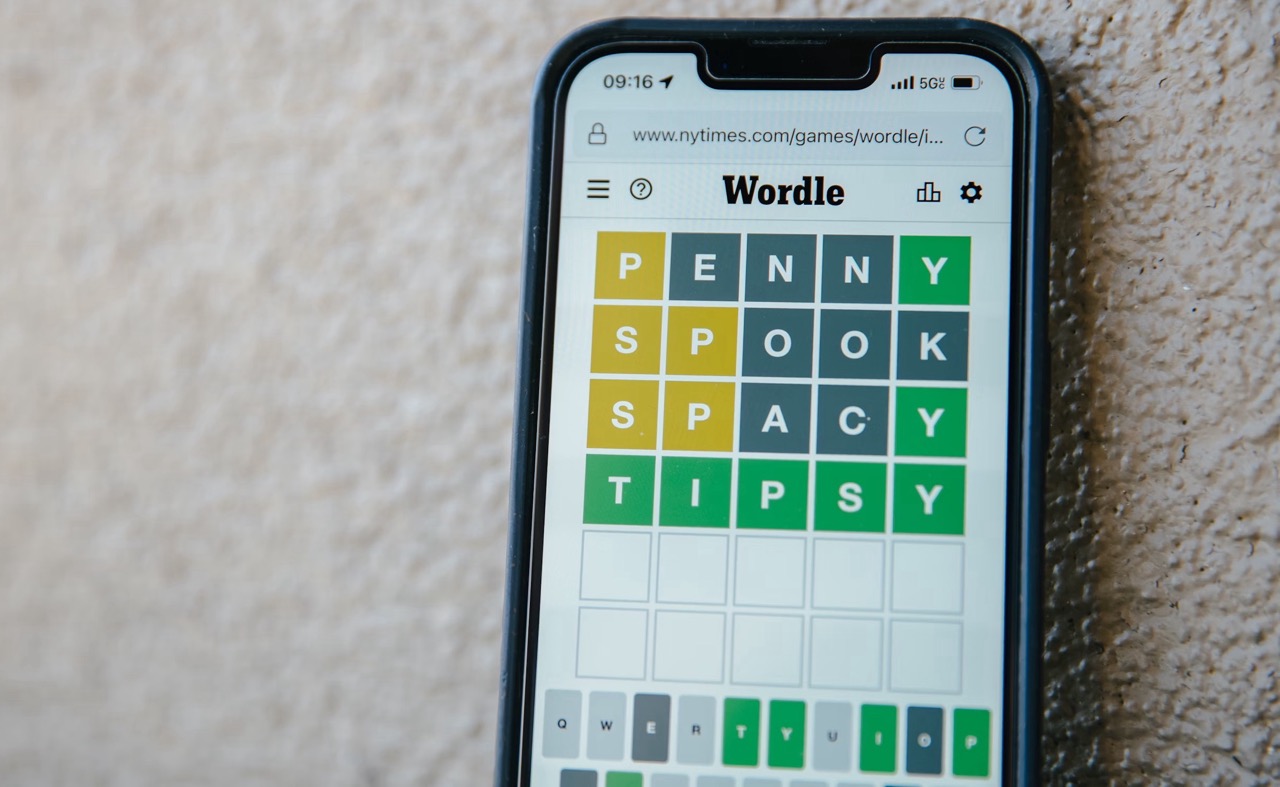

We obsess over features, velocity, and scale – but sometimes the clearest product lessons come from something as simple as a daily five-letter puzzle. I recently came across an article that walked readers through a specific Wordle entry (hints, vowel strategies, and the answer). Beyond the entertainment value, Wordle is a compact case study in product design, information theory, and human-centred engagement that every CTO, product leader, and architect should study.
Context (the signal)
An explainer piece highlighted how a sequence of guided hints (first letter, letter pattern, meaning, rhyme) and starter-word strategies help players converge on the correct five-letter solution within six tries. The story is about solving a puzzle, but the mechanics – constraints, feedback, cadence, and social sharing – are the real signal.
Analysis – what Wordle teaches enterprise technology leaders
1. Constraints are powerful design levers
Wordle’s strict rules – five letters, six attempts, single daily puzzle – force players to make informative choices. In product terms, constraints focus attention, reduce feature overload, and improve decision quality. As architects we should embrace tight constraints for early-stage products: limit options, surface the most meaningful inputs, and let the UX guide users toward deliberate actions instead of overwhelming them.
2. Feedback must be immediate, unambiguous, and actionable
The green/yellow/gray tiles are an elegant minimal feedback loop. Each response reduces uncertainty and lets users update hypotheses. For enterprise systems, invest in concise feedback: let users know what changed, why it matters, and their next best step. This reduces cognitive load and speeds problem resolution.
3. Design for high-information probes
Advice like “start with vowel-rich words” is essentially guidance for maximizing information gain per guess. That’s information theory applied to UX. When designing onboarding or diagnostics, provide “probes” (questions, tests, or workflows) that reveal many data points at once – this accelerates personalization and intelligent defaults.
4. Cadence and scarcity drive both retention and meaning
A single daily puzzle creates ritual, anticipation, and social moments. For many enterprise apps, constant notifications and feature bloat erode attention. Consider creating meaningful cadences – daily summaries, weekly retrospectives, quarterly challenges – that make interactions feel valuable rather than noise.
5. Social primitives multiply value
Wordle’s shareable grid turned individual play into a communal experience without heavy social features. Product teams should look for low-friction sharing mechanisms that preserve privacy yet enable community – a single image, a milestone badge, or an anonymized performance metric can spark organic distribution.
6. The data ethics and anti-cheat paradox
Simple games become contested when scores and bragging rights matter. As you add gamification to enterprise products (leaderboards, badges, contests), prepare governance: fairness checks, fraud detection, and a clear policy on assistance (e.g., AI hints vs. spoilers). Ethical gamification sustains trust.
Actionable guidance for CTOs and founders
– Prototype constraints-first: launch an MVP with a small set of tightly-scoped interactions and iterate.
– Build clear micro-feedback loops: instrument UI states so users always know the consequence of each action.
– Use information-rich diagnostics in onboarding to personalize faster (one good probe beats ten shallow ones).
– Deploy cadence-based engagement: design rituals, not background noise.
– Favor simple social share mechanics over heavy social stacks to grow virality while protecting privacy.
– Plan governance for gamified features: monitoring, anti-abuse, and clear user expectations.
Takeaways
– Constraints + clear feedback = better decisions.
– High-information interactions accelerate personalization.
– Ritual and shareability are underrated levers for retention.
– Gamification needs guardrails – both technical and ethical.
Closing thought
A five-letter puzzle is small in scope but enormous as a design laboratory: when you strip away complexity, you see what actually moves people – clarity, challenge, and moments worth sharing. As architects and product leaders, our job is to design systems that provide those moments at scale, without surrendering trust or ethics.
About the Author
Sanjeev Sarma is the Founder Director of Webx Technologies Private Limited, a leading Technology Consulting firm with over two decades of experience. A seasoned technology strategist and Chief Software Architect, he specializes in Enterprise Software Architecture, Cloud-Native Applications, AI-Driven Platforms, and Mobile-First Solutions. Recognized as a “Technology Hero” by Microsoft for his pioneering work in e-Governance, Sanjeev actively advises state and central technology committees, including the Advisory Board for Software Technology Parks of India (STPI) across multiple Northeast Indian states. He is also the Managing Editor for Mahabahu.com, an international journal. Passionate about fostering innovation, he actively mentors aspiring entrepreneurs and leads transformative digital solutions for enterprises and government sectors from his base in Northeast India.