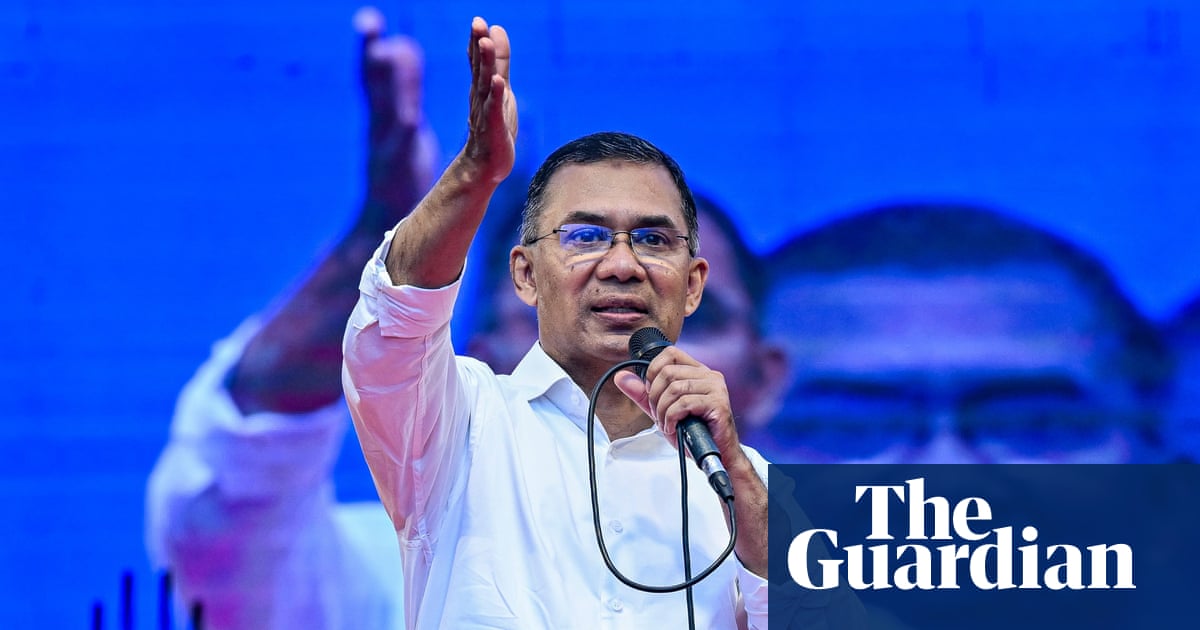
Hope for a New Dawn: Tarique Rahman Promises an Era of Clean Politics as Bangladesh Faces Historic Election After Hasina’s Fall

Tarique Rahman, poised to be Bangladesh’s next prime minister after 17 years in exile, is promising to combat long-standing corruption and lead the country towards a “new path.” As voting commenced in Bangladesh’s first free and fair elections in almost two decades, Rahman, leader of the Bangladesh Nationalist Party (BNP), expressed his commitment to a new era of accountability and clean governance. He emphasized a “top down, no tolerance” approach to graft, envisioning a government that genuinely represents the will of the people.
Polls suggest the BNP is likely to secure a significant majority against its rival, the Islamist party Jamaat-e-Islami, marking a potential return to power after two decades. “We saw in the last regime that corruption was encouraged,” Rahman said, acknowledging the country’s struggles with corruption. He added, “Our economy was left destroyed. It will take time, but if we establish real accountability, that will eventually control corruption.”
This election follows the ousting of autocratic Prime Minister Sheikh Hasina in 2024, amid a student-led uprising that resulted in an estimated 1,400 deaths, according to the UN. Hasina’s regime faced accusations of electoral fraud and suppression of dissent, particularly against BNP activists. Since August 2024, Bangladesh has been governed by an interim administration led by Nobel laureate Muhammad Yunus, tasked with facilitating a democratic process. However, the nation continues to grapple with law enforcement challenges and economic stagnation.
Analysts highlight the significance of these elections, emphasizing that a credible and peaceful vote is crucial for the future of democracy in Bangladesh, where over 127 million citizens are registered to vote. Significant security measures are enforced, with over 900,000 police and military personnel deployed to ensure safety at polling stations.
In Dhaka, excitement permeates the atmosphere, particularly among younger voters eager to experience democracy. “This is the first time I am freely taking part in an election,” said 30-year-old Yasmin Sorupa, who plans to vote for the BNP. “In the past, I could never cast my vote because somebody had already done it for me.”
Rahman returned to Bangladesh on Christmas Day after more than 17 years abroad, having lived in London. He succeeded his mother, Khaleda Zia, a prominent figure in Bangladesh’s political landscape, shortly before her passing. Reflecting on his exile, Rahman stated, “Physically, I may have been out of the country but for all those years, I was always connected to my people.”
Despite his ambitious plans, Rahman faces public skepticism due to past corruption associated with his party during its previous rule from 2001 to 2006. He openly acknowledged past “mistakes” but pledged to address them. Accusations against him, including involvement in a corrupt government, linger, though he asserts that the courts have cleared him of all charges.
Yet, Rahman’s return is not embraced by all, as many associate him with a politically powerful dynasty. Both his and Hasina’s families have controlled Bangladeshi politics since the nation’s independence in 1971. Additionally, Rahman must contend with the resurgent Jamaat-e-Islami and their hardline Islamist allies, who advocate for more stringent Islamic principles.
Rahman recognized extremist sentiments in society, attributing them to discontent stemming from a lack of democratic expression. He told supporters, “If we are able to practice democracy, create jobs, and provide opportunities, I believe people will move away from radical thinking.”
As Bangladesh potentially embarks on a new chapter, Rahman must also navigate foreign relations, particularly with India, a nation whose ties soured following Hasina’s departure. Acknowledging existing issues, Rahman emphasized the need for a “relationship of mutual respect,” indicating that the onus is on both nations to rebuild trust.
With Bangladesh’s political landscape on the brink of transformation, the outcome of these elections could significantly shape the country’s future.
Original Source: https://www.theguardian.com/world/2026/feb/12/tarique-rahman-bnp-bangladesh-election
Category :
Tags:
Publish Date: 2026-02-13 05:10:00