Is Thwaites Still the ‘Doomsday Glacier’? Unveiling the Alarming Truth Behind Our Planet’s Future!

Scientists have long found the “Doomsday Glacier” label for Thwaites Glacier unsettling, but the reality it represents is crucial. This immense Antarctic glacier, comparable in size to Florida, could contribute as much as 2 feet to global sea-level rise if it were to melt entirely. A research team aboard the icebreaker Araon is currently investigating Thwaites and the surrounding seas to better understand the glacier’s fate.
While the outlook may sound dire, experts assert that Thwaites isn’t doomed yet. Researchers emphasize that reducing carbon emissions driving climate change could still shield the glacier from drastic decline. However, the global trajectory isn’t promising. Fossil fuel emissions reached record levels in 2025, and they show little indication of decreasing. Alarmingly, a recent study suggests we may already be too late to completely prevent the melting of Antarctic ice shelves in this region.
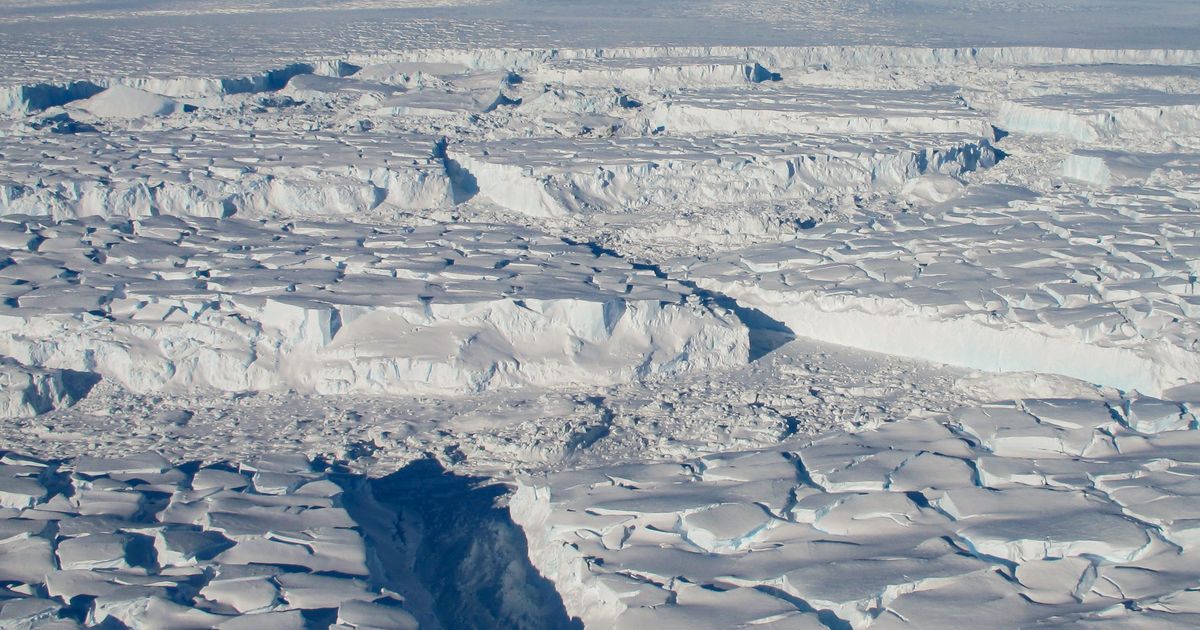
Although Thwaites is not expected to collapse imminently, scientists have gained a clearer understanding of factors that could lead to its disintegration in the latter half of the century. To contextualize these predictions, it’s essential to grasp the glacier’s structure. Thwaites consists of solid ice flowing towards the sea, where its edge extends over the ocean, forming a floating ice tongue. This is where warm ocean currents play a critical role, eroding the underside of the ice and inching the glacier’s grounding line further inland, which could set off a problematic feedback loop.
The underlying bedrock of Thwaites slopes downward, adding to the glacier’s vulnerability. Once the grounding line recedes significantly, warm seawater can flood in, exacerbating the melting process and further pulling the grounding line back. This cycle-retreating and melting-poses a severe risk of destabilizing the glacier, leading to significant ice loss and disastrous sea-level impacts. “The consequences of this unstable retreat will be felt worldwide in terms of sharply increased rates of sea-level rise,” says Hilmar Gudmundsson, a glaciologist at Northumbria University.
Current research indicates that Thwaites has not yet embarked on this self-reinforcing cycle. Gudmundsson notes that computer models suggest a near certainty of future collapse if the grounding line retreats too far, though predicting when is challenging.
In a glimmer of hope, recent studies indicate that one alarming scenario involving Thwaites’ ice cliffs might be less likely. These cliffs, which form steep vertical edges after chunks of ice break off, are prone to instability. However, modeling released in 2024 suggests the glacier may be resistant to this rapid collapse scenario, even if further research is required for confirmation.
While catastrophic scenarios often dominate headlines, scientists are focused on refining predictions regarding gradual sea-level rise from Antarctic ice. Doug Benn, a glaciologist at the University of St. Andrews, emphasizes that incremental changes can significantly affect low-lying nations and ecosystems. “Authorities are not really going to be planning for the next century. They’re going to be planning the next decades,” he notes, highlighting the urgent need for actionable climate strategies.
With critical research underway, the fate of Thwaites Glacier holds significant implications for our planet’s future, revealing both challenges and opportunities in the fight against climate change.
Categories: Climate Change, Glaciology, Environmental Science
Tags: Thwaites Glacier, Sea Level Rise, Climate Research, Antarctic Studies, Carbon Emissions
Original Source: https://www.spokesman.com/stories/2026/jan/03/is-thwaites-still-the-doomsday-glacier/
Category :
Tags:
Publish Date: 2026-01-04 06:59:00