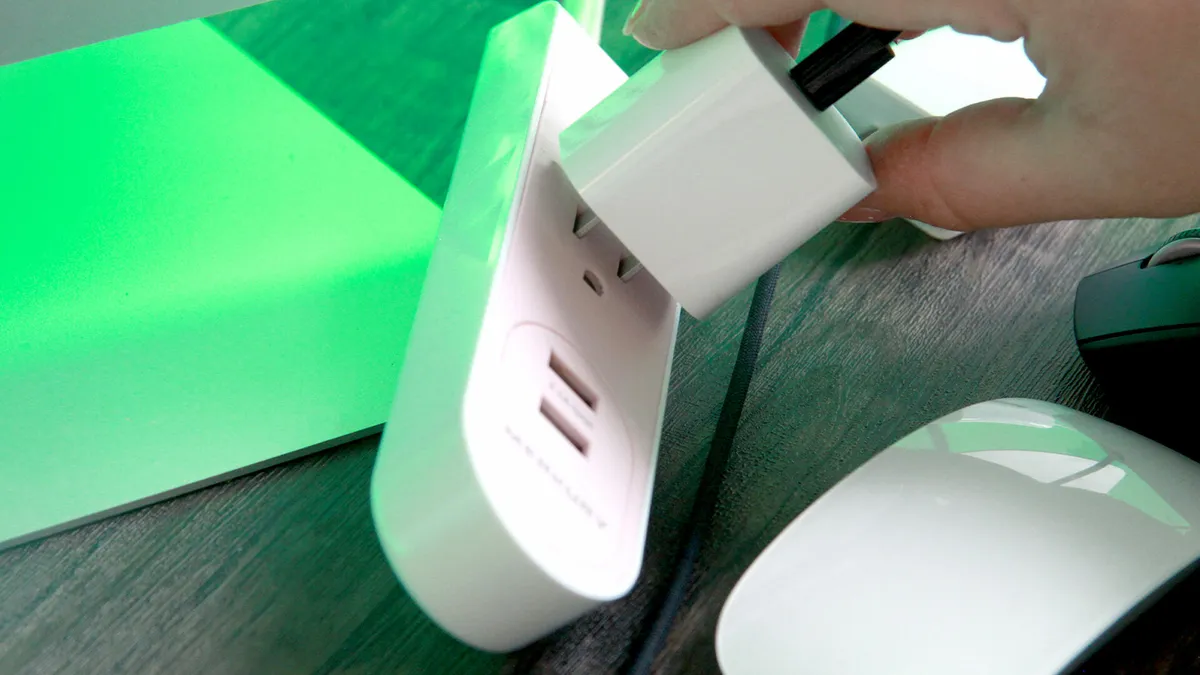

Smart Plugs: The Overlooked Titans of Home Automation
In today’s fast-paced digital age, where technology continually shapes our daily routines, one might wonder why smart plugs have not received the same level of attention as their more glamorous counterparts, like smart thermostats or AI-powered assistants. However, these seemingly simple devices hold enormous potential not only for individual convenience but also for broadening our understanding of home automation and energy management.
Recent discussions about smart plugs highlight their multifaceted capabilities, from enhancing home security by mimicking occupancy to managing energy consumption effectively. One utilizes them to control lights and devices remotely, automate schedules for daily usage, and even create safer home environments by cutting power from potential fire hazards. But what does this mean for the broader landscape of enterprise architecture and technology deployment?
The Context
Maria Diaz’s article articulates a range of innovative applications for smart plugs, underscoring their role in energy savings, automation, and security enhancements. The wide array of use cases-from controlling lights and managing heating devices to limiting children’s screen time-highlights the growing trend towards seamless integration of smart home technology into daily lives.
The Analysis
Smart plugs are more than just a niche product; they symbolize a shift towards a more interwoven technological ecosystem. In enterprise architecture, this signifies a pivotal movement towards decentralized control and energy efficiency, echoing the ongoing quest for smarter data-driven solutions.
-
Energy Monitoring and Efficiency: Organizations can leverage smart plugs to gain insights into energy consumption, both at home and in corporate settings. Monitoring energy usage not only optimizes costs but also aligns with sustainability goals by reducing the carbon footprint.
-
Future of Home Automation: The integration of smart plugs into existing systems calls for a thoughtful examination of legacy infrastructure. As enterprises consider “Build vs. Buy” strategies, the potential to incorporate smart plug technology into legacy systems offers a promising path to modernization without complete overhauls.
-
User-Centric Design: With the evolution of user interfaces-from traditional switches to voice commands-we need to address the human element in smart technology adoption. Effective design will ensure that users not only understand the technology but also fully leverage it for various applications, enhancing the overall user experience.
-
Security Implications: As we increasingly rely on these devices, the necessity for cybersecurity becomes paramount. Smart plugs, while convenient, pose risks if they are vulnerable to attacks. Organizations must adopt a Zero Trust approach, ensuring comprehensive security measures that safeguard infrastructure against emerging threats.
-
Scalability: The smart plug case proves that minor IoT devices can drive significant changes. This scalability suggests that industries should explore similar ‘small wins’-simple solutions that can be rolled out quickly with minimal disruption, leading to larger enterprise impacts.
The Localization
In a diverse landscape like Northeast India, where energy access can vary widely, smart plugs could empower citizens by enhancing energy efficiency and control. For rural areas, where availability of reliable technology remains a challenge, the adoption of energy monitoring with smart plugs could be a game-changer, ensuring that even basic appliances contribute to overall energy saving. Furthermore, by enabling local artisans to convert traditional tools into smart devices, we could stimulate frugal innovations that cater specifically to regional needs.
Takeaways
- Adopt Smart Solutions: Enterprises should consider integrating smart plugs into their operational frameworks for enhanced energy efficiency and streamlined control.
- Prioritize Security: Develop robust security protocols to mitigate risks associated with the adoption of smart IoT devices.
- Focus on User Experience: Emphasize user-centric designs and interfaces to drive adoption and maximize benefits.
- Embrace Sustainability: Leveraging these technologies aids organizations in aligning with global sustainability initiatives-improving their brand reputation while contributing to a healthier planet.
As we navigate an increasingly interconnected world, let us not underestimate the significance of small technological innovations. Devices like smart plugs may be humble in appearance, but their implications for sustainability, efficiency, and user engagement are profound, setting the stage for a smarter future.
About the Author
Sanjeev Sarma is the Founder Director of Webx Technologies Private Limited, a leading Technology Consulting firm with over two decades of experience. A seasoned technology strategist and Chief Software Architect, he specializes in Enterprise Software Architecture, Cloud-Native Applications, AI-Driven Platforms, and Mobile-First Solutions. Recognized as a “Technology Hero” by Microsoft for his pioneering work in e-Governance, Sanjeev actively advises state and central technology committees, including the Advisory Board for Software Technology Parks of India (STPI) across multiple Northeast Indian states. He is also the Managing Editor for Mahabahu.com, an international journal. Passionate about fostering innovation, he actively mentors aspiring entrepreneurs and leads transformative digital solutions for enterprises and government sectors from his base in Northeast India.