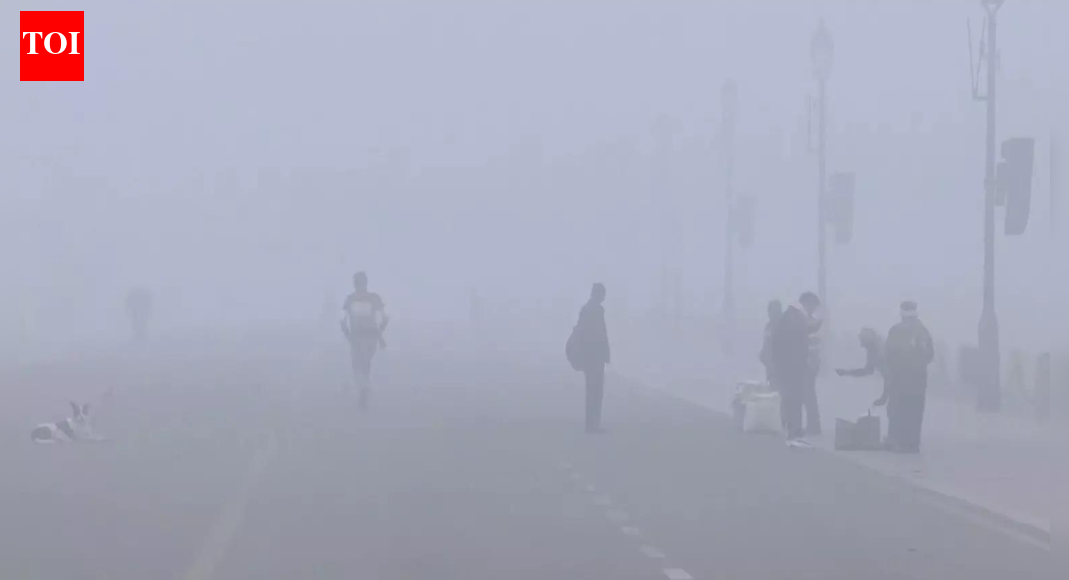
Delhi-NCR Faces Health Crisis: Toxic Smog Turns Air Quality to ‘Severe’ Levels, Flights Grounded Amidst Low Visibility!

NEW DELHI: A thick layer of smog enveloped the Delhi-NCR region on Saturday morning, with the Air Quality Index (AQI) hitting a staggering 380, placing it in the ‘very poor’ category according to the Central Pollution Control Board (CPCB) at 7 AM. Many areas were further impacted, as several monitoring stations recorded ‘severe’ pollution levels, casting a shadow over residents’ health and daily commutes.
Notable AQI readings included 428 at Sarai Kale Khan and Anand Vihar, while the ITO area registered a concerning 429. Other heavily affected spots included Akshardham at 420, Ashok Vihar at 407, and Rao Tularam Marg at 403. The Barapullah flyover area recorded an AQI of 380, reiterating the extensive reach of this environmental crisis.
In response to the worsening air quality, the Commission for Air Quality Management (CAQM) activated Stage-IV measures of the Graded Response Action Plan (GRAP) across Delhi-NCR. These measures encompass a prohibition on non-essential construction activities, restrictions on certain diesel vehicles, and increased enforcement to address pollution sources more effectively.
Delhi’s Environment Minister, Manjinder Singh Sirsa, conducted surprise inspections at petrol stations, including those along the Delhi-Gurugram border and Janpath, to ensure compliance with the ‘No PUC, No Fuel’ mandate. This directive aims to mitigate pollution by encouraging vehicle owners to prioritize vehicle maintenance and emission compliance.
According to environmental standards, an AQI of 401 to 500 is categorized as ‘severe,’ indicating serious health risks, especially for vulnerable populations. Conditions like these compel authorities to strengthen their efforts in managing air quality, drawing attention to the urgent need for long-term solutions to combat pollution in the nation’s capital.
As Delhi faces another day in the smog, the focus remains on both immediate actions and sustained strategies to improve air quality and safeguard public health. With the implementation of these curbs, the government aims to alleviate the dangerous conditions that have become alarmingly frequent in recent months.
In summary, as smog blankets the city, residents find themselves grappling with deteriorating air conditions. The CAQM’s stringent measures underscore the gravity of the situation, emphasizing that urgent steps are necessary to protect the health and wellbeing of the populace in a region where clean air is becoming increasingly elusive.
Original Source: https://timesofindia.indiatimes.com/india/delhi-ncr-wakes-up-to-toxic-smog-aqi-hits-very-poor-to-severe-levels-flights-impacted-due-to-low-visibility/articleshow/126087878.cms
Category :
Tags:
Publish Date: 2025-12-20 08:57:00