SoftBank’s Market Cap Plummets by $32 Billion Amidst Tumultuous AI Stock Valuations: A Wake-Up Call for Investors!

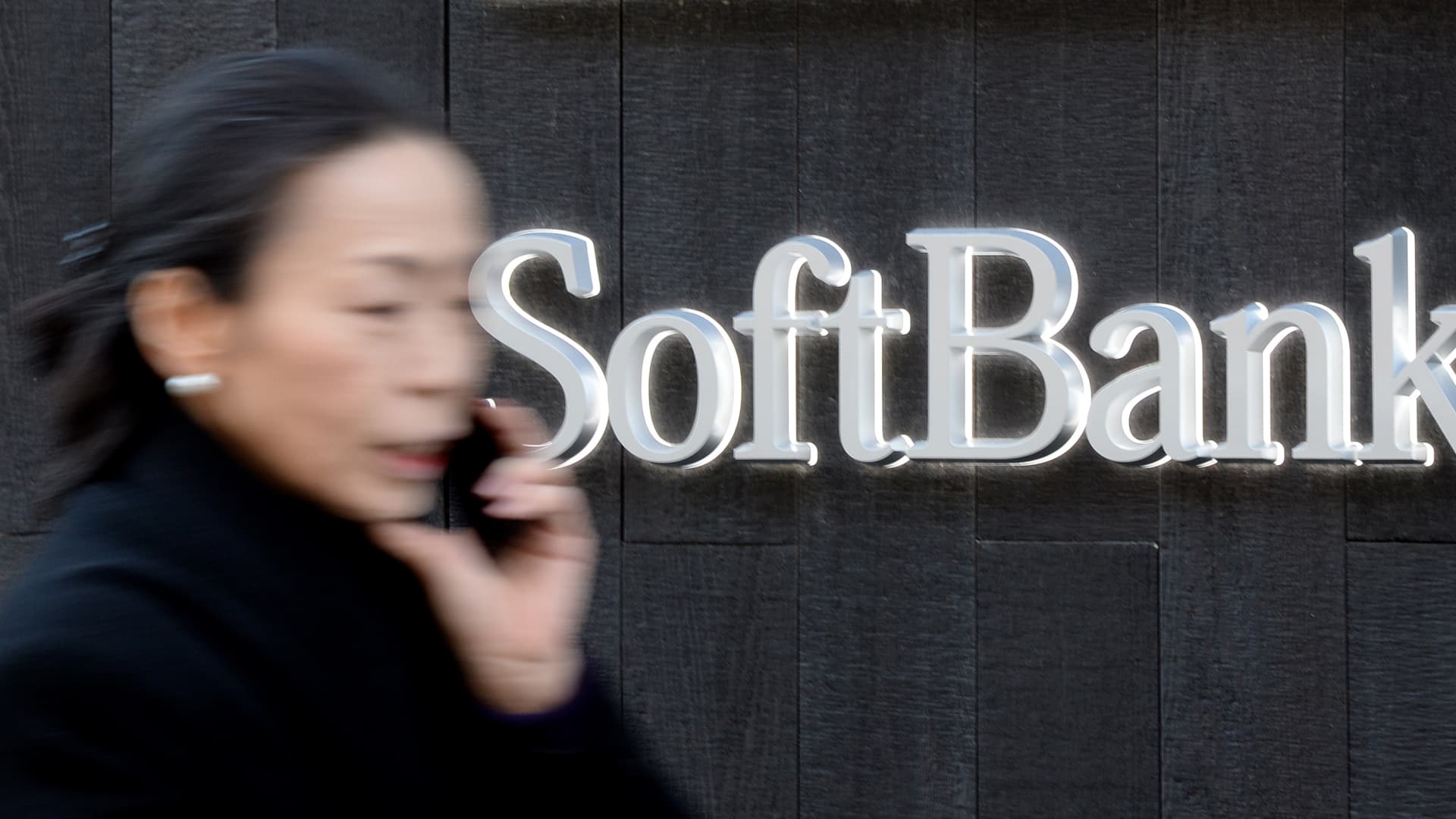
Shares in Japan’s SoftBank Group plummeted by more than 14% on Wednesday, reflecting a wider downturn in AI-related companies across Asia, which followed declines among U.S. peers. The sharp selloff has sparked investor concerns over inflated valuations in what has become the market’s most crowded trade. With this drop, SoftBank’s market capitalization took a hit of approximately $32 billion, marking its worst trading day since last August, when shares fell over 18%.
SoftBank’s extensive investments in artificial intelligence span various sectors, including infrastructure, chips, and application development. A significant player in the market, SoftBank holds a controlling stake in UK-based Arm Holdings, whose chip designs are crucial for mobile and AI processors. The company also recently acquired Ampere Computing to bolster its data center capabilities in AI. However, the stock for Arm Holdings, listed on the Nasdaq, fell by 4.71% overnight.
SoftBank’s backing extends to leading AI model developers, such as OpenAI, and innovative application startups like OpusClip-a generative AI video-editing platform-and Tempus AI, which utilizes machine learning within precision medicine. In just two days, SoftBank has lost nearly $50 billion in market cap, with shares already down over 7% on Tuesday.
Other technology stocks in Japan also faced significant losses. Semiconductor testing equipment maker Advantest declined more than 8%, while chipmaker Renesas Electronics saw a 5.48% drop. Tokyo Electron, another key player in chip production equipment, fell over 5%. South Korean memory chip giants Samsung Electronics and SK Hynix were not spared either, each suffering losses of nearly 6%. The notable gains in these chipmakers had previously propelled South Korea’s Kospi Index to record highs. Taiwan’s TSMC, the world’s largest contract chipmaker, experienced a 2% decline, while major Chinese tech firms Alibaba and Tencent saw their shares drop over 3% and 2%, respectively.
This downturn follows a notable drop of approximately 8% in U.S. software company Palantir, despite exceeding third-quarter expectations. The rising valuations in the AI sector have started to weigh on investor sentiment, contributing to concerns of a potential tech bubble. The AI-focused rally has pushed the S&P 500’s forward price-to-earnings ratio above 23, the highest level since 2000, according to FactSet.
Market analysts are expressing worries about an impending AI correction. Louis Navellier, a seasoned investor, noted that if an AI correction were to happen, it could significantly impact the broader market, given the influence of leading firms in this sector. Comparisons are being drawn to the dot-com boom of the late 1990s, as many in finance observe that the valuations of AI companies are soaring ahead of realistic profit expectations. Jared Bernstein, former head of the Council of Economic Advisers, remarked that current AI investment levels exceed those seen during the internet bubble, highlighting the disconnection between potential earnings and actual expenditure.
Meanwhile, Michael Burry, famous for predicting the 2008 financial crisis, has attracted attention with a bearish stance on leading AI companies including Palantir and Nvidia, as his Scion Asset Management disclosed substantial short positions in these stocks. Other tech giants in the U.S. also saw declines, with Oracle dropping by 4%, AMD almost 4%, and notable falls for Nvidia and Amazon.
Despite this turbulence, Dan Ives, managing director at Wedbush, asserted that he views the selloff as a temporary phenomenon rather than the onset of a prolonged downturn. He described current market conditions as a reaction marked by “nervousness,” linking this volatility to simultaneous selloffs in cryptocurrency and other sectors.
Original Source: https://www.cnbc.com/2025/11/05/softbank-ai-stocks-slide-on-valuation-jitters-.html
Category :
Tags:
Publish Date: 2025-11-05 10:35:00