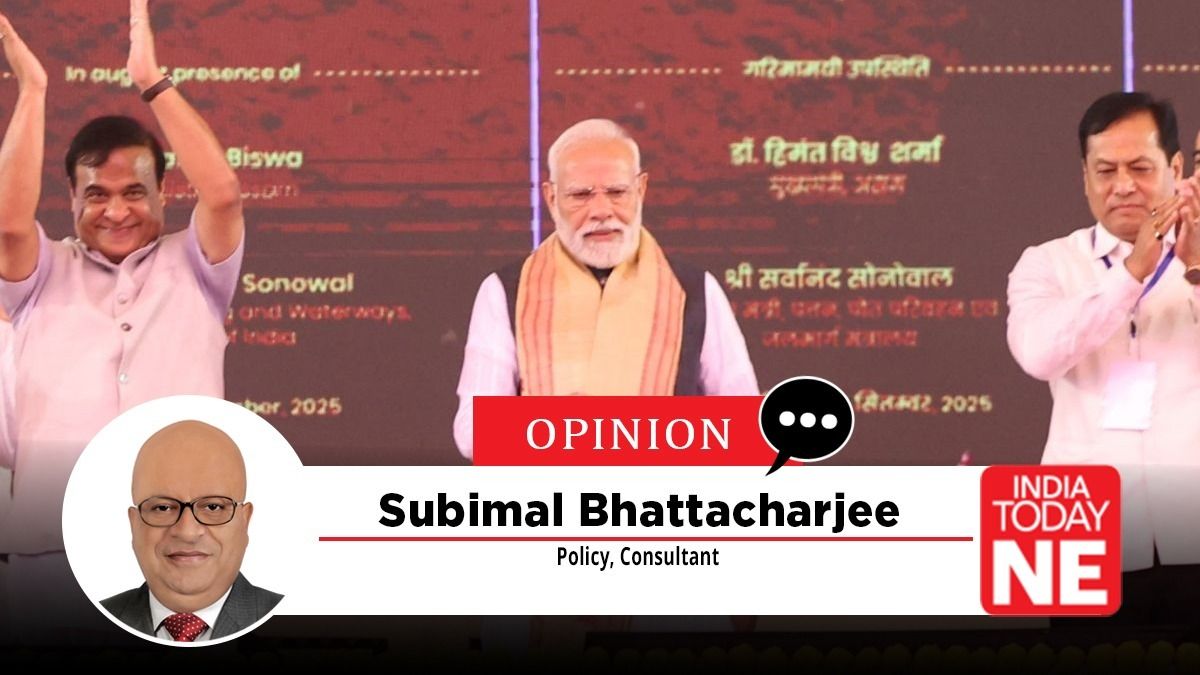

Prime Minister Narendra Modi’s recent two-day visit to Assam, Manipur, and Mizoram on September 13-14, 2025, signifies a pivotal change in how the Indian government engages with its northeastern states. This meticulously planned trip included project announcements totaling over ₹35,000 crore, underscoring the profound effects of consistent prime ministerial focus on regional development and national unity.
Modi’s attendance at the centenary celebration of Bharat Ratna Dr. Bhupen Hazarika in Guwahati exemplifies the blend of cultural significance with political leadership. By taking part as the chief guest, the Prime Minister elevated a regional cultural affair into a national homage, highlighting how high-level governmental support can enhance regional cultural assets into national landmarks. Hazarika, renowned as the “Bard of Brahmaputra,” reflects the synergy Modi aims for-an artist rooted in Assamese culture whose work resonates universally. By aligning himself with Hazarika’s legacy, Modi framed his northeastern strategy within a broader cultural nationalism that embraces diversity and fosters unity.
Notably, the announcement of projects worth ₹18,000 crore in Assam coincided with the cultural celebrations, linking cultural preservation to economic growth. This initiative demonstrates Modi’s belief that sustainable development requires respect for local identities while simultaneously creating opportunities for progress.
Modi’s first visit to Manipur since the recent ethnic strife illustrates the vital role of the Prime Minister’s presence in communicating national priorities. His visit carried an explicit message: the region and its inhabitants are recognized at the highest levels of government. By approaching Manipur not as a crisis manager but as a development facilitator, Modi reframed the narrative from one of problem-solving to opportunity-creation, showcasing a political acumen that prioritizes long-term stability over immediate media impact.
One of the trip’s standout moments was Modi’s spontaneous 65-kilometer road journey from Imphal to Churachandpur during heavy rain, which he called “a blessing from God.” This endeavor highlighted his commitment to shared experiences with the people he serves. The road journey also served multiple strategic goals: it provided unfiltered insight into local realities, demonstrated respect for all communities by ensuring equal access despite weather challenges, and created a compelling visual narrative of connection, bridging the gaps that typically define center-periphery relationships.
The distribution of development projects across these three northeastern states illustrates a sophisticated approach to economic diplomacy. Assam’s ₹18,000 crore allocation, alongside Manipur’s investments of ₹7,300 crore in Churachandpur and ₹1,200 crore in Imphal, along with development packages for Mizoram, creates a cohesive framework for regional growth instead of isolated state-centric initiatives.
This strategy converts development into a collaborative effort rather than a zero-sum competition. When communities become economically interconnected through shared infrastructure, they form vested interests in preserving peace and cooperation. Emphasizing connectivity through roads, railways, and digital networks lays the groundwork for social integration while facilitating the movement of goods and ideas.
Mizoram’s inclusion in this tour reinforces Modi’s strategic vision for an integrated northeast. Mizoram exemplifies the broader potential of the region: peaceful, prosperous, and woven into India’s overall growth narrative. The linkage of Mizoram’s capital, Aizawl (Sairang), to national railway connectivity, along with the inauguration of three trains from Sairang, is significant, benefiting not only Mizoram but also southern Assam and Manipur. The establishment of the Khelo India Multipurpose Indoor Hall in Tuikual highlights sports as an avenue for youth development and national unity.
Modi’s engagement in Assam reveals the nuanced relationship between cultural festivities and political cohesion. The centenary celebration featuring 50,000 individuals reciting Hazarika’s poems created a powerful cultural experience that transcended political divides. Events like the “1000 voice concert” illustrated how cultural initiatives can foster national solidarity.
By aligning himself with Assam’s rich cultural heritage, Modi achieved several goals: affirming regional pride, connecting local identity with national narratives, and signaling governmental recognition of northeastern contributions to Indian society. This cultural diplomacy establishes emotional ties that surpass mere administrative interactions.
Modi’s northeastern visits consistently underscore how direct engagement from the Prime Minister can streamline administrative processes and enhance efficiency. Projects worth ₹35,000 crore across the three states not only represent financial investment but also entail improved bureaucratic coordination and greater inter-ministerial collaboration. Such direct involvement creates mechanisms for accountability that are essential, particularly in areas where geographic distance may lead to administrative delays.
The significance of Modi’s visits compounds over time. The combination of cultural recognition (such as the Hazarika centenary), substantial economic investment, and personal outreach cultivates enduring relationships that go beyond specific policies or political cycles. These relationships facilitate ongoing dialogue and adaptation of development strategies.
Modi’s northeastern strategy illustrates a sophisticated understanding of how regional growth contributes to national strength. The strategic location, cultural diversity, and natural resources of the northeast are vital for India’s future development. Regular attention from the Prime Minister ensures these assets are incorporated into national planning while respecting regional uniqueness.
Overall, Modi’s northeastern visit showcases how strategic governmental engagement generates broader impacts than solitary project announcements. His approach, combining cultural appreciation, economic investment, administrative efficiency, and genuine connection, presents a comprehensive framework for addressing both material needs and the emotional aspirations of communities.
From the vibrant cultural events in Guwahati to the personal road journey in Manipur and enhancing Aizawl’s connectivity, Modi’s strategy emphasizes that effective democratic leadership necessitates both symbolic and substantive engagement. This holistic approach offers critical insights into managing diversity in large democracies: investing personal time in recognizing and celebrating regional distinctions while creating pathways for shared prosperity lays the groundwork for sustainable national integration that mere bureaucratic methods cannot achieve.
Original Source: https://www.indiatodayne.in/opinion/story/prime-minister-modis-north-east-visit-the-transformative-power-of-prime-ministerial-presence-1277936-2025-09-15?utm_source=rssfeed
Category:
Tags:
Publish Date: 2025-09-15 15:33:00