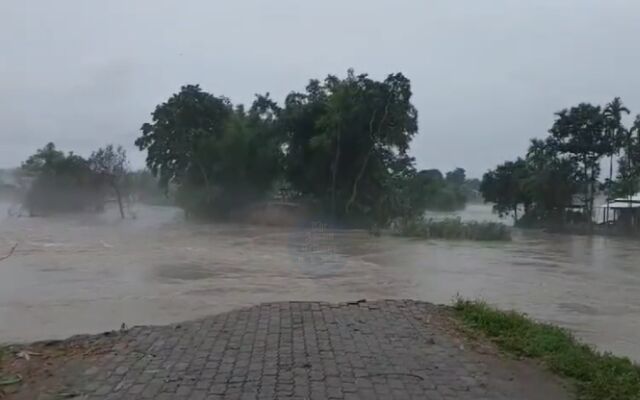

The recent announcement by the Centre regarding the initiation of Phase-V of the ‘Protection of Majuli Island from Flood and Erosion’ comes with an estimated budget of Rs 56.34 crore, bringing renewed hope to one of India’s most vulnerable river islands. However, as the Brahmaputra Board unveils new phases and collaborations, the island continues to face a shrinking landmass and increasing erosion, raising urgent questions about institutional capacity and responsiveness.
Majuli, celebrated for its cultural and ecological significance, has suffered the loss of nearly 75 square kilometers to erosion since 1986. Although 58 square kilometers have seen new deposition, the net land loss and shifting dynamics of the Brahmaputra present a severe threat. Communities are uprooted, cultural heritage erodes, and the island’s delicate ecology is consistently undermined. Despite various interventions, including the installation of porcupine structures, bank reinforcements, and research studies, Majuli remains precariously poised between hope and despair.
On average, Assam loses approximately 8,000 hectares of land annually. The Brahmaputra’s tendency to shift southward due to geological and seismic disturbances poses a significant challenge. Reports indicate that, over the last 50 years, nearly 100 square kilometers of land have eroded in Goalpara district alone. The intensity of this shifting is especially pronounced in the lower Brahmaputra valley, affecting districts such as Goalpara, South Salmara Mankachar, and Dhubri.
The effectiveness of the Brahmaputra Board has been hampered by limited institutional capability. Issues such as delays in master plan preparations, execution gaps, inadequate supervision, and a shortage of technical expertise have eroded the Board’s credibility. With erosion affecting over 4.27 lakh hectares across Assam since 1950, there is an urgent need for robust, adaptive, and technologically integrated planning. Yet, the current situation often reflects bureaucratic inertia rather than the necessary scientific and immediate actions. Notably, the Board’s engagement with esteemed institutions like IIT-Guwahati and INTACH for deeper studies offers some hope.
However, mere studies will not suffice. The key to Majuli’s preservation lies in timely implementation, accountable governance, and effective collaboration with local communities. A truly community-inclusive approach could serve as a model for other riverine islands in the Brahmaputra basin. The challenges ahead transcend engineering; they encompass political will, transparency, and the need for institutional reform.
For Majuli to be genuinely protected-beyond just plans-the Brahmaputra Board must transform into an agile and accountable organization, empowered by cutting-edge expertise and proactive leadership. The time for discussions on erosion has passed; decisive action is now imperative.
Original Source: https://assamtribune.com/opinion/majulis-erosion-crisis-demands-action-not-just-promises-1587151
Category: Opinion
Tags:
Publish Date: 2025-08-03 13:16:00