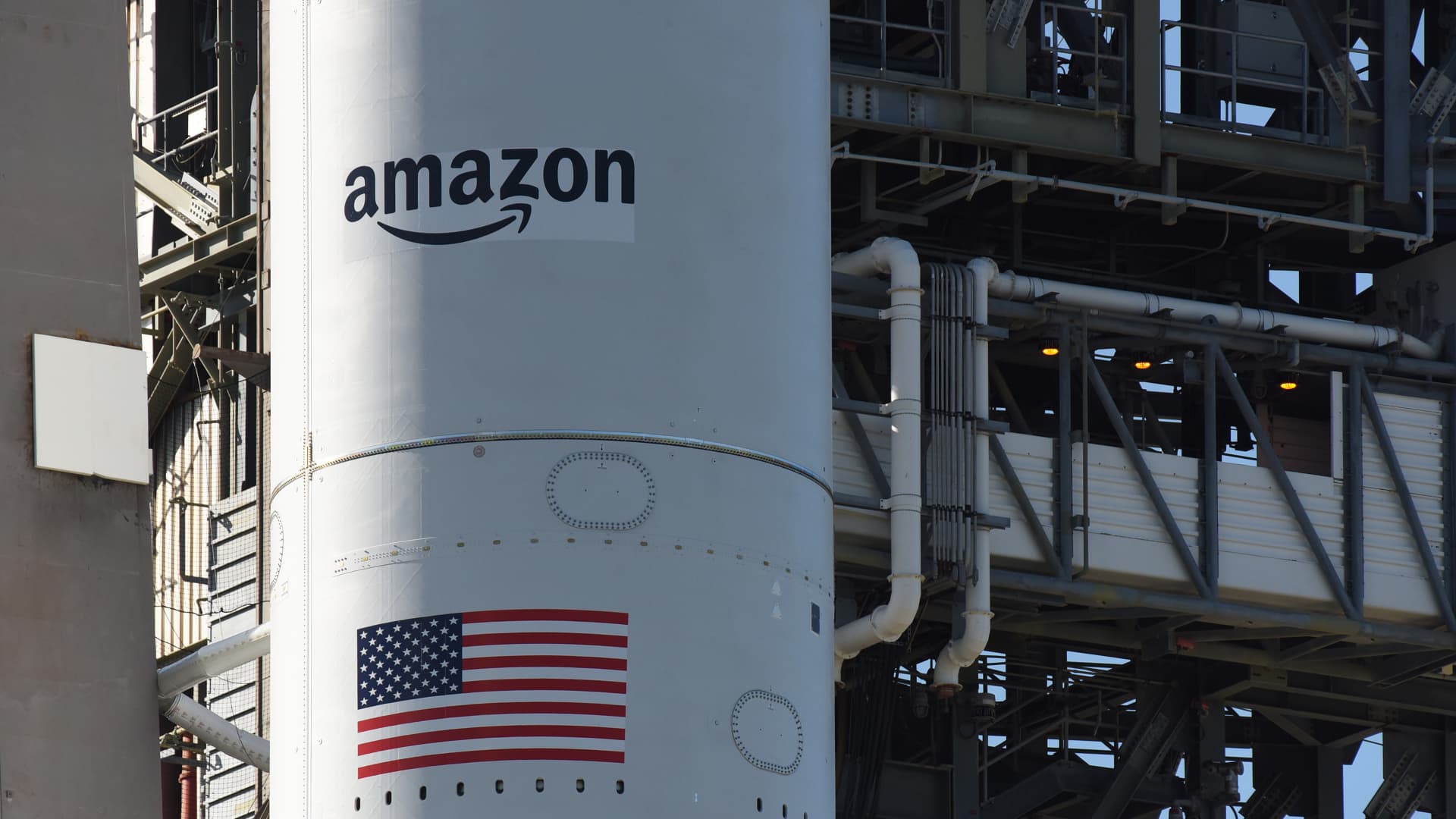

Amazon’s Project Kuiper, aimed at establishing a broadband internet constellation, is gaining momentum as the company continues its partnership with SpaceX. On October 5, 2023, a Falcon 9 rocket lifted off from Cape Canaveral, Florida, at 2:30 a.m. ET, successfully deploying 24 Kuiper satellites into orbit. This launch marks a significant step for Amazon, as it strives to compete with SpaceX’s Starlink, currently the leader in low-Earth orbit satellite internet.
Panos Panay, head of Amazon’s devices and services unit overseeing Project Kuiper, expressed gratitude toward SpaceX in a LinkedIn post shortly after the launch, stating, “Congrats to the amazing Amazon Project Kuiper team on another successful launch, and a big thanks to SpaceX for the ride to space.” With this latest mission, Amazon has now successfully placed 78 satellites into orbit, the first two being launched earlier this year in April and June, also with the assistance of SpaceX competitors, United Launch Alliance.
Launched in 2019, Project Kuiper aims to deploy over 3,000 satellites in order to deliver broadband internet services. The initiative faces a tight deadline set by the Federal Communications Commission (FCC), which mandates that Amazon must have about 1,600 satellites operational by July 2026. This urgent timeframe has pushed Amazon to scale its satellite manufacturing and rocket partnerships, including securing as many as 83 launches altogether, with three of these assigned to SpaceX.
As the competition heats up in the satellite internet arena, space has become a critical battlefield for some of the world’s wealthiest entrepreneurs, with Amazon’s Jeff Bezos taking on Elon Musk’s ventures. Besides Project Kuiper, Bezos is also competing with Musk through his own aerospace company, Blue Origin. Earlier this year, Blue Origin launched its New Glenn rocket, positioning it as a serious contender against SpaceX’s reusable Falcon 9 rockets.
Project Kuiper represents one of Amazon’s largest investments to date, with over $10 billion allocated for development. Analysts suggest that total costs for establishing the full satellite constellation could reach $23 billion, not accounting for terminal expenses required for consumer connectivity. Furthermore, Bank of America estimates that Amazon will spend around $150 million per launch this year, with satellite production costs projected to reach $1.1 billion by the end of Q4.
Market analysts anticipate that the satellite internet sector could grow to at least $40 billion by 2030, providing Amazon with a lucrative opportunity. If successful in capturing 30% of this market, analysts predict that Kuiper could generate approximately $7.1 billion in revenue by 2032. With Starlink demonstrating robust early growth, these estimates might even prove conservative.
As the space race intensifies, Amazon’s commitment to Project Kuiper underscores the strategic significance of satellite internet in the telecom landscape, setting the stage for fierce competition and innovation in the years to come.
Original Source: https://www.cnbc.com/2025/07/15/amazon-teams-up-with-rival-musks-spacex-to-launch-kuiper-satellites.html
Category :
Tags:
Publish Date: 2025-07-16 18:39:00