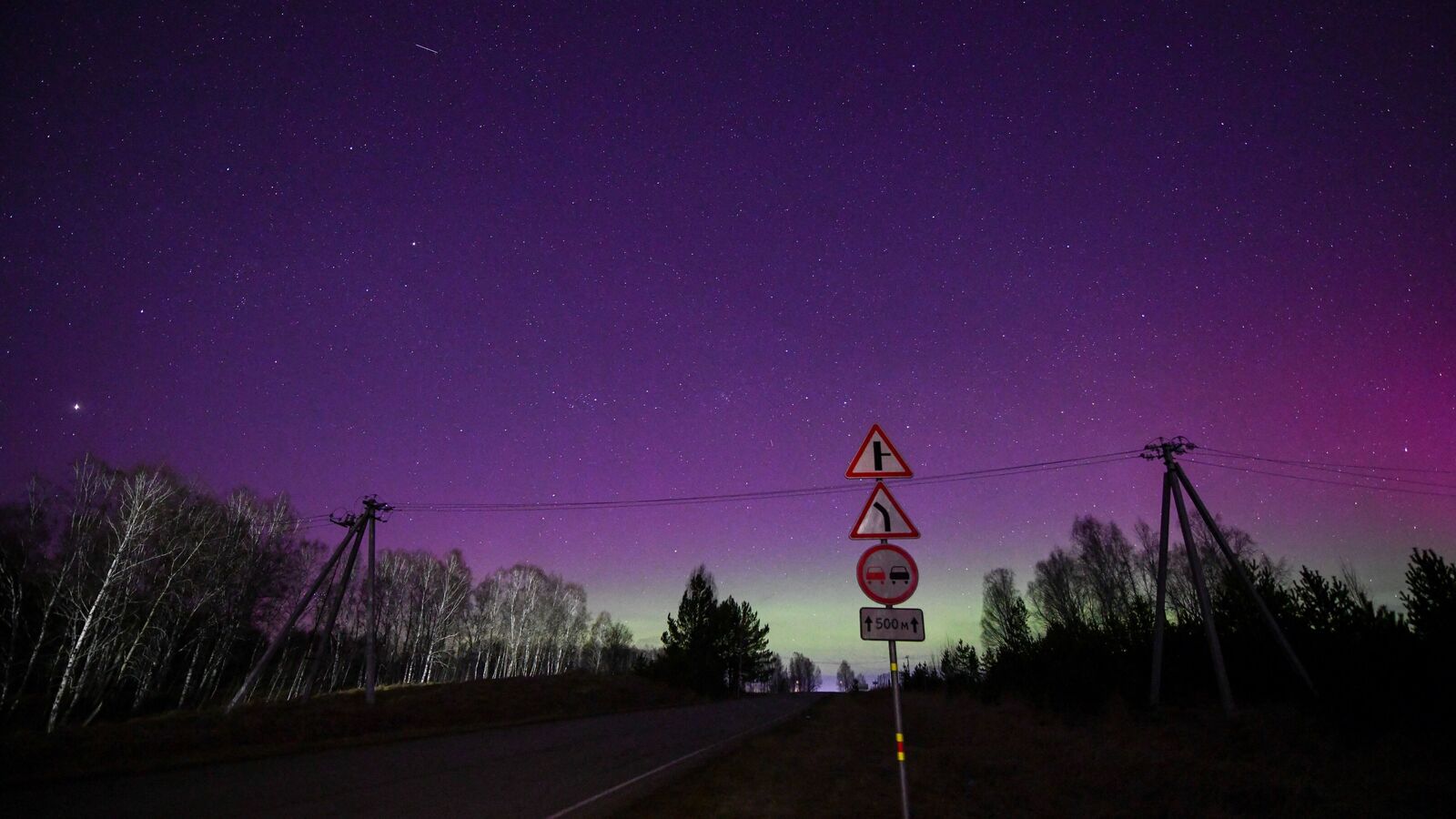

Skywatchers across the northern United States are in for a celestial spectacle on the nights of June 24 and 25, as the aurora borealis-commonly referred to as the northern lights-may illuminate the skies in over a dozen states. The NOAA Space Weather Prediction Center (SWPC) has forecasted a significant stream of solar wind originating from a coronal hole on the Sun, which is expected to trigger G1 to G2 geomagnetic storms. Consequently, this uptick in geomagnetic activity could push the auroral oval further south than usual, granting residents well below the Canadian border an unusual opportunity to witness this breathtaking natural phenomenon.
The optimal time for viewing the auroras is around 1 a.m. local time when the night sky reaches its darkest. To enhance the chances of spotting the northern lights, observers are encouraged to venture away from city lights and gaze toward the northern horizon.
According to NOAA’s latest predictions, 14 U.S. states, along with most of Canada, lie within or just beneath the tantalizing aurora view line. These states-ranked by their likelihood of sighting the lights-include Alaska, Minnesota, North Dakota, Montana, Maine, Michigan, Wisconsin, Vermont, New Hampshire, Washington, Oregon, Idaho, New York, and South Dakota. Alaska, with its geographical advantage, is expected to offer the most robust display. However, residents in northern parts of New York, Oregon, and South Dakota might also catch faint glimmers of the aurora dancing along the horizon.
The auroral forecast hinges on the Kp index, a crucial metric for measuring geomagnetic activity on a scale from 0 to 9. The index is anticipated to peak at around 5.67 during this event, placing it solidly within G2 storm territory, which typically allows for auroras to be observed deep into the northern United States and southern Canada.
For those eager to catch a glimpse of this natural wonder, several tips can enhance the viewing experience. Seek out a location that offers a clear view of the northern sky, avoid any light pollution from urban areas, and be patient as auroras can sometimes appear in waves. Bringing along a tripod is advisable for photography enthusiasts, as long exposure times are often necessary to capture the dynamic colors and movement of the aurora.
While anticipation is high, it’s important to remember that auroras can be unpredictable. Even under perfect conditions, they may arrive later than expected, appear faint, or even skip regions entirely. These natural light displays can surprise observers by stretching further south than initially predicted.
The northern lights, or aurora borealis, are mesmerizing light displays that primarily occur in high-latitude regions around the Arctic, with their southern counterpart, the aurora australis, visible near the Antarctic. This stunning phenomenon produces vibrant waves of green, pink, and even red or purple light, which can create extraordinary patterns across the night sky.
The creation of the aurora is intricately tied to the interaction between charged particles from the Sun and Earth’s magnetic field. As solar wind impacts Earth, it deflects most particles but allows some to enter at the poles. These particles collide with gas atoms in the upper atmosphere, predominantly oxygen and nitrogen, producing light as the atoms return to their normal state-this beautiful glow is what captivates observers.
Different colors emerge based on the altitude of these interactions. Green is the most common hue, created by oxygen at altitudes of 100–300 kilometers. Red lights, which are rarer, also originate from oxygen but at even higher elevations, while blue and purple shades are attributed to nitrogen.
As the nights of June 24 and 25 approach, the potential for visual delight promises to engage and enthrall many, making this a memorable occasion for skywatchers across the northern U.S. and Canada.
Original Source: https://www.livemint.com/news/us-news/northern-lights-alert-aurora-borealis-may-be-visible-in-14-us-states-on-june-25-11750792624145.html
Category :
Tags:
Publish Date: 2025-06-25 00:59:00